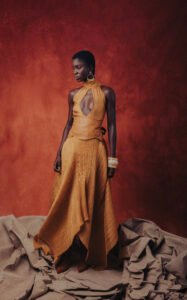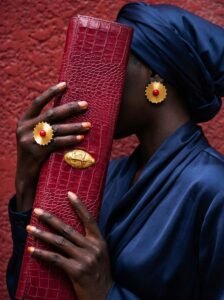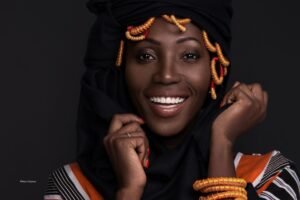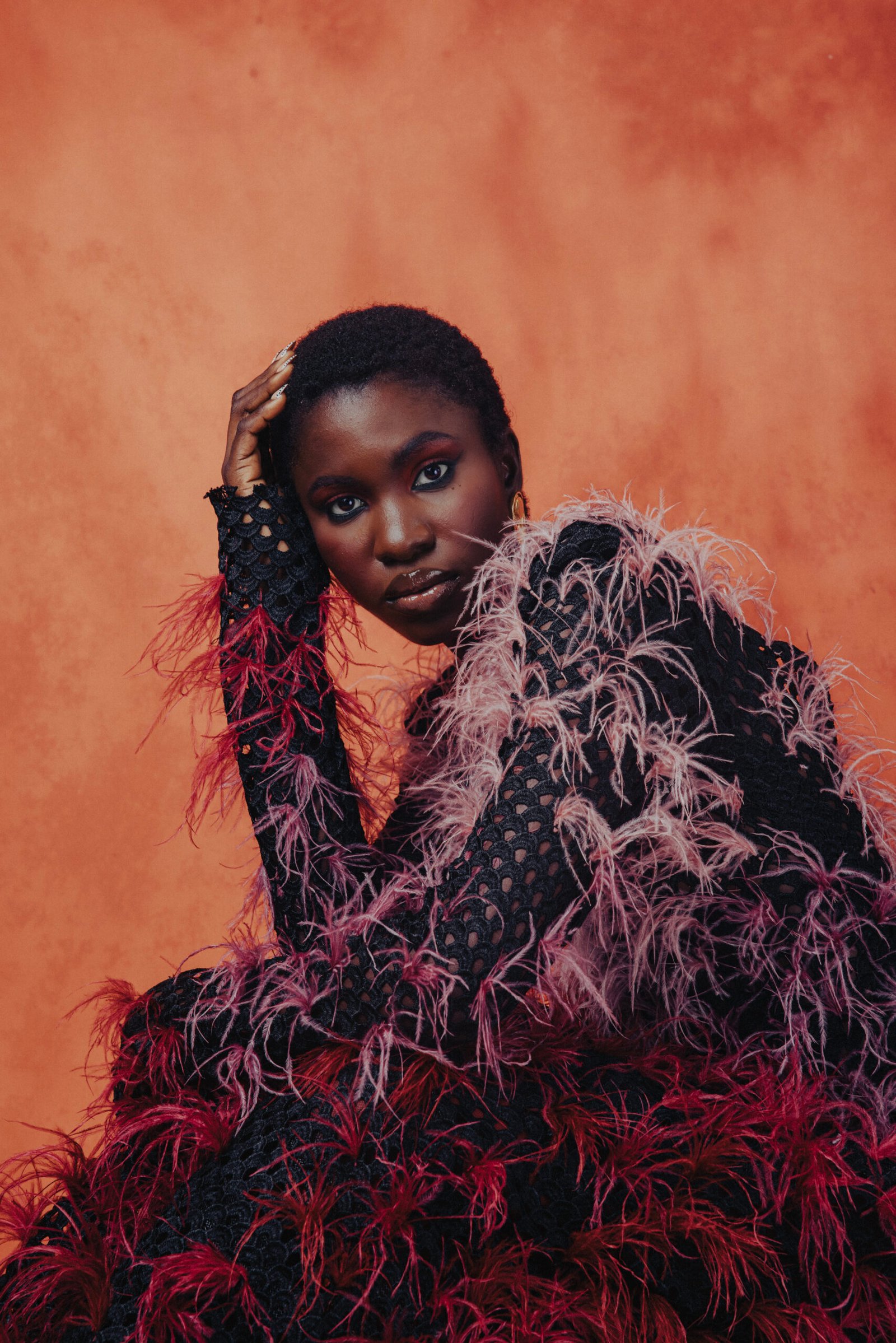
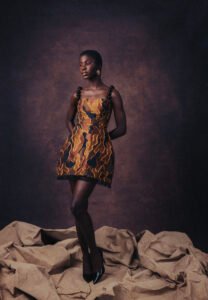
Based in Lagos, Nigeria, LB Lumina belongs to a new generation of African luxury houses redefining what elegance means in the 21st century. Here, fashion is intentional; It’s a language through which women reclaim space, authority, and softness, all at once. Beyond a brand, LB Lumina is a philosophy.
At the helm is a designer who understands that clothing has long served as silent armor for women navigating systems that rarely made room for them. Through sculptural silhouettes, layered textures, and a delicate mix of strength and fluidity, LB Lumina offers something deeper than aesthetics: bold presence.
In this exclusive conversation, Bibi, the artist behind LB Lumina opens up about identity, heritage, power, and why African fashion is asserting itself as a defining global voice.
Exclusive Interview
RSA: What moment or realization first made you see fashion not just as clothing, but as a language of identity and power?
LB: As a child, I was always drawn to fashion, I often describe Lady Biba as my love letter to it. Even though I grew up in the 90s, I was deeply inspired by the power women of the 80s; women who used silhouette and presence to reclaim space in a world that didn’t always make room for them.
What struck me was how clothing became a language long before words were spoken. Women who were often marginalised could step into confidence, authority, and visibility simply through how they dressed. It wasn’t just about style; it was about identity and power.
It’s no surprise that my earliest clients were professional women. Designing for them made me realise that fashion could shape how a woman moves through the world, not as decoration, but as a form of self-definition.
RSA: LB Lumina feels like a dialogue between strength and softness. How would you describe the emotional world of the brand?
LB: Dressing powerful women for years made me realise how important it is to show the full dynamism of womanhood. Lady Biba Lumina was born from a desire to explore who she is beyond work, how she exists in quieter, more expressive spaces while still embodying strength.
Emotionally, LB Lumina lives in contrast. I love pairing structured textiles like Aso Oke with softer fabrics such as tulle and organza to create layers of meaning. I often describe it as a marriage of structure and flow, elements that don’t traditionally meet, but when cut and manipulated intentionally, create something unexpectedly harmonious.
At its core, the brand reflects my belief that femininity doesn’t have to choose between resilience and romance. Both can exist in the same frame, and that balance defines the emotional world of Lumina.
RSA: Who is the LB Lumina woman beyond style, how does she move through the world, and what does she stand for?
LB: The LB Lumina woman is not a wallflower. She knows who she is and understands the weight of her presence. When she enters a space, she doesn’t shrink, she owns it with quiet certainty.
She might be an entrepreneur, an artist, or a cultural leader, but what connects her is self-awareness. She moves through the world with intention, not loudly, but unmistakably.
In many ways, she reflects the modern African woman: multidimensional, globally aware, and deeply rooted in her identity.
RSA: Your pieces feel intentional and sculptural. How do you weave storytelling into silhouettes while keeping them effortlessly wearable?
LB: I always begin with emotional architecture before technical construction. Every collection starts with a narrative, sometimes a cultural memory, sometimes a question about womanhood, and I translate that into structure through tailoring, proportion, and movement.
With the Flaire collection, which debuted at Lagos Fashion Week in 2025, I explored texture and motion. I wanted each piece to feel alive, almost as if it carried its own rhythm.
At the same time, wearability is essential. I’m constantly exploring what modern African elegance looks like, using traditional textiles to craft contemporary pieces that transition naturally into a woman’s everyday life.
RSA: In what ways does heritage shape your collections?
LB: Growing up within Yoruba culture and living in Lagos, I’ve always been surrounded by the vibrancy of owambécelebrations where clothing becomes storytelling.
I blend imported fabrics with locally crafted textiles, combining embroidery, beading, and handmade tassels created alongside local artisans. For me, heritage isn’t nostalgia, it’s collaboration and evolution.
Each piece becomes a dialogue between tradition and modernity.
RSA: Lagos continues to assert itself as a creative capital. How does LB Lumina represent this new chapter of African luxury on a global stage?
LB: Lagos is fearless creatively. It encourages experimentation while remaining deeply rooted in culture, and LB Lumina reflects that energy.
African luxury is moving beyond narrow definitions into something more layered, technical craftsmanship, intentional storytelling, and refined silhouettes that resonate internationally.
Lumina sits within that evolution, contributing to a new visual language where African design is not positioned as emerging, but as an integral voice within global fashion.
RSA: From the first spark of inspiration to the final runway look, what part of your design journey feels the most sacred or transformative?
LB: The first sample is always the most transformative moment for me. It’s where imagination meets reality. It can feel like pure magic or, sometimes, heartbreak.
Even after 13 years of designing, seeing a sketch become a physical garment still excites me. That moment never gets old.
The most sacred part, though, is sketching. I’m very old-school in that way, I prefer a notebook to an iPad. I often sketch in bed or while travelling, especially when I’m surrounded by a beautiful view that allows my mind to wander freely.
RSA: Luxury is shifting from excess to meaning. How does LB Lumina approach conscious creation?
LB: For me, sustainability begins with intention rather than trends. I design with longevity in mind, strong construction, thoughtful materials, and silhouettes that remain relevant beyond a single season.
Producing locally and working with locally made fabrics is central to our process. Conscious creation isn’t only about reducing waste, it’s about honouring the people, the process, and the story behind every garment.
RSA: When someone wears LB Lumina, what emotion do you hope they step into?
LB: Lumina means light, and that idea guides everything.
I want the wearer to feel seen, to step into presence without hesitation. The garment should never overshadow her; it should amplify her.
I want her to shine.
RSA: What new territories — creative, geographical, or conceptual, are calling the brand next?
LB: I’m deeply interested in expanding Lumina through international dialogue, not just geographically, but creatively.
That means collaborations, cross-cultural storytelling, and building bridges between African design language and global audiences.
I’m also exploring new mediums such as film, editorial narratives, and immersive experiences that merge fashion with visual art.
RSA: If LB Lumina could dress three women from any era or field, who would they be and why?
LB: Nike Osinowo, she represents timeless Nigerian elegance.
Michelle Obama, her intelligence, discipline, and refined sense of style make her an enduring muse.
Bozoma Saint John, she captures the spirit of Lumina perfectly, showing up boldly and unapologetically with a strong sense of identity.
RSA: How do you see African fashion evolving in the next decade, and where does LB Lumina sit in that future?
LB: African fashion is entering a period of deeper infrastructure, stronger manufacturing, refined storytelling, and designers positioning themselves as cultural authors.
The narrative will shift away from being labelled “emerging” toward recognised global influence.
I see LB Lumina contributing to that future by merging heritage, technical tailoring, and contemporary luxury into a visual language that resonates internationally.