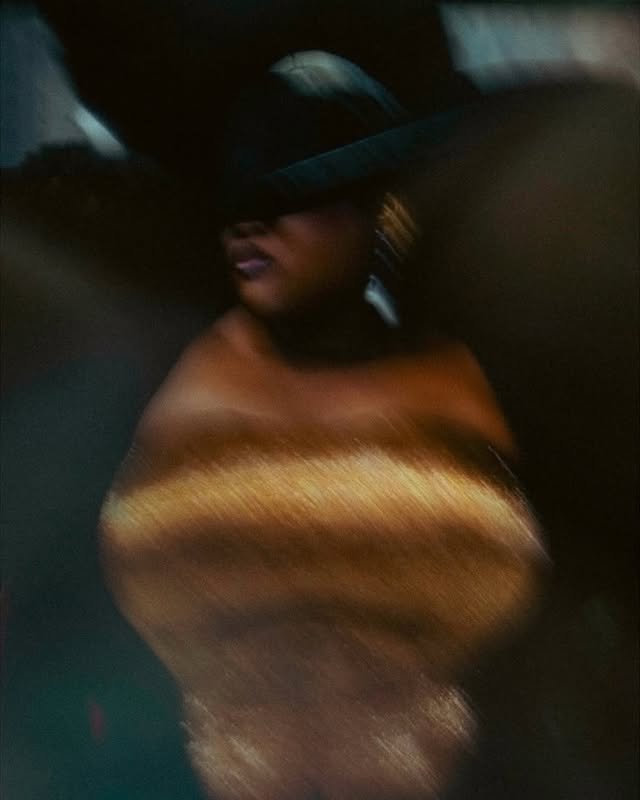
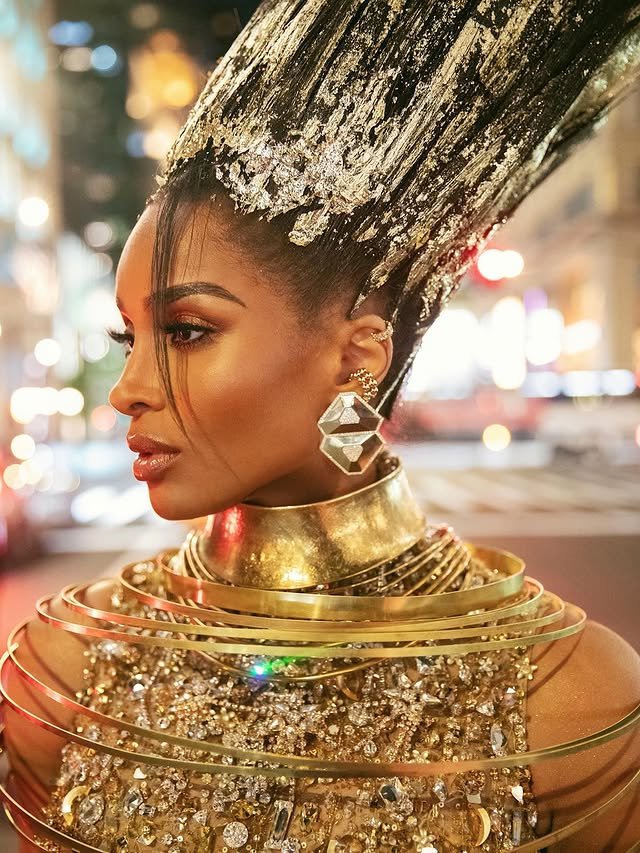
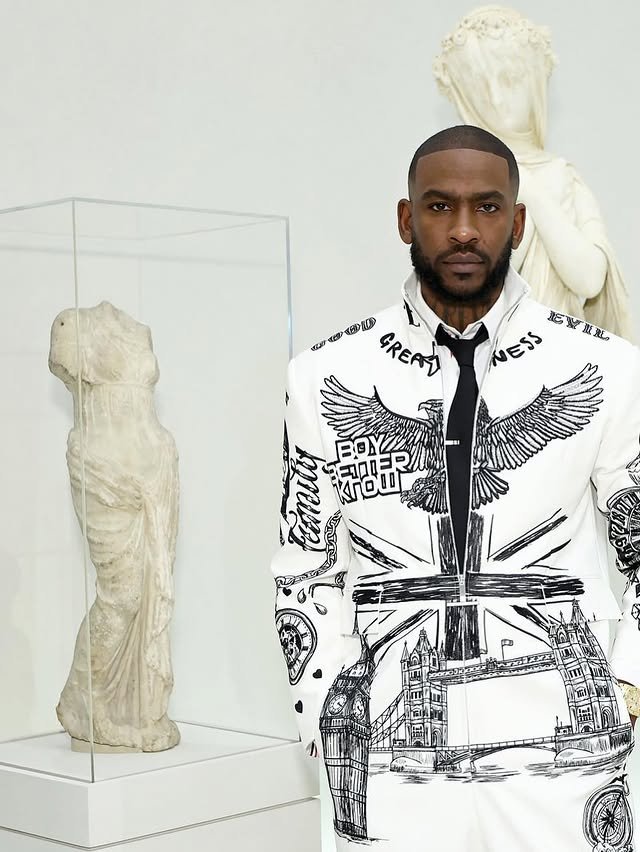
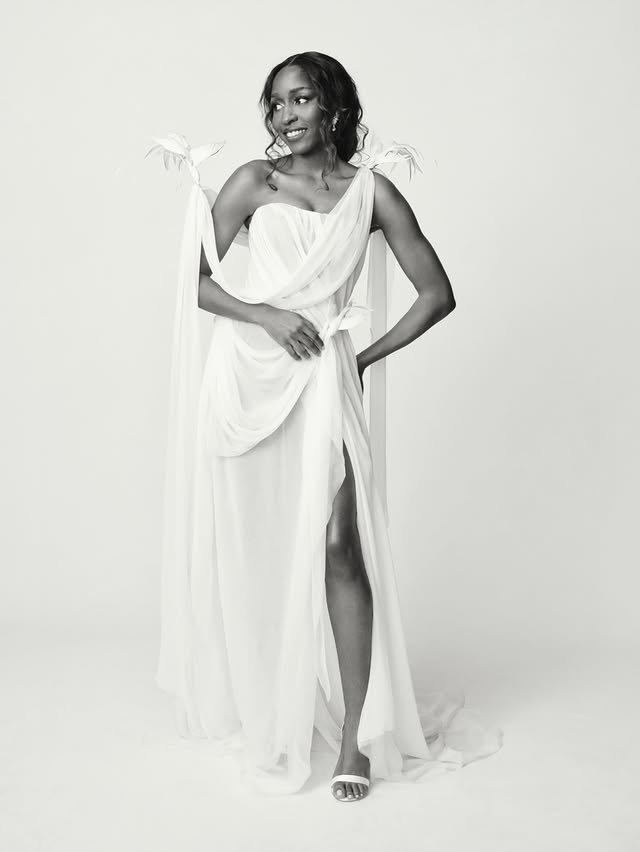
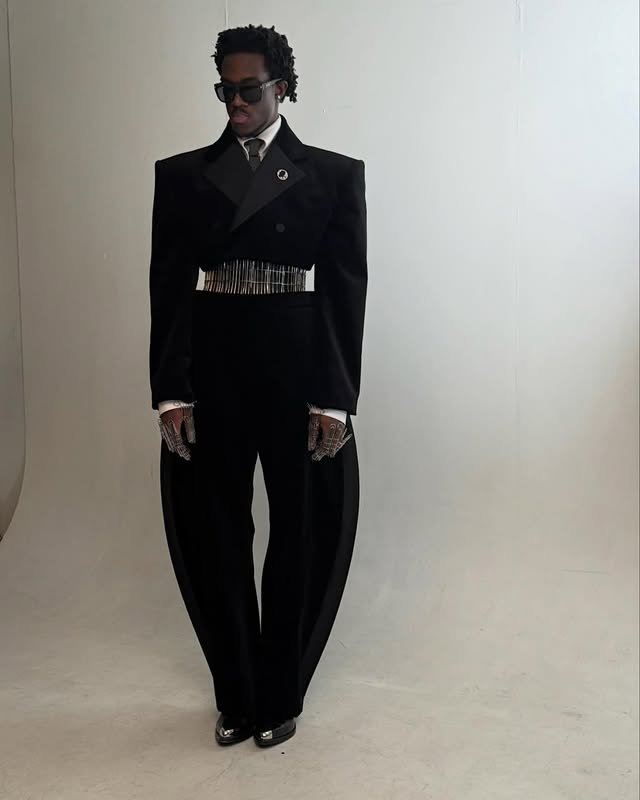
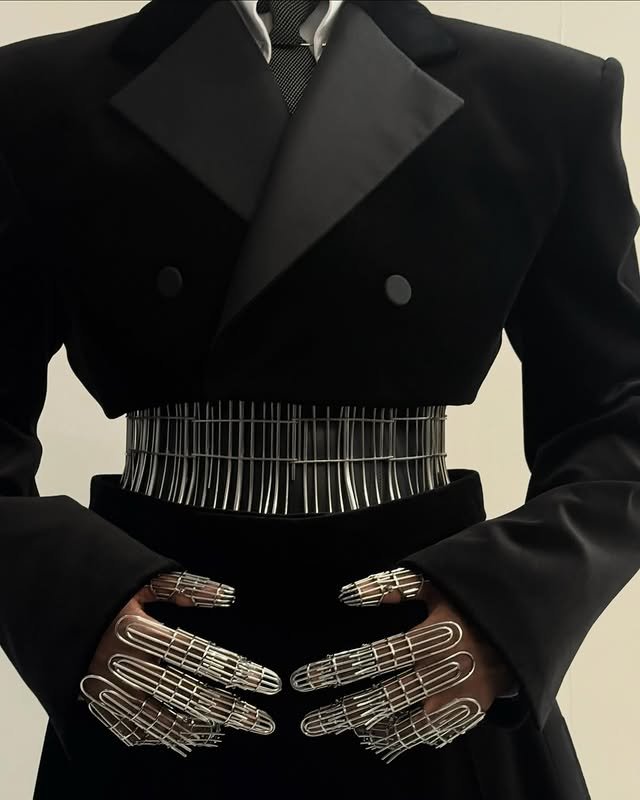
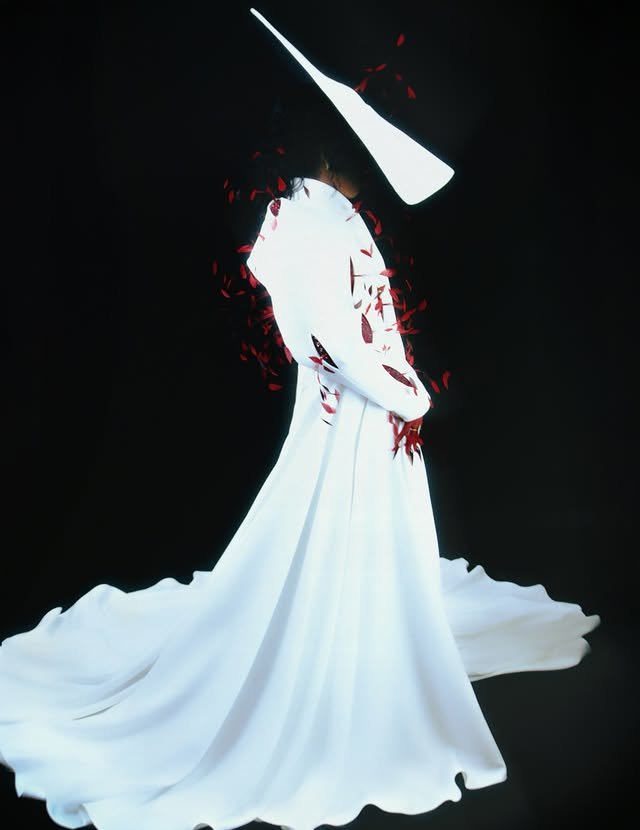
At the 2026 Met Gala, under the theme “Fashion is Art,” the red carpet leaned fully into transformation. Bodies were sculpted, extended, abstracted into form. Fabric behaved like skin. Skin became surface. For some, that read as costume. For others, it felt like embodiment.
Because long before fashion houses framed the body as medium, it had already been working that way, holding meaning, carrying memory, communicating without needing explanation.
Across African and diasporic traditions, the figure has long existed as a site of inscription: marked, adorned, shaped to say something. Through scarification, beading, draping, hair, and ritual adornment, it signals identity, status, transition, belonging.
Some of the night’s most compelling looks understood that instinctively.
Doechii delivered one of the clearest executions of the theme in custom Marc Jacobs. Draped in deep burgundy, her figure was partially revealed, partially wrapped, grounded by bare feet and traced with henna across the skin. Styled by Sam Woolf, the look resisted over-polish. It stayed close to the body, textural, tactile, human.
The henna is where it sharpens; it turns the surface into language. If the theme asked for fashion as art, Doechii answered with the body as medium.
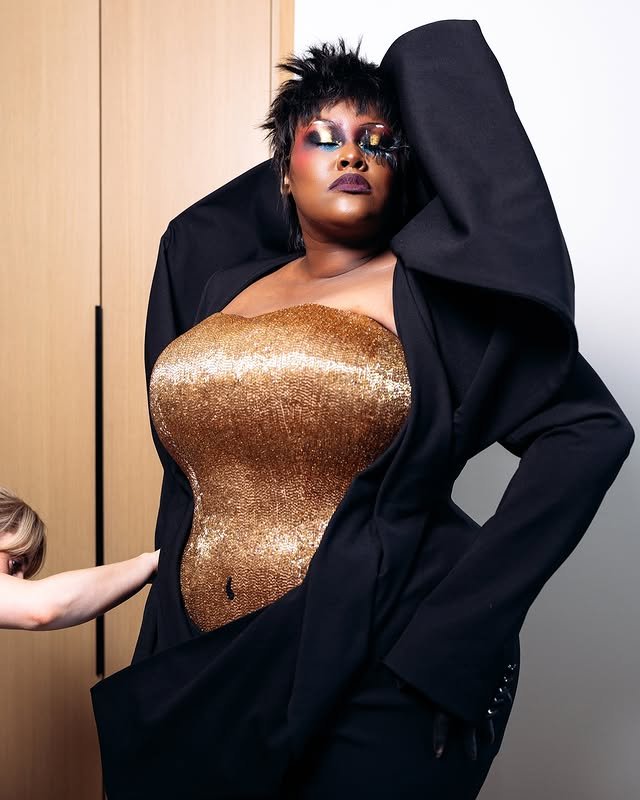
Then there was French-Cameroonian artist Yseult, easily one of the night’s strongest moments, in custom Harris Reed. The look opened in sculptural black volume before revealing a gold beaded bodice, dense, luminous, and gleaming under the light. The drapery echoes her presence outward, while the beading pulls focus back to the figure.
Beadwork across African traditions has long worked this way, drawing attention, carrying meaning, signaling importance through placement and density. Nothing arbitrary, everything intentional.
Nigerian tech founder John Imah introduced a disruptive kind of approach through afrofuturism. His presence bridged “Costume Art” with something often left out of the conversation: technology as extension of the body, not replacement of it. Sitting at the intersection of innovation and heritage, drawing from Nigerian visual language while pushing it forward through tech integration. In one look, tradition went from static to adaptable, and that matters, because African design is often referenced in terms of past and origin, but less often in terms of future. If others used bodies as a canvas, this was the body as interface.
When Ciara arrived in a Nefertiti-inspired moment that leaned into one of the most enduring visual archetypes of African femininity, there was an audible gasp. The widely recognized reference landed. Because Nefertiti is not just an image, she’s an icon. The elongated neck. The verticality. The poise. It’s a reminder that the body itself can carry authority before a word is spoken. Ciara truly embodied that.
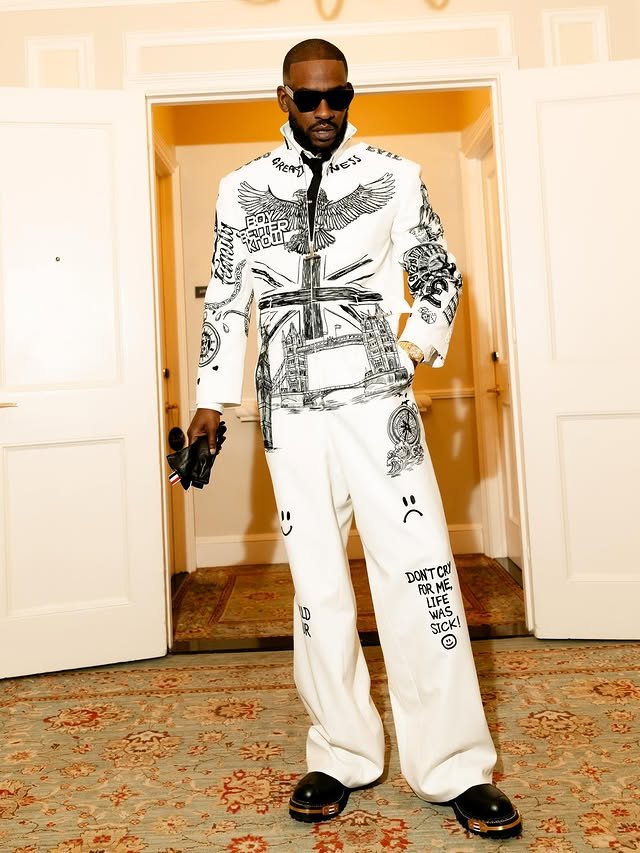
Throughout the night, Doja Cat in sculptural Saint Laurent, styled by Brett Alan Nelson, continued to push the body toward something surreal. Molded, reimagined, slightly unhuman. Skepta, in a custom Thom Browne number, stayed rooted in the body as record, keeping score of all his actual tattoos replicated throughout the ensemble.
Across the carpet, that same level of intention carried through: Anok Yai, statuesque in Balenciaga, while Tyla delivered another polished moment in Valentino; Adut Akech arrived dressed in Thom Browne, owning the silhouette as she carries new life. Ayo Edebiri kept things ethereal and atmospheric in custom Chanel.
Damson Idris added a sharp, tailored edge in Prada, finishing the look with jewelry of his own design, while Wisdom Kaye leaned fully into structure with a reconstructed Public School look.
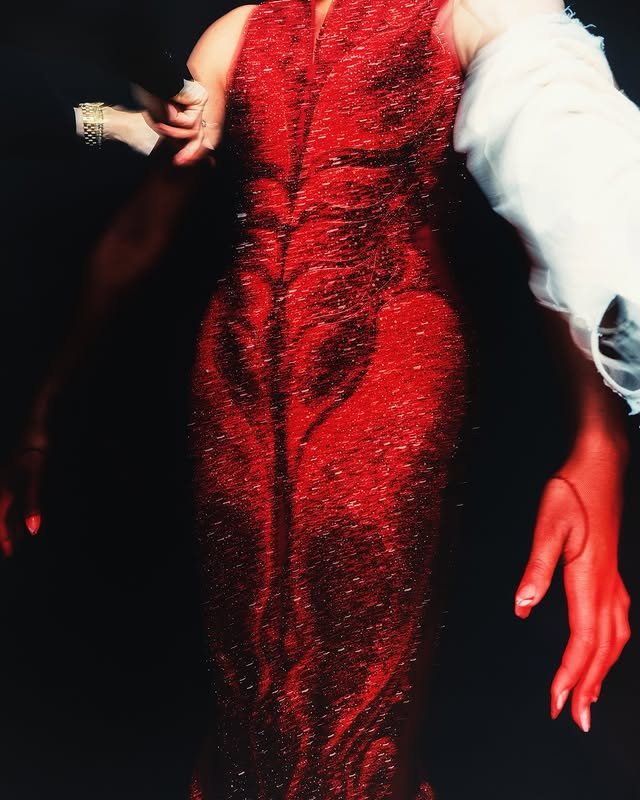
Naomi Osaka stepped into transformation in custom Robert Wun, her look unfolding through layers of anatomy and movement. The throughline across these moments sits in how bodies hold art, a message with meaning, because “Fashion is Art” only lands when the form is part of the process.
Writer: Anita Hosanna