South Africa’s electronic underground has never stayed still. Across Durban, Johannesburg, Cape Town, Pretoria, and the Eastern Cape, artists and producers have spent years bending, mutating, and rebuilding club music on their own terms.
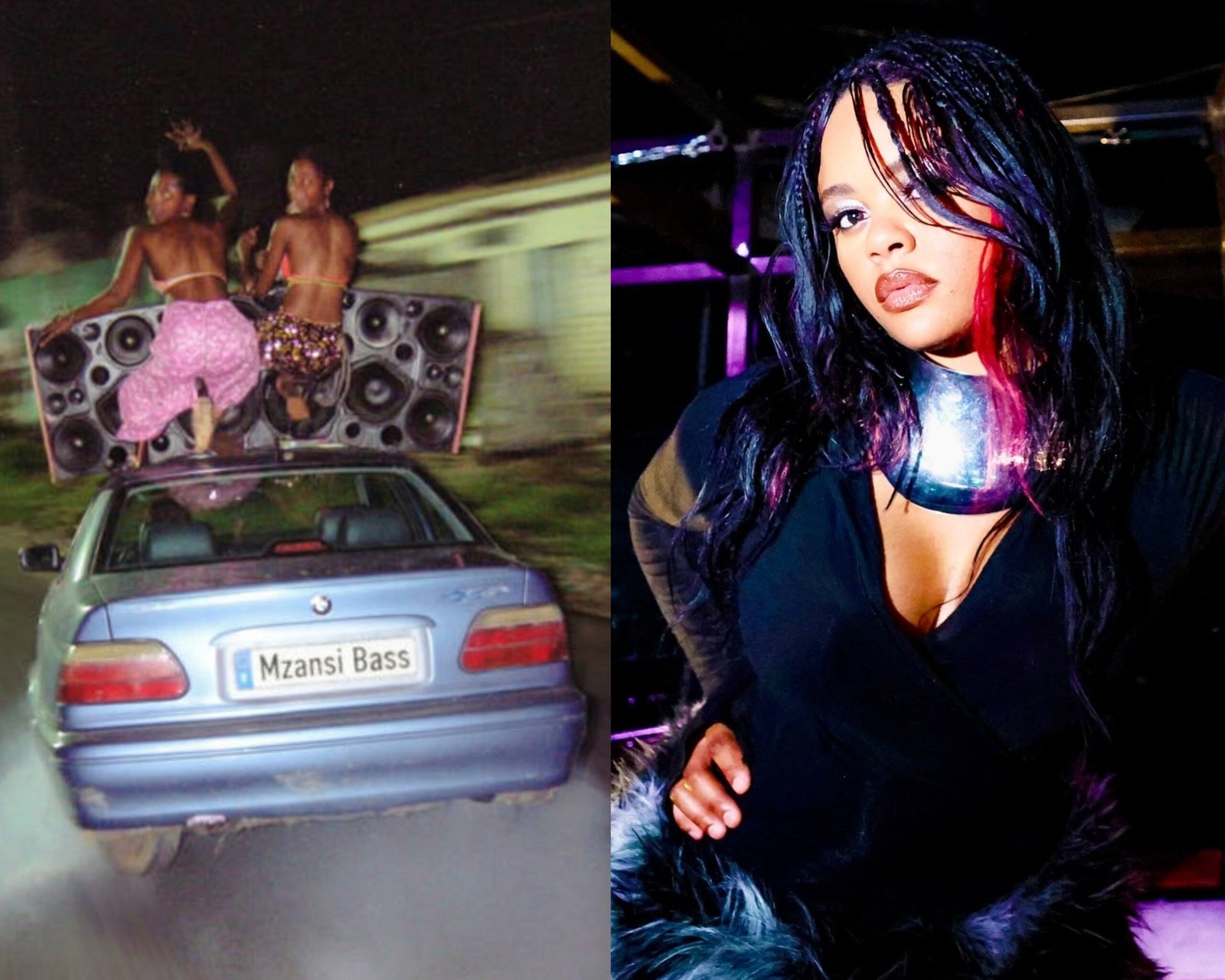
Gqom was born in the local scene of Durban and eventually traveled around the world. Amapiano also became a global phenomenon, while its darker and more experimental mutations continue to develop away from the mainstream. It is this restless ecosystem that Mzansi Bass, curated by London based creative Shannen SP, seeks to document.
The compilation is the first release in TraTraTrax’s new Sampler series, and rather than attempting to define a new genre, Mzansi Bass is experimental, collaborative, deeply local, and connected to the wider world.
Its title provides the project’s simplest explanation. “Mzansi” roots the compilation firmly in South Africa, while “Bass” describes the sonic language connecting its disparate worlds from Gqom, Amapiano, and 3-step to ballroom, jungle, dubstep, UK bass, and baile funk.
“Mzansi Bass captures the punk / DIY energy that exists in South African underground electronic music,” Shannen SP tells Rolling Stone Africa, “anchored in experimentation, mutating genres, informal distribution networks, and the invention of hybrid styles at such a rapid rate with bass at their core.”

The compilation arrives at a moment when South African electronic music is visible internationally, but Shannen is deliberately looking beyond the sounds that have become most familiar to global audiences.
From the beginning, she wanted the project to center on artists pushing the boundaries of bass and soundsystem music rather than simply presenting another snapshot of the country’s most commercially recognizable exports.
“I wanted the project to center artists pushing the boundaries of bass and soundsystem music in South Africa and go beyond genres that may be seen as more mainstream in Europe, like Amapiano and Afrotech,” she said. “The compilation always had to represent the Black African rave culture coming out of South Africa and also push collaborations with artists from outside the country.”
Shannen specifically wanted to highlight new developments in 3-step, Gqom, and South African club music while resisting the temptation to make the project sound immediately accessible to European dance audiences.
“It was really important to include new developments in 3-step, gqom, and S.A. club music, rather than mainstream styles, and show new audiences that the underground is very alive in the country,” she explained.
The compilation brings together established figures such as DJ Lag with younger and emerging voices, including Jay Music, while creating space for artists who operate between genres and scenes.
For Shannen, placing different generations next to one another wasn’t simply a matter of representation. It was about allowing distinct artistic identities to collide.
“I think it’s really important,” she said. “Jay and DJ Lag both have really distinct sounds. You can always tell when it’s their track. Each artist on the compilation has brought something unique to the project.”
Among those artists is Barbieszn, whose contribution explores the meeting point between Gqom, Ballroom, and Pritori rap. Brazilian-Dutch vocalist and producer Lyzza connects with Cape Town producer Boniface on “Favelas,” creating a collaboration that might never have happened without the compilation.
“Those are two artists who may never have come across each other if it weren’t for this project,” Shannen said. “And they made something really iconic.”
That cross-cultural exchange reflects the larger journey of South African club music itself. Sounds that emerge from highly localized contexts can travel thousands of kilometers, mutate in new environments, and eventually return with entirely different meanings.
Gqom is one of the clearest examples. Its sparse percussion, unconventional rhythms, Zulu-language vocals, and resistance to the conventions of Western dance music helped establish a sound that could not easily be absorbed into existing electronic categories. Yet its influence has traveled globally, becoming part of conversations around experimental club music from Europe to South America.
For Shannen, this movement between local identity and global mutation is fundamental to understanding Mzansi Bass. Shannen worked with visual artist Unkle Luc on artwork inspired by ideas around Black Surrealism, technology, and what she describes as a “third” or “hybrid” zone.
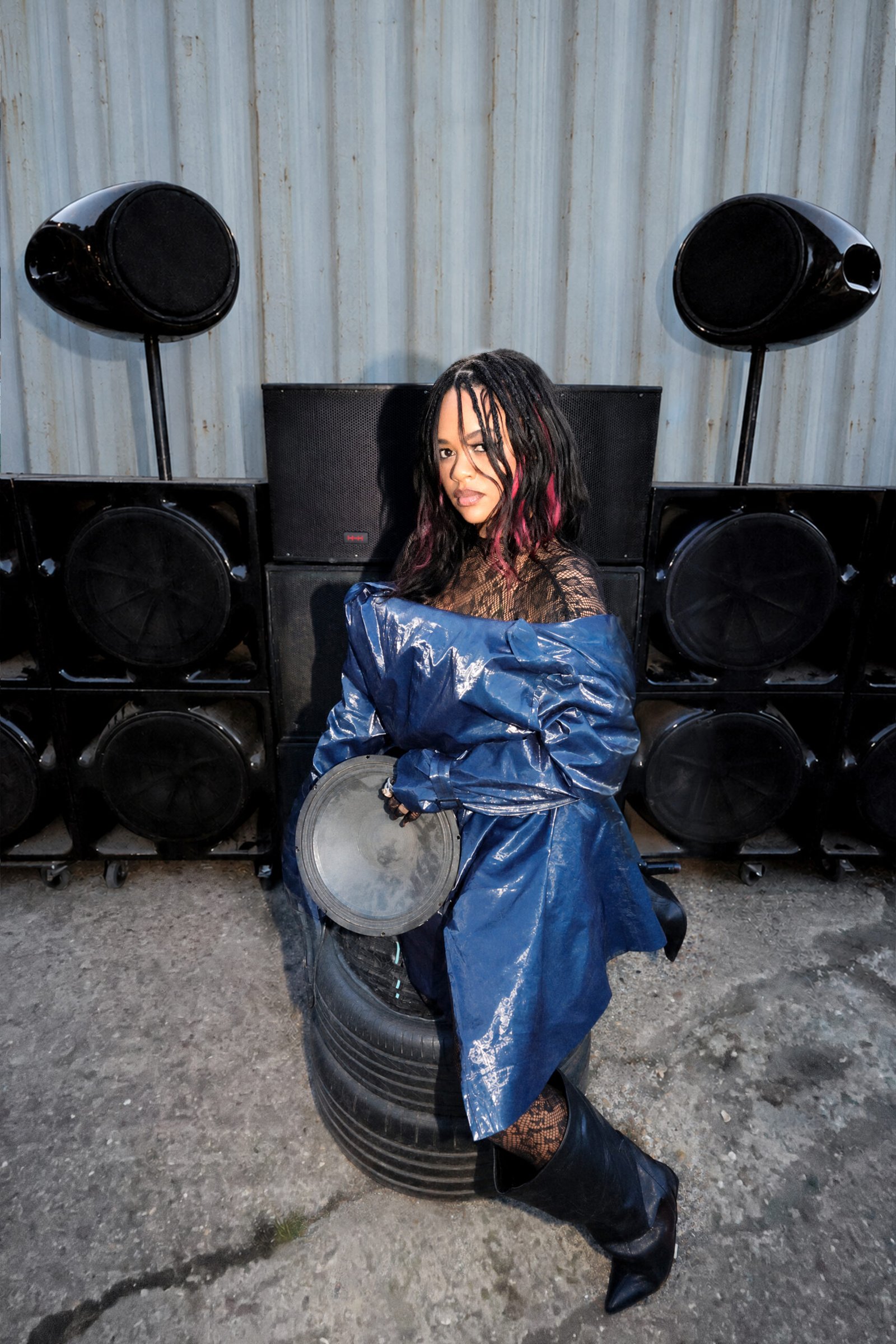
“When the artwork began to develop a natural synergy with the music, and the visual language became aligned with the sonic identity of the project, the narrative started taking its form,” she revealed.
That idea of hybridity runs through the entire compilation. It can be heard in the meeting of Gqom and Ballroom, the mutations of Amapiano, the relationship between South African bass music and the legacy of Black British electronic music, and the incorporation of sounds from Brazil and the Netherlands.
Rather than treating these influences as isolated genres, Mzansi Bass considers them part of a larger conversation about how Black musical cultures continually reinvent rhythm, technology, and the dance floor.
Shannen’s own listening history helped shape that perspective. One of the records that significantly altered her perception of what the compilation could become was Hennybelit’s Xhosa Rockstar. To Shannen, the project represented something akin to deconstructed club music—but through a distinctly South African lens.
“I was like, wait, this is one of the most interesting projects I’ve heard in a while… like, this also exists!” she recalled.
Her experiences playing alongside artists such as Mala, one of the foundational figures in dubstep, further prompted her to consider the relationship between South African underground styles and Black British electronic music.
Those encounters helped recontextualize the sounds she was hearing and eventually drew her toward the collection of artists who would become part of Mzansi Bass.
“I just asked everyone to experiment and step outside of their comfort zones and go deep and dark with it because this compilation would be a safe place for that,” she said.
Calling Mzansi Bass a genre would miss the point. Its identity is less about a specific BPM, drum pattern, or production technique and more about a shared approach to making music.
The project acknowledges South Africa’s musical history while refusing to treat that history as fixed. It recognizes the pioneers while making room for artists who are still inventing their own language, and it connects deeply local sounds to a global electronic underground without stripping them of the contexts from which they emerged.
For Shannen, that sense of possibility is ultimately what she wants listeners to take away from the project.
“I hope it tells them about the potency of Black African rave music coming out of the country and the continent on the whole. Dance music doesn’t have to be 160 BPM to be transportative and euphoric. I hope they pick up on a constellation of ideas rooted in fluidity and collective creation,” she said.
Tracklist:
Shannen SP x HENNYBELIT – Mzansi Bass
DJ Lag – NOPS
State OFF – Alarm
LYZZA x Boniface – Favelas
Jay Music – Midnight Session
Deep Narratives – Ghetto Gong
Audio Addicts – Stjwetla Revisit
Barbie SZN – GTI
Listen to Mzansi Bass Compilation HERE
Credits:
Photographer: Delusional Film
Creative Direction: Casper Grey
Styling: Rain
Photo Edit: Casper Grey
MUA: Anete