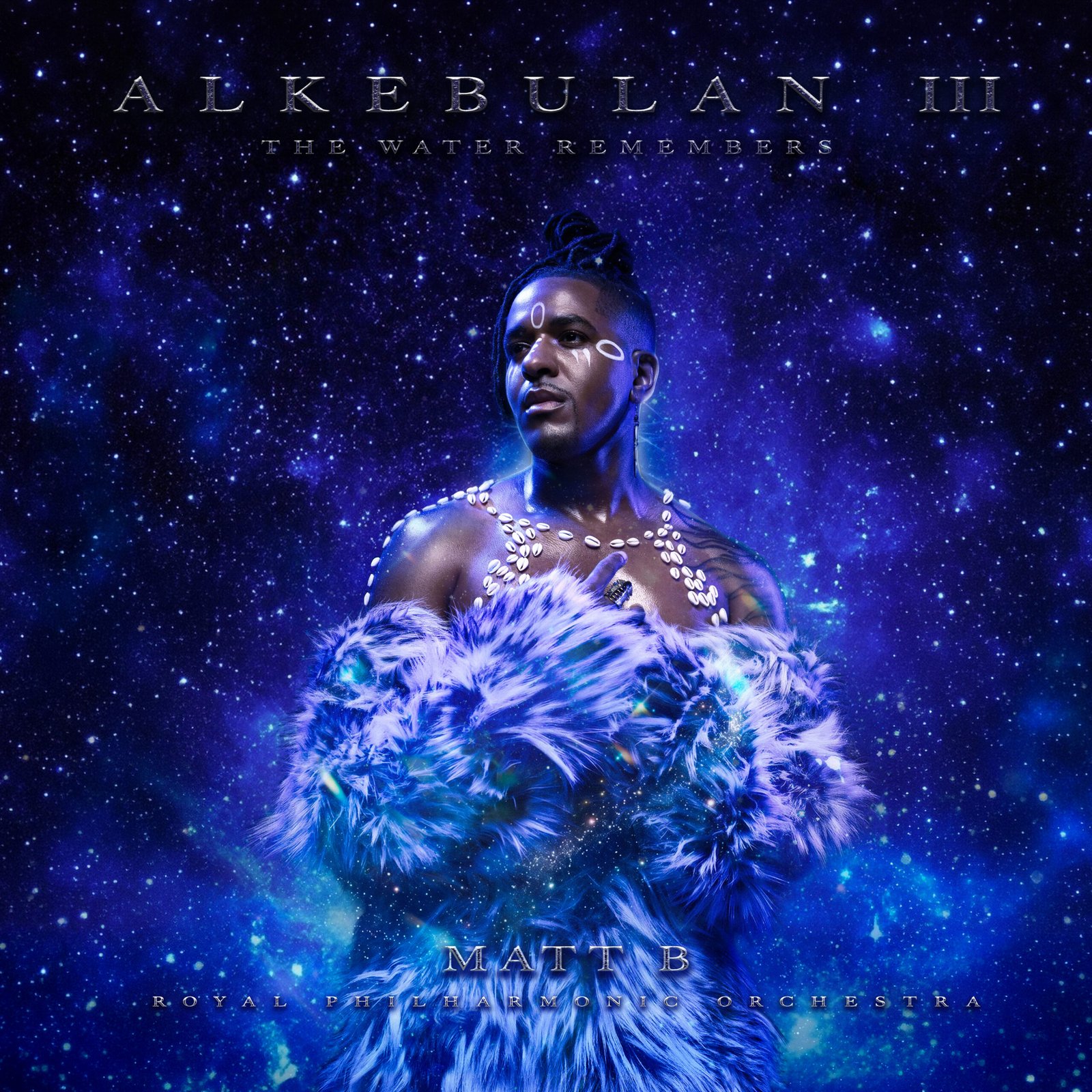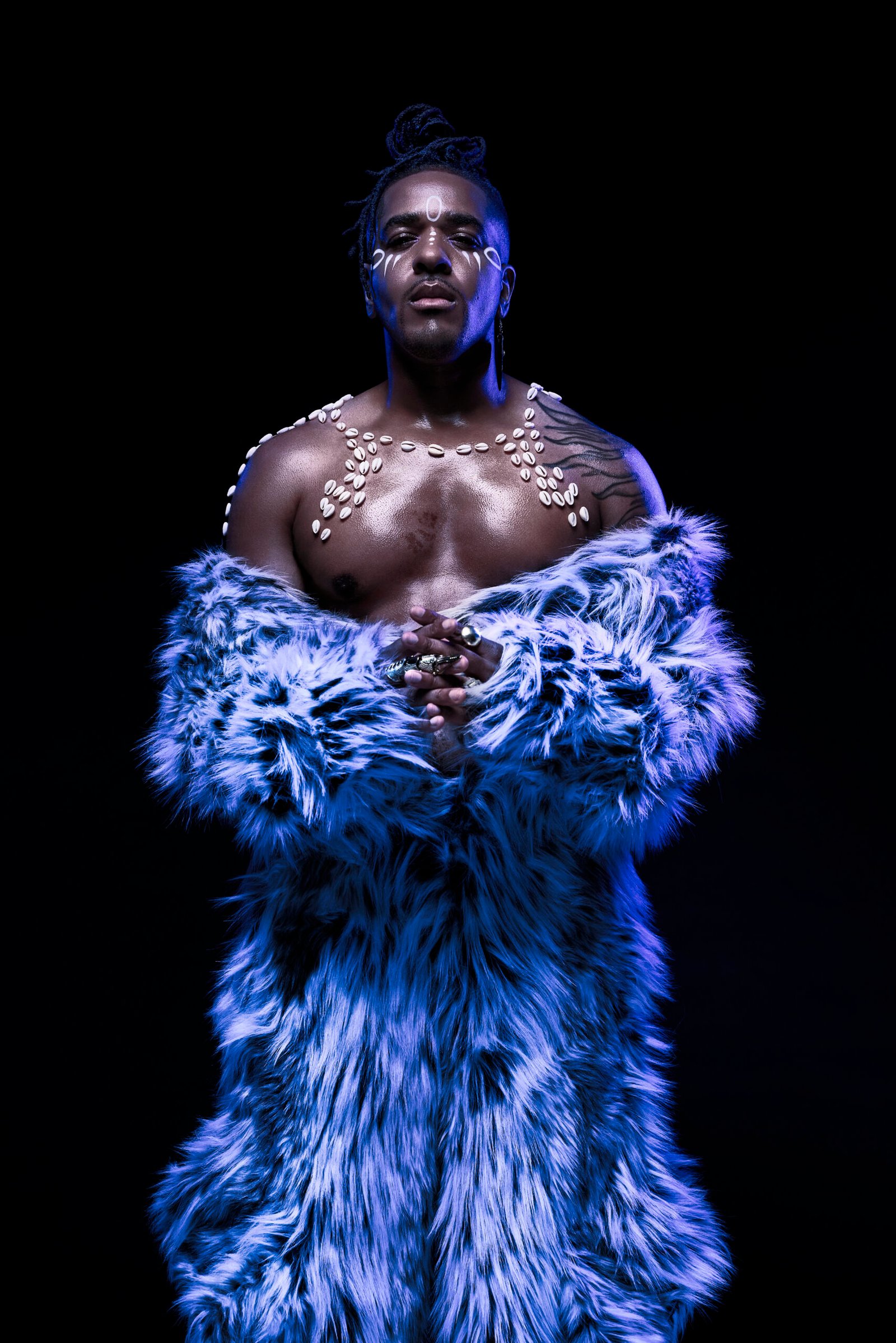
No matter how far water travels, it can never forget its source. That idea sits at the heart of Matt B’s ‘ALKEBULAN III: The Water Remembers,’ the third and final part of his ALKEBULAN trilogy. The trilogy began with ALKEBULAN in 2023, as the Chicago-born singer, songwriter, and producer turned his artistic gaze toward Africa. Its second chapter, ALKEBULAN II, deepened that exploration and earned Matt B the 2025 Grammy Award for Best Global Music Album.
Now, on August 21, the Grammy winner released ALKEBULAN III: The Water Remembers, the trilogy’s concluding part. While the earlier albums explored broader ideas around Africa and the diaspora, the new project turns its focus more specifically toward Nigeria and Matt B’s Igbo ancestry. The album arrived after a DNA test that began as an attempt to understand his ancestry eventually led him to the Igbo people of Owerri, Imo State, and a subsequent journey to Nigeria, where he was welcomed by a community that gave him a name, titles, and a better understanding of himself.
“The idea behind ‘The Water Remembers’ is that water has memory. It retains something of what happens to it, whether good or bad. When you consider that the human body is predominantly made of water, that concept becomes incredibly profound to me,” Matt B told Rolling Stone Africa. But The Water Remembers is not simply the story of a man discovering where he came from. The 10 track album expands the singer’s personal experience into a bigger story about Africans who were violently separated from their homelands, the traditions and memories that survived that rupture, and the descendants who are still trying to understand what was carried across generations.
The album begins with a song about separation, ‘At The End Of The Door,’ featuring Kabusa Oriental Choir, and ends with a reconnection song, ‘The Water Remembers,’ featuring Kabusa Oriental Choir and Martial T. Batchamen. ‘At The End Of The Door’ draws from the history surrounding the Door of No Return and the transatlantic slave trade, establishing the rupture at the center of the album. But Matt B deliberately refuses to let that rupture define the entire African story. “Our story did not begin with slavery,” he said.
The album therefore does something important after beginning at the point of forced separation. It looks backward. Before displacement, there was community. There were traditions, spirituality, agriculture, music, family, celebration, and belief. There were people whose identities did not begin when they were captured and whose lives cannot be understood only through what was done to them. The Kabusa Oriental Choir is central to this idea. The Nigerian ensemble appears on the opening track and returns throughout the album on “Overboard,” “Fertile Ground,” and the closing title track.
Matt B does not see them only as collaborators. He sees them as a representation of the ancestors themselves. “Throughout the project, they become a physical representation of my ancestors,” he said. “They are the voices guiding me through this journey, reminding me of where I come from and ultimately helping lead me back home.” Their recurring presence gives the album a sense of continuity. The voices that accompany the listener at the moment of separation are still there at the moment of reconnection.
Other artists featured in the album include Boy Spyce, Skales, Goya Menor, Fatoumata Diawara, and The Cavemen. The track “Iri Ji,” featuring Boy Spyce, draws from the Igbo New Yam Festival, a celebration of harvest, community, and gratitude. But the song is part of a broader discovery Matt B made during his journey to Nigeria. He remembered encountering the kola nut tradition, where it was presented as a gesture of honor, hospitality, and respect. “What I began to understand is that these traditions aren’t simply ceremonial acts. They carry history, meaning, and memory from one generation to the next,” the singer revealed.
The more Matt B encountered those traditions, the more his understanding of ancestry shifted. He told Rolling Stone Africa that he wasn’t simply learning about Igbo culture anymore; he was recognizing himself within it. “The traditions, language, ceremonies, and symbolism became part of the spirit of the entire project. Taking what I learned and putting it into the music became incredibly important because I wasn’t simply learning about Igbo culture anymore. I was recognizing myself within it,” he said.
That realization is fundamental to The Water Remembers. Matt B didn’t approach Igbo culture merely as a subject to research. He encountered aspects of it as pieces of an inheritance that he did not previously know he possessed. That inheritance was interrupted by the violence explored in “Overboard.” Featuring the Kabusa Oriental Choir, the song draws from accounts of Africans aboard slave ships who resisted captivity, including those who chose to go overboard rather than submit to bondage.
For Matt B, the story was less about death. “It became less about death for me and more about resistance, agency, and the refusal to be completely conquered,” he mentioned. That perspective changes the emotional weight of the song. The people being remembered were not simply victims of history. They were individuals whose agency survived even when nearly every other form of freedom had been taken from them.
While “Overboard” explores the refusal to surrender, “My Mother’s Song,” featuring Malian singer Fatoumata Diawara, explores another form of resistance: remembering. The song was inspired by a story Matt B heard about a young girl from Sierra Leone who was taken from her home around the time of the transatlantic slave trade.
“Before she was taken, her mother had taught her a song. She carried that song with her to the Americas and eventually passed it down to her children, who passed it down to theirs. That melody survived within her family for generations. Centuries later, her descendants were able to use the song as part of the journey to trace their family back to Sierra Leone, where they discovered that a version of the same song was still remembered.” Matt B shared.
He added, “I kept thinking about what that song must have meant to that little girl. She had been separated from her family, her homeland, her language, and everything that was familiar to her, but when she sang that melody, she could still hear her mother. It became a way of carrying home with her when she could no longer physically return to it. And generations later, the very thing her mother gave her became part of what helped her descendants find their way back.”
The Grammy winner disclosed that the ancestral memory speaks directly to what The Water Remembers is about. According to him, Fatoumata Diawara felt like the right person for the track “My Mother’s Song” because she could embody an ancestral voice without it feeling forced. “I needed someone who could embody that ancestral voice without it feeling forced, and Fatoumata has this incredible ability to communicate so much through the emotion and texture of her voice,” Matt B said.
Her voice gives the story another dimension, connecting Matt B’s Nigerian ancestry to a wider West African history and, beyond that, to the experience of a diaspora whose relationship with the continent was violently interrupted. “The Passage,” featuring Ghanaian artist Camidoh, takes that idea further by asking what Africans were able to carry with them when they were forcibly removed from their homes. Matt B was fascinated by accounts of enslaved Africans preserving seeds during displacement, including stories of seeds being braided into hair. This captures a central idea running through the album: sometimes survival exists in things so small that history barely notices them.
“I became fascinated by the ways our ancestors found to carry pieces of home into places that were completely foreign to them. There are stories and traditions surrounding enslaved Africans preserving seeds during displacement, including accounts of seeds being braided into hair. Whether through seeds, music, spirituality, language, food, or traditions, they found ways to preserve something of where they came from and pass it forward,” the singer said.
He went on to reveal that the idea connects to the larger theme of The Water Remembers. “You can remove someone from their homeland, but you cannot remove the homeland from them. Pieces of Africa survived within our ancestors and continued through their descendants, sometimes in ways we may not even consciously recognize today,” Matt B added. “The Passage” is therefore not only about movement. It is about what survives movement. The Atlantic could transport Africans away from the continent, but it could not completely transport Africa out of them.
That idea also grows into “Fertile Ground,” another collaboration with Kabusa Oriental Choir. A person can be separated from their homeland and still carry its culture. A descendant can grow up thousands of miles from an ancestral home and still feel pulled toward a place they have never known. Matt B’s journey is an embodiment of that idea. His DNA test gave him a geographical clue. Owerri gave that clue a physical reality. He selected artists from different parts of Africa because he did not want ALKEBULAN III to exist entirely through his own voice. His journey may have begun as a personal search for identity, but he wanted the final chapter to become something communal.
“Every artist was chosen intentionally because there was something in their voice, their energy, or the way they approach music that I felt belonged within this story,” he said. Each collaborator consequently adds another perspective to the album’s larger story. Skales brings confidence and movement to “Nothing Dey Pa.” Boy Spyce brings youthful energy to “Iri Ji.” Goya Menor embodies the strength and fearlessness Matt B wanted for “IGIRIGI.”
Camidoh also expands the story beyond Nigeria into another West African perspective, while Fatoumata Diawara gives “My Mother’s Song” its maternal and ancestral voice. The Cavemen then connected generations through “Children of the Sun,” while the Kabusa Oriental Choir became the recurring collective voice of ancestry. The collaborations make the album feel less like a solitary search and more like a gathering. “IGIRIGI,” featuring Goya Menor, moves from individual survival toward collective strength. Matt B describes the song as being about the power that exists when people protect one another, preserve culture, and move forward together.
During Matt B’s travels through West Africa, he repeatedly heard “no wahala,” meaning no problem or no stress. He said the spirit to live fully in spite of hardship is what the track “Nothing Dey Pa” featuring Skales stands for. He stated, “It wasn’t that hardship didn’t exist. It was that hardship didn’t seem to have the authority to take away people’s ability to live, laugh, and experience joy. That spirit becomes part of “Nothing Dey Pa.” Skales brings a confidence that reinforces the idea that survival is not simply about enduring. It is also about continuing to live, create, and claim your identity.
“If every song focused exclusively on trauma, I actually think I would be telling an incomplete story,” Matt B mentioned. That is why the album makes room for joy. It is why “Children of the Sun,” featuring The Cavemen, arrives as something close to an exhale. After moving through displacement, resistance, survival, and ancestral loss, the album pauses to celebrate life itself. “When I think about everything our ancestors had to survive for us to exist today, I don’t believe honoring them only means mourning what they endured,” Matt B clarified. “There is also something incredibly powerful about enjoying the life they fought for us to have.”
The Cavemen are a natural fit for it. Their presence connects the album’s historical concerns to contemporary Nigerian life, reinforcing the bridge between tradition and the present. Then the album returns to water. The 10th track and the last track, “The Water Remembers,” featuring Kabusa Oriental Choir and Martial T. Batchamen, closes the circle. The choir returns as the ancestral voice. Martial T. Batchamen also featured in the song representing what Matt B described as the voice of God. “Martial T. Batchamen represents the voice of God, speaking directly to me and, more broadly, to those of us throughout the African diaspora. His words carry this reassurance that, despite everything, our ancestors endured. Despite the displacement, the suffering, and the attempts to erase their identities, we were never forgotten,” Matt B said.
He further stated that “God remembers who we are, where we come from, and who He created us to be. He remembers what was done to our people, but He also remembers the strength that carried us through it. For me, it becomes this powerful reminder that even after generations of separation, there is still purpose in our story and a path that can lead us back to ourselves.” Together, those voices answer the question that has been running underneath the entire project: after generations of separation, what remains? Eventually there are connections, memories, faith, and identity.
After a DNA test identified Matt B.’s connection to the Igbo people, he traveled to the region, and the community gave him the Igbo name Ikechukwu, meaning “Strength of God.” He also received the chieftaincy titles Ahamefula, meaning “May my name not be forgotten,” and Nwanne Di na Mba, meaning “A brother in a foreign land.” For years, the ALKEBULAN project had been concerned with identity and reclaiming what had been lost. Then, in Nigeria, Matt B’s ancestral community gave him a name. And yet, one of the most remarkable parts of the story is that much of ALKEBULAN III had already been written before he made the journey to Nigeria.
When the singer arrived in Owerri, he began encountering things that felt strangely familiar because he had already been writing about them. “It felt like the music somehow knew where I was going before I got there,” he told Rolling Stone Africa. ALKEBULAN III: The Water Remembers is not simply a soundtrack to Matt B’s return to Nigeria. His return is one part of a much longer journey that had already been unfolding through his music and his search for identity. His journey gives the album its entry point, but its questions belong to anyone whose history has been interrupted.
“If there is one idea I hope people carry away from this album, it is that your story began long before you did. There are generations of people behind each of us whose decisions, sacrifices, strength, and survival made our lives possible. Understanding that has completely changed the way I understand myself because it gave me a foundation that I didn’t know I was missing,” he said. The singer does not suggest that a DNA test can answer all the questions. Instead, he asks people to become curious about the fragments that remain.
“I’m not saying everyone has to follow the same path I did or that a DNA test is going to answer every question. I’m saying to be curious. Ask your family questions while you still can. Learn the stories that were passed down. Research the ones that weren’t. Look at the traditions you grew up with and ask where they might have come from. Sometimes the things we consider ordinary are carrying more history than we realize,” he explained.
The door at the beginning of ALKEBULAN III was supposed to represent permanent separation, but the water at the end says otherwise. ALKEBULAN III: The Water Remembers is Matt B’s attempt to put that truth into music: people can be displaced, histories can be interrupted, names can be forgotten, and connections can be obscured, but something can still survive through DNA, tradition, and sometimes in a seed carried across an ocean or even in a song passed from a mother to a child.
OUR EXCLUSIVE INTERVIEW WITH MATT B

“The Water Remembers” is the album title and also seems to be the central idea holding the project together. What does water remember for you personally and how did the concept grow out of your DNA discovery and trip to Owerri?
The idea behind The Water Remembers is that water has memory. It retains something of what happens to it, whether good or bad. When you consider that the human body is predominantly made of water, that concept becomes incredibly profound to me.
Then there is our DNA. We know through fields like epigenetics that the experiences and environments of previous generations can leave biological effects that extend beyond a single lifetime. For me, there is also something much deeper and more spiritual within that idea. I believe my ancestors are alive within me—that the trauma they endured, but also their strength, resilience and spirit, have traveled through generations and are now a part of who I am.
The Water Remembers is a reflection of that belief. My journey to Owerri only strengthened it. I went from seeing percentages and regions on a DNA test to physically standing on the land of my ancestors, meeting my living ancestral line and being received by the Igbo people. My people.
In that moment, ancestry was no longer abstract or something that existed only in the past. It was alive. I could see it in the faces of my relatives, feel it in the land and recognize it within myself. To me, that is what the water remembers. Even when the mind has forgotten, something within us still knows where we come from.
The album moves through ideas of ancestry, displacement, identity, ancestral memory and reconnection. When you were making ALKEBULAN III, were you thinking about it as a story with a beginning, middle and end? If so, what journey does the 10-track sequence take the listener on from “At the End of the Door” to “The Water Remembers”?
This story is part of a much greater story: the ALKEBULAN trilogy, something I’ve been working on for the past six years. It begins with with ALKEBULAN and now concluding with ALKEBULAN III: The Water Remembers. Each album explores a different facet of my journey to understand who I am and where I come from, and this third album brings that journey full circle.
ALKEBULAN III focuses specifically on West Africa, predominantly Nigeria and more specifically, my Igbo roots. Through the sequence of the album, I wanted to create a path through song that explores the journey of my ancestors: who they were, the traditions they carried, the rupture of the transatlantic slave trade, the pain and anguish they endured, but also the resilience and hope that allowed them to keep going for generations they would never live to see.
“At the End of the Door” begins at one of the darkest points in that story. It speaks to the journey toward the Door of No Return and what came before it, immediately establishing the emotional stakes of the project. From there, the album almost takes a leap backward. I wanted to explore who my people were before they ever reached that door—their traditions, spirituality, joy, community and resilience—because our story did not begin with slavery.
As the album progresses, we move through displacement and survival, but ultimately toward reconnection. That is why ending with “The Water Remembers” is so important. What began with a door that was supposed to represent permanent separation ultimately ends generations later with a descendant finding his way back home.
So yes, I absolutely see the album as having a beginning, middle, and end. But in many ways, it is also a circle. The journey begins with separation and ends with reconnection. What was supposed to be lost forever was remembered.
“At The End Of The Door” opens the album with the Kabusa Oriental Choir, while “The Water Remembers” closes it with the choir and Martial T. Batchamen. Why was the choir important to both the beginning and the ending of this story? What do those two songs represent to you?
Kabusa Oriental Choir plays a pivotal role in the storytelling of ALKEBULAN III: The Water Remembers. Throughout the project, they become a physical representation of my ancestors. They are the voices guiding me through this journey, reminding me of where I come from and ultimately helping lead me back home.
That is why their presence at both the beginning and the end is so important. “At the End of the Door” represents this moment of separation, where my ancestors are being taken from everything they know and forced into the unknown. But those ancestral voices never disappear. They remain present throughout the journey, and generations later, they are still there to guide me.
By the time we arrive at “The Water Remembers,” Martial T. Batchamen represents the voice of God, speaking directly to me and, more broadly, to those of us throughout the African diaspora. His words carry this reassurance that despite everything our ancestors endured.
Despite the displacement, the suffering, the attempts to erase their identities, we were never forgotten. God remembers who we are, where we come from and who He created us to be. He remembers what was done to our people, but He also remembers the strength that carried us through it. For me, it becomes this powerful reminder that even after generations of separation, there is still purpose in our story and a path that can lead us back to ourselves.
Together, the choir and Martial create this connection between the ancestral and the spiritual. The choir carries the voices of those who came before us, while Martial represents the voice of God guiding and reassuring us along the way. The album begins at a moment of profound separation, with our ancestors being taken from everything they knew, and ends generations later with a message of remembrance and restoration. Despite everything that was lost, something remained: the connection to our ancestors, to God and ultimately to ourselves.
Several songs on the album connect to Igbo culture and experience. “IRI JI,” for example, draws from the Igbo yam festival, while “Fertile Ground” and “IGIRIGI” carry their own cultural and symbolic weight. What did you discover about Igbo traditions, language or history during your time in Nigeria that changed the way you understood yourself and how did those discoveries make their way into these songs?
During my pilgrimage to Nigeria, I discovered so many beautiful traditions that have been upheld for centuries within Igbo culture. From the New Yam Festival, which is this beautiful celebration of harvest, community and gratitude, to something as seemingly simple as the kola nut, everything carries meaning.
The kola nut tradition really stayed with me. When you arrive at someone’s home, it is presented as a gesture of honor, hospitality and respect. I was also given several to take home with me as evidence of my encounter and experience with the Igbo people. What I began to understand is that these traditions aren’t simply ceremonial acts. They carry history, meaning and memory from one generation to the next.
I also experienced an incredible welcoming ceremony filled with drumming, singing, dancing and celebration. His Royal Majesty Eze Engr. Chidume Okoro bestowed upon me the Igbo name Ikechukwu, meaning “Strength of God.” I was then given the chieftaincy title Ahamefula, meaning “May my name not be forgotten,” and later Nwanne Di na Mba, meaning “A brother in a foreign land,” by His Royal Highness Eze Leo Nwokocha.
All of those things were deeply symbolic to me because there is so much power in a name. That idea has existed within ALKEBULAN from the very beginning. Part of the reason I chose the name ALKEBULAN was this idea of symbolically giving the continent its name back. Then, years later, I traveled to my ancestral homeland and experienced my people giving me a name. In many ways, it felt like they were giving me my identity back, something that had been stripped away from my ancestral line generations ago.
That changed the way I understood myself. Traditions like the New Yam Festival helped inform songs like “IRI JI,” but the influence goes much deeper than referencing individual customs.
The traditions, language, ceremonies and symbolism became part of the spirit of the entire project. Taking what I learned and putting it into the music became incredibly important because I wasn’t simply learning about Igbo culture anymore. I was recognizing myself within it.
“My Mother’s Song” featuring Fatoumata Diawara is one of the album’s most intimate titles. What is the story behind that song? Who or what is “mother” in the context of the song? Your own mother, Africa, or an ancestral mother and why was Fatoumata the right person to help tell that story?
“My Mother’s Song” is one of the most meaningful records on the album for me, and it actually took several months to fully come together. It was one of the first songs I completed for ALKEBULAN III, and once I found the heart of it, it really helped establish the emotional foundation for the rest of the project.
The inspiration came from a true story I encountered about a young girl from Sierra Leone who was taken from her home around the age of nine or ten and brought across the Atlantic during the slave trade. Before she was taken, her mother had taught her a song. She carried that song with her to the Americas and eventually passed it down to her children, who passed it down to theirs. That melody survived within her family for generations. Centuries later, her descendants were able to use the song as part of the journey to trace their family back to Sierra Leone, where they discovered that a version of the same song was still remembered.
The fact that something as fragile as a melody could survive what so much else could not really stayed with me. I kept thinking about what that song must have meant to that little girl. She had been separated from her family, her homeland, her language and everything that was familiar to her, but when she sang that melody, she could still hear her mother. It became a way of carrying home with her when she could no longer physically return to it. And generations later, the very thing her mother gave her became part of what helped her descendants find their way back. To me, that is ancestral memory in one of its purest forms, and it speaks directly to what The Water Remembers is about.
So when I say “mother” in the song, I’m speaking about more than one person. There is the mother at the center of the original story, but she also became symbolic of the ancestral mother and, in some ways, the motherland itself. It is that voice from where you came from that somehow continues to reach you, even across distance and generations. That is something I think people beyond the African diaspora can connect with as well. We all have things that are passed down to us—songs, stories, traditions, expressions—that may seem small until you realize they are carrying pieces of people who came before you.
That is also why Fatoumata Diawara felt so right for this record. I needed someone who could embody that ancestral voice without it feeling forced, and Fatoumata has this incredible ability to communicate so much through the emotion and texture of her voice. There is warmth and tenderness there, but also strength, history and wisdom. When she came onto the record, it felt like that maternal and ancestral presence I had been imagining while writing the song finally had a voice.

“The Passage” with Camidoh and “Overboard” with the Kabusa Oriental Choir seem to engage directly with movement, separation and the dangers of crossing from one place to another. How much of these songs comes from your own journey of tracing your ancestry, and how much is a reflection on the history of Africans and the Black diaspora being separated from home?
Both of those songs sit at a really important point in the story because they deal with what happens after that initial separation from home. When I began tracing my own ancestry, I found myself thinking less about history in broad terms and more about the individual people who actually lived through it. These were human beings with families, traditions, beliefs and entire lives before they were taken. I wanted these songs to bring some of that humanity back into the story.
“Overboard” comes from one of the most difficult parts of that history for me to process. During the Middle Passage, there were Africans who resisted aboard slave ships, and there are accounts of people choosing to go overboard rather than submit to a life of bondage. I kept thinking about the amount of conviction it must have taken to make a decision like that. Even in a moment when virtually every freedom had been taken from them, there was still a part of themselves they refused to surrender. So the song became less about death for me and more about resistance, agency and the refusal to be completely conquered.
“The Passage” looks at another side of that experience: survival. I became fascinated by the ways our ancestors found to carry pieces of home into places that were completely foreign to them. There are stories and traditions surrounding enslaved Africans preserving seeds during displacement, including accounts of seeds being braided into hair. Whether through seeds, music, spirituality, language, food or traditions, they found ways to preserve something of where they came from and pass it forward.
That idea really connects to the larger theme of The Water Remembers. You can remove someone from their homeland, but you cannot necessarily remove the homeland from them. Pieces of Africa survived within our ancestors and continued through their descendants, sometimes in ways we may not even consciously recognize today.
My own journey of tracing my ancestry allowed me to understand that on a much more personal level. I am here because people before me survived something that was designed to sever that connection. So “Overboard” and “The Passage” explore two very different responses to an unimaginable circumstance—resistance and survival—but both ultimately speak to the same thing: there was something within our ancestors that refused to be erased.
You brought together artists from different parts of Africa. There is Skales, Boy Spyce, Goya Menor, Camidoh, Fatoumata Diawara and The Cavemen, alongside the Kabusa Oriental Choir. What did each collaborator bring to the story that you could not have expressed alone? Were there particular songs where the featured artist changed your original idea for the record?
From the beginning, I knew I didn’t want ALKEBULAN III to exist entirely through my voice. So much of what I’ve experienced throughout Africa has reinforced the importance of community and the collective, and I wanted the way I made the album to reflect that same idea. Every artist was chosen intentionally because there was something in their voice, their energy or the way they approach music that I felt belonged within this story.
Fatoumata Diawara has this incredible ability to communicate history and emotion through her voice, but she also has this beautiful free spirit that I really connected with. Goya Menor carries a strength and fearlessness that felt perfect for “IGIRIGI.” Boy Spyce represents a spirit of curiosity, while Skales brought confidence and an energy that feels almost effortless. With The Cavemen., there is a wisdom in what they do. Their music feels deeply rooted in tradition while still existing in the present, so for me they represent that connection between generations.
Kabusa Oriental Choir brought brotherhood and the power of the collective voice, and Camidoh added another dimension to the West African story that allowed the album to stretch beyond my own connection to Nigeria and the Igbo people.
The important thing was that I never wanted any of these artists to come into my world and simply do what I would have done. That would defeat the purpose of collaborating. I would create the foundation of a song and know the emotion or story I wanted it to carry, but once another artist stepped into that space, I wanted them to bring their own identity with them. There were definitely moments where someone delivered a vocal or approached an idea differently than I imagined, and suddenly I heard the record in a completely new way.
That happened especially with Fatoumata on “My Mother’s Song.” I knew what the song meant to me when I wrote it, but once I heard her voice within it, the maternal and ancestral presence I had been imagining became tangible. The same thing happened in different ways across the album. Each collaborator revealed something in the music that I couldn’t have accessed on my own.
That is what I love most about these collaborations. They didn’t come in and change the story I was trying to tell; they gave the story more dimensions. ALKEBULAN began as a very personal search for identity, but it was never meant to end with me. Having artists from different parts of Africa bring themselves into this final album allowed the project to become something much more communal, which feels appropriate for a story that is ultimately about finding your way back to your people.
“Nothing Dey Pa” with Skales, “Igirigi” with Goya Menor and “Children Of The Sun” with The Cavemen introduce different emotional and musical energies into what is otherwise a deeply reflective project. How did you balance the weight of ancestry and displacement with joy, celebration, resilience and the everyday experience of being African?
That balance was really important to me because when we talk about African history, particularly from the perspective of the diaspora, there can be a tendency to begin the story with slavery and displacement. But our history didn’t begin there, and our identity cannot be defined solely by what happened to us. There was culture, spirituality, family, celebration and joy before the transatlantic slave trade, and remarkably, those things continued to exist even after everything our ancestors endured.
I wanted the emotional range of the album to reflect that. If every song focused exclusively on trauma, I actually think I would be telling an incomplete story. Resilience isn’t only about surviving something terrible. Sometimes resilience looks like dancing. Sometimes it is laughing, creating music, building community, falling in love or simply deciding that despite everything around you, you are still going to experience the fullness of life.
That is where records like “Nothing Dey Pa” come in. Skales brings this confidence to the song that really embodies the idea that regardless of what life places in front of you, you keep moving. There is strength in being able to say, “I’m still here, I know who I am, and I’m going to continue living in that truth.”
“IGIRIGI” approaches resilience through the collective. That song is really about understanding the strength that exists when we protect one another, preserve the culture and move forward together. The more time I’ve spent in Africa, the more I’ve been impacted by that sense of community, the understanding that your identity is connected to something larger than yourself.
Then “Children of the Sun” with The Cavemen. feels almost like an exhale. It looks forward and celebrates the gift of simply being alive. When I think about everything our ancestors had to survive for us to exist today, I don’t believe honoring them only means mourning what they endured. There is also something incredibly powerful about enjoying the life they fought for us to have.
That is the balance I wanted throughout ALKEBULAN III. There is grief here because grief is part of the story. But so are joy, confidence, love, brotherhood and celebration. Our ancestors didn’t only leave us their trauma. They also left us their creativity, their faith, their humor, their traditions and their ability to find joy even in impossible circumstances. To me, that is just as important to remember.
Your return to Owerri came after a DNA test identified a connection to the Igbo people there, and you were welcomed with the names Ikechukwu, Ahamefula and Nwanne Di na Mba. Was there a particular moment during that journey that changed the album for you? Is there a specific memory from Owerri that listeners can hear somewhere in ALKEBULAN III?
What is interesting is that so much of ALKEBULAN III had already been written before I ever made the physical journey to Owerri. I had been creating from research, instinct, my experiences throughout Africa and this growing understanding of my ancestry. Then I arrived in my ancestral homeland and started encountering things in real life that felt strangely familiar because I had already been writing about them. That was probably one of the most profound parts of the entire experience. It felt like the music somehow knew where I was going before I got there. And when you listen to the album, you can find many of those easter eggs hidden in the music.
There wasn’t one single moment that changed the album as much as there was this constant feeling of confirmation. When I arrived, I was welcomed with singing, drumming, dancing and this incredible procession of people celebrating my return. I had already explored that spirit of community and celebration in the music, particularly through a song like “IRI JI,” which draws inspiration from the New Yam Festival. I didn’t experience the festival itself, but being surrounded by that communal energy in Owerri gave me a completely different understanding of what I had been writing about.
I felt the same thing with the resilience and joy of the people. Throughout my travels in West Africa, I heard “no wahala” constantly—“no problem, no stress”. It wasn’t that hardship didn’t exist. It was that hardship didn’t seem to have the authority to take away people’s ability to live, laugh and experience joy. That spirit lives inside a song like “Nothing Dey Pa.” There is this confidence that circumstances don’t get to determine who you are.
Faith was another thing that really struck me. The Igbo people I encountered had such a deeply rooted belief in the Most High, and that connected immediately to the spiritual language already present throughout the album. By the time you reach “The Water Remembers” and hear what I interpret as the voice of God, that message of being remembered and guided had become even more personal because of what I experienced in Owerri.
So when people listen to the album, they may not hear a literal recording of one specific moment in Owerri, but they are hearing the emotional echoes of that experience throughout it. That’s what makes this project so special to me. I wrote so much of the journey before I lived it, and then I went home and watched the music come to life around me.
If ALKEBULAN III: The Water Remembers could leave listeners with one idea about ancestry and identity, what would you want that idea to be? And for someone in the African diaspora who may feel disconnected from where their ancestors came from, what do you hope they discover about themselves?
If there is one idea I hope people carry away from this album, it is that your story began long before you did. There are generations of people behind each of us whose decisions, sacrifices, strength and survival made our lives possible. Understanding that has completely changed the way I understand myself because it gave me a foundation that I didn’t know I was missing.
As an African American, whether someone identifies with terms like Freedmen, Soulani or FBA, there is a very particular experience that comes with knowing that part of your history was deliberately interrupted. For generations, so many of us have been trying to answer very basic questions: Who were our people? Where did they come from? What languages did they speak? What were their names? That absence can create a feeling of being disconnected from something you know belongs to you, but you can’t quite reach.
For me, tracing my ancestry and eventually standing in Owerri changed that. I had spent years using the image of a tree and its roots when talking about identity, but this experience made that metaphor real for me. Marcus Garvey famously said, “A people without the knowledge of their past history, origin, and culture is like a tree without roots”. Finding my roots and embracing them fully gave me a stronger understanding of the person I already was.
That is what I hope someone in the diaspora takes from my journey. I’m not saying everyone has to follow the same path I did or that a DNA test is going to answer every question. I’m saying to be curious. Ask your family questions while you still can. Learn the stories that were passed down. Research the ones that weren’t. Look at the traditions you grew up with and ask where they might have come from. Sometimes the things we consider ordinary are carrying more history than we realize.
I also hope this project encourages greater understanding between Africans on the continent and those of us throughout the diaspora. Our histories have taken us in different directions, and we have built distinct cultures and identities that deserve to be honored. But difference doesn’t have to mean disconnection. There is room for us to celebrate who we have become while also being curious about what still connects us.
That is ultimately what this entire ALKEBULAN journey has given me. I went searching for where I came from and discovered that reconnecting with the past could also change the way I think about the future. My hope is that The Water Remembers inspires someone else to begin asking those questions for themselves and, wherever that journey leads them, to understand that they come from something much greater than themselves.
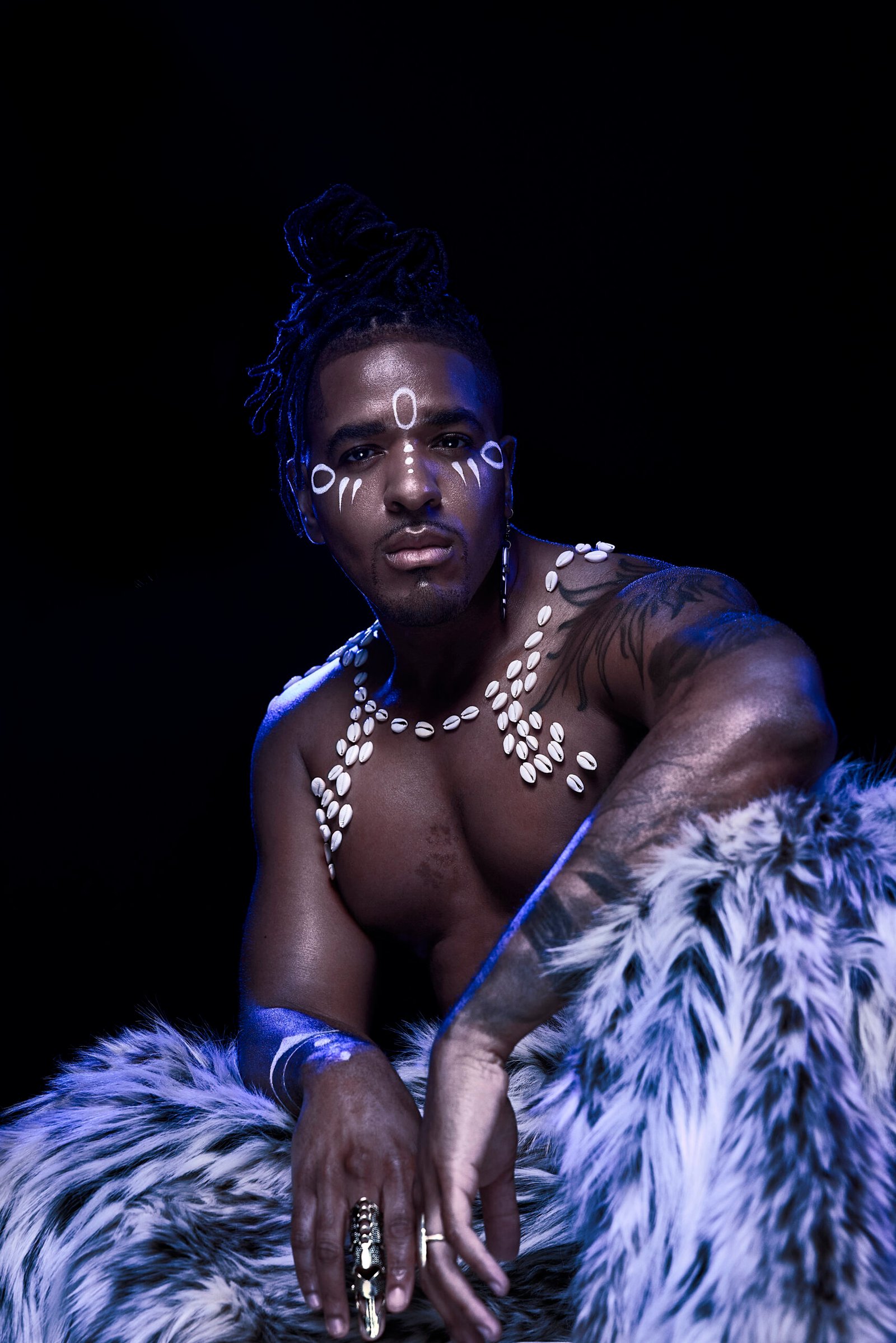
Following its August 21 release, ALKEBULAN III: The Water Remembers made it to number 1 on the US iTunes Worldwide Albums chart.
Find the tracklist below:
1. AT THE END OF THE DOOR (ft. Kabusa Oriental Choir)
2. NOTHING DEY PA (ft. Skales)
3. IRI JI (ft. Boy Spyce)
4. OVERBOARD (ft. Kabusa Oriental Choir)
5. MY MOTHER’S SONG (ft. Fatoumata Diawara)
6. THE PASSAGE (ft. Camidoh)
7. FERTILE GROUND (ft. Kabusa Oriental Choir)
8. IGIRIGI (ft. Goya Menor)
9. CHILDREN OF THE SUN (ft. The Cavemen)
10. THE WATER REMEMBERS (ft. Kabusa Oriental Choir & Martial T. Batchamen)