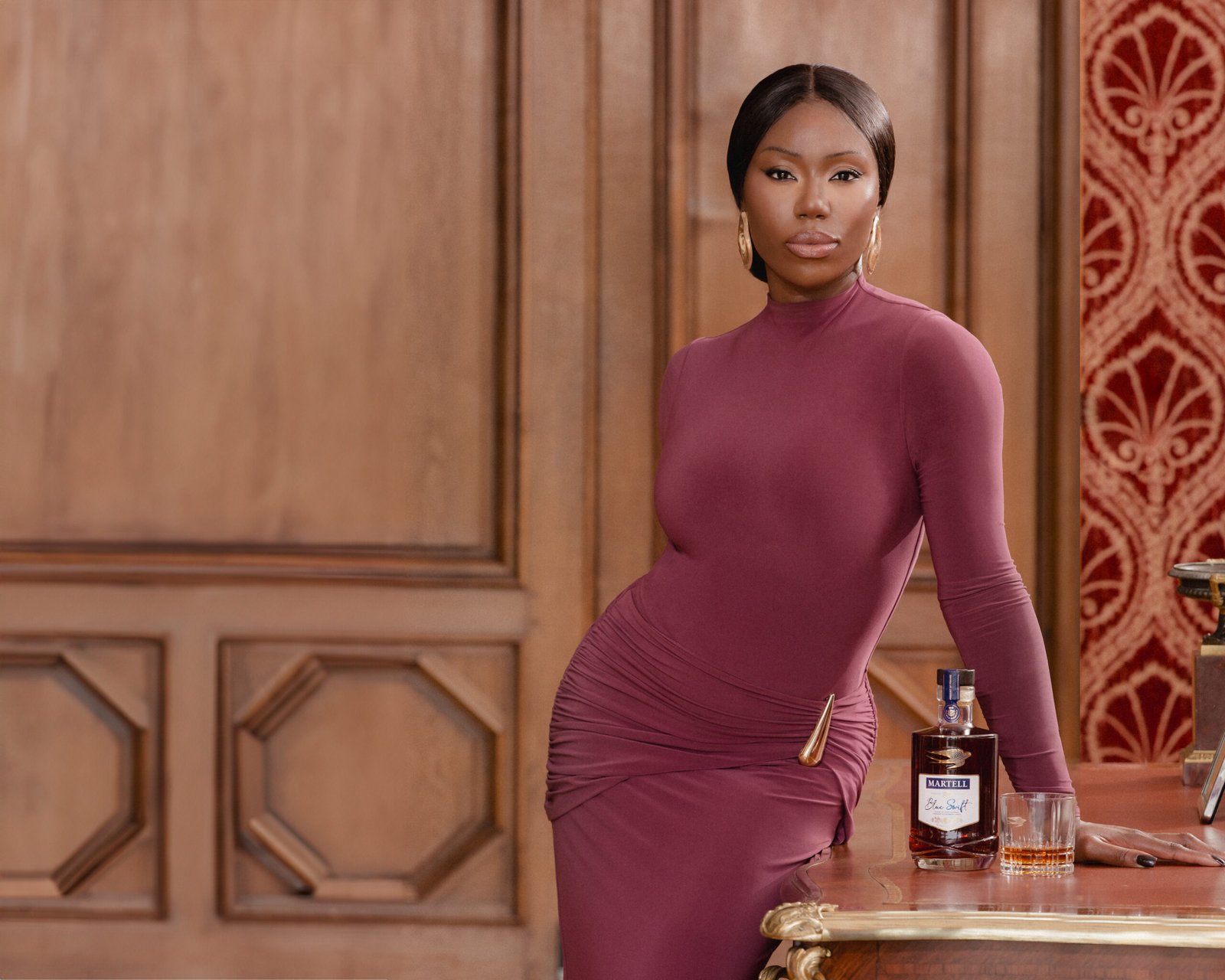
Ivie Ani is Martell’s newest culture ambassador. The Nigerian American culture journalist, who has built a career around documenting culture across the diaspora, takes a step forward by bringing that work into a new space. Her work aligns naturally with Martell, as both share a deep interest in culture and the stories, people, and ideas that shape it.
“From the outside looking in, it might seem unorthodox to partner with a brand of this magnitude and of this kind as a media professional who’s done the work I’ve done, but it’s directly aligned in so many ways,” Ani tells Rolling Stone Africa. “I’ve spent my career documenting culture across the diaspora, and joining Martell as a Culture Ambassador feels like a continuation of that work, just through a different medium.”
The appointment gives Ani the opportunity to expand her work in a new and refreshing way. Speaking on what she believes is missing from the way African culture is currently documented and represented globally and how she hopes to address that through her partnership with Martell, she emphasizes oral documentation of culture.
For Ani, cultural documentation cannot be reduced to written archives alone. A visit to the Nigerian village her mother is from gave her a deeper appreciation for the role of oral history in preserving memory. Watching generations of a family sit together and listen to their elders reminded her that some of the most important cultural records exist not on paper, but in stories passed from one generation to another.
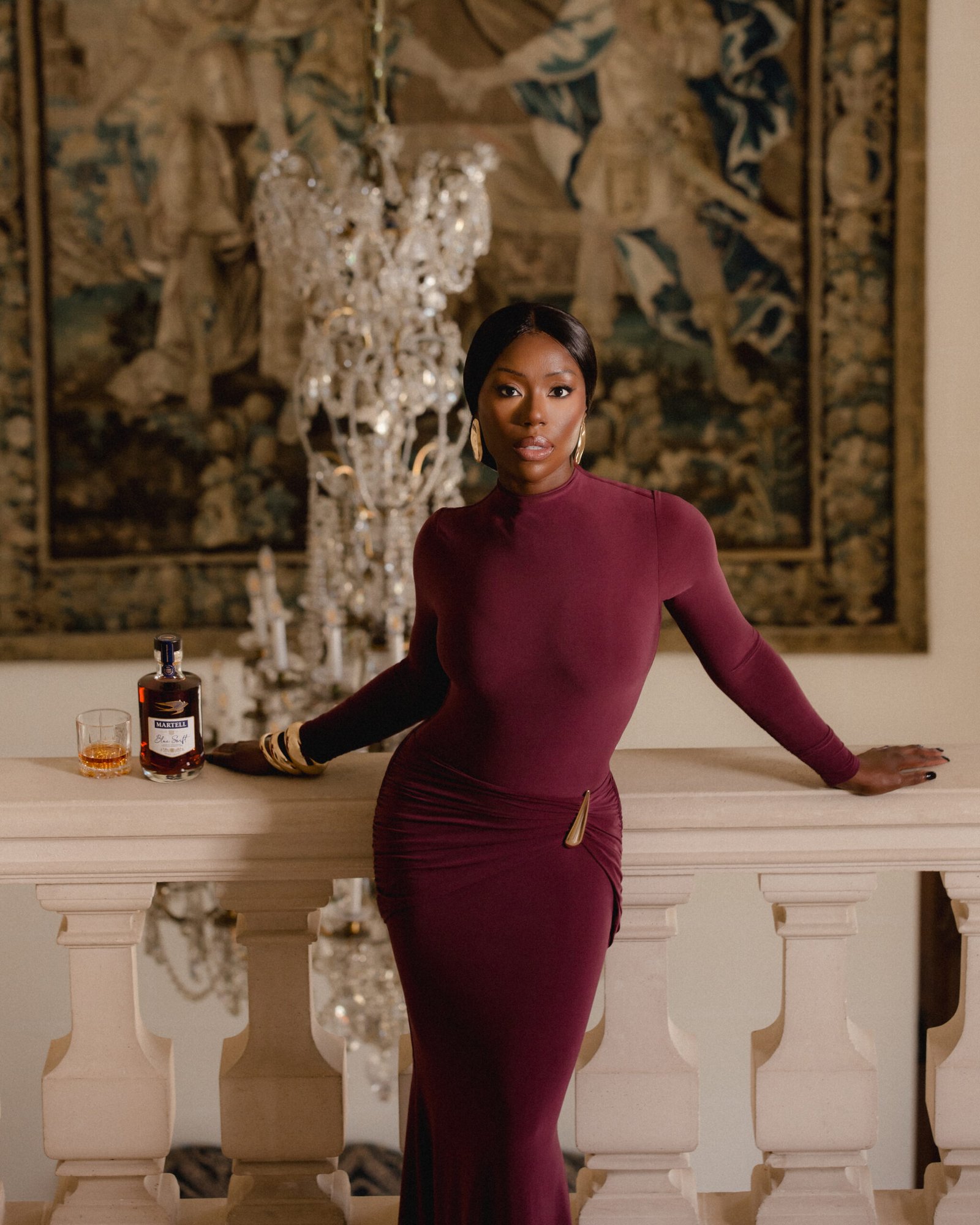
She intends to carry this idea into her work with Martell. “With my work now and my role as Culture Ambassador at Martell, there will be an emphasis on that visual and oral documentation of the artists and figures who are shaping culture today. There will be an exploration of the different pillars that comprise culture—music, history, gastronomy, language, and the arts—and all of the ways we can make culture and preserve it,” she said.
That broader lens is informed by Ani’s experience moving between the United States, Nigeria, and the wider Black diaspora. As a Nigerian American, she occupies a position that allows her to see culture from multiple perspectives, but she does not view that position simply as an identity marker. Instead, she sees it as a responsibility to translate ideas and experiences between communities and make them understandable to people both inside and outside those worlds.
“My position in between cultures and countries has helped me understand my role in translating and making ideas and concepts legible to people both in and outside of these worlds,” she stated. The culture ambassador explained that her identity informs her work without defining the entirety of it. Her interests have always extended beyond any single cultural category, but she is intentional about bringing her own perspective into her storytelling because of what it could mean for the generations coming behind her.
She said, “I’m choosing to amplify my identity and blend it with my skills in the work that I do because I do believe it can make a difference for future generations.” According to her, the ability to hold multiple perspectives is one of the things that makes cultural storytelling powerful. Rather than simplifying complex histories or communities into a single narrative, she wants to make room for contradiction, nuance, and different points of view.
“The capacity to hold and see multiple perspectives makes storytelling multidimensional and more robust to me. It makes it more real,” she explained. This is relevant to her work around Afrobeats, which she sees as one of the most important cultural movements of the present moment. As African music continues to move through global charts, festivals, fashion, film, and pop culture, Ani believes the conversation needs to acknowledge that Afrobeats has grown beyond the boundaries of genre. “The particular focus on Afrobeats music and culture is critical right now as people recognize that it is more than music; it’s a movement,” she said.
As part of Martell’s Culture Ambassadors platform, Ani hopes to connect music with the broader cultural forces surrounding it, bringing together creative intellectualism, curation, tastemaking, and storytelling. Her focus, however, will not be limited to the artists whose names dominate headlines. She wants to identify the architects and trailblazers who have helped build the culture, including lesser-known voices whose contributions are already shaping what comes next.

“I want to spotlight the familiar faces and the lesser-known voices in the conversation,” she said. “The architects and trailblazers within this community have stories and art that resonate both in and beyond their worlds, and that is important to canonize in real time.” For Ani, the idea of “canonizing” culture in real time is critical. Cultural history is often written retrospectively, with decades passing before certain artists, movements, or communities are fully understood and acknowledged for their influence. She wants to document those contributions while they are happening, allowing the people who are building culture today to have a voice in how their stories are remembered tomorrow.
This is the reason why her philosophy around tradition is not simply about preservation; Ani believes that tradition should be respected but not treated as untouchable. “I believe in upholding tradition and breaking it when necessary. Innovation to me can either disrupt tradition or keep it alive,” she mentioned. Her hope is that the next generation of journalists and culture writers will understand that there is no single path to building a meaningful career in media. The industry may continue to change, but the skills of reporting, storytelling, curiosity, and cultural understanding remain necessary.
Ani has admiration for those who continue creating and documenting culture regardless of whether they have a major platform, institutional title, or financial investment behind them. In her words, “I respect when independent media workers lock in and do the work they know needs to be done with or without a job, a title, a platform, or an investment.”
That is part of what makes Martell’s decision to bring an independent media professional like her into its Culture Ambassadors program meaningful to her. The partnership, in her view, shows that established brands can play a role in supporting the people responsible for documenting and interpreting culture not just by giving them a platform, but by investing in their expertise and perspective.
“A prestigious legacy brand like Martell backing an independent media professional is important to see right now because I know it’ll give younger journalists and media workers reshaping their careers hope for what is possible,” she said.
Martell’s Culture Ambassadors platform previously welcomed Adesope Olajide, known as Shoopsydoo, and Abdul Abdullah in 2025. Ani now joins the program as a voice whose work has long existed at the intersection of media, music, and cultural identity, bringing a perspective shaped by both her Nigerian heritage and her experience within the American and wider Black cultural landscape.