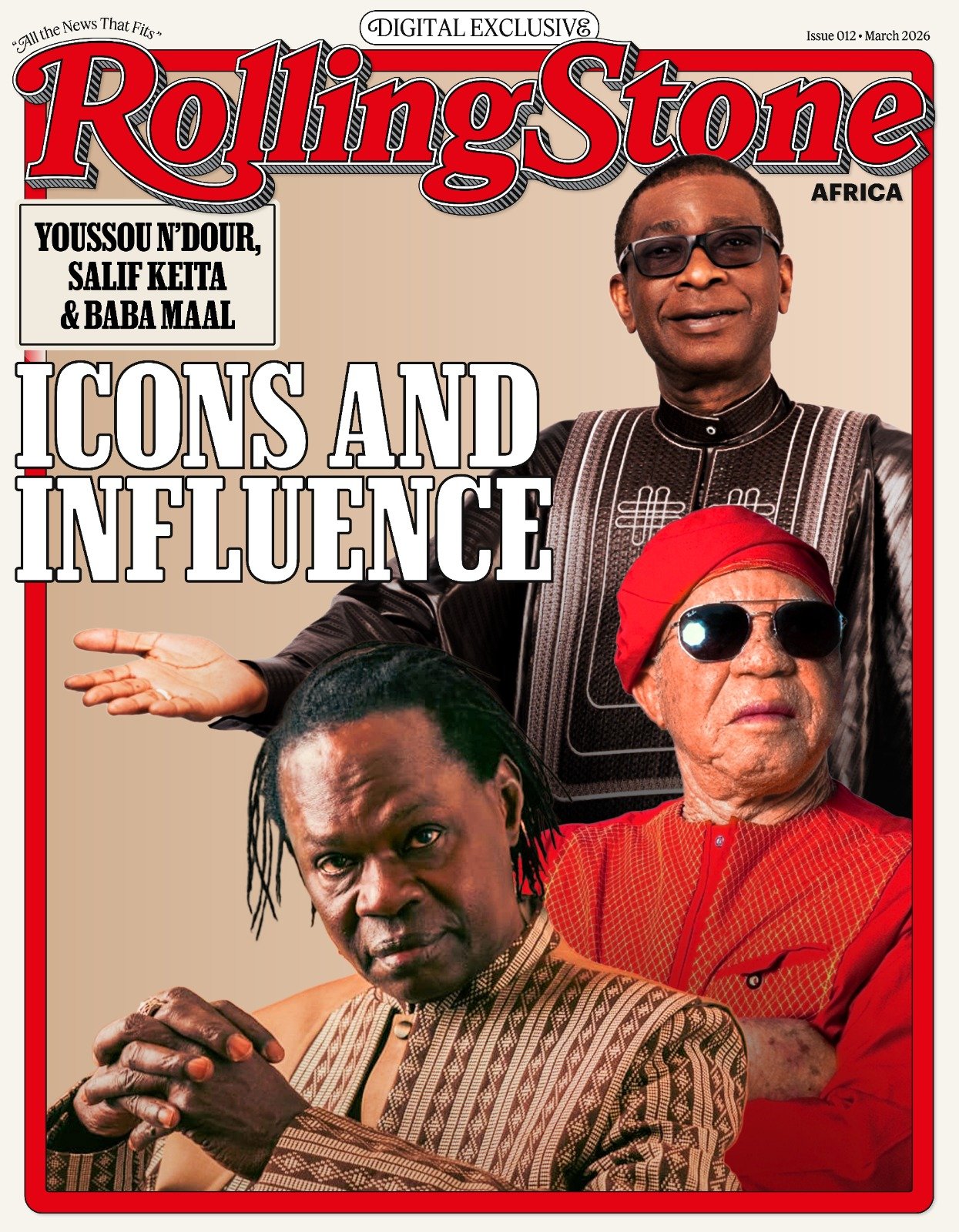
Baaba Maal, Salif Keita, and Youssou N’Dour belong to a rare lineage of musicians whose voices have not only shaped sound, but history itself.
Across decades, borders, and generations, these three icons have carried Africa with them, faithfully, unapologetically, and powerfully. They did not follow global trends; they defined them. They did not dilute their identities to be understood; they expanded the world’s understanding of Africa.
Each, in his own way, represents a pillar of what African music has become, and what it has always been.
Baaba Maal stands as a guardian of tradition and a master of evolution. Rooted in the Peulh culture of northern Senegal, his music carries ancestral memory while speaking fluently to the modern world. His journey has always been guided by a singular question: how to meet the world without losing oneself. And through every collaboration, every stage, every note, he has answered with unwavering authenticity, proving that cultural identity is not a limitation, but a force.
Salif Keita, often called “the Golden Voice of Africa,” embodies resilience transformed into purpose. Born with albinism in a society that once rejected him, he turned adversity into power, carving a path not only for himself but for countless others. His voice was both spiritual and deeply human, carries lived experience, compassion, and a message rooted in love. Beyond music, he stands as a symbol of dignity and advocacy, reminding the world that art can, and must, serve humanity.
And then there is Youssou N’Dour, a global architect in his own right who redefined the place of African music on the international stage. As the pioneer of Mbalax, he built bridges between Senegal and the world, tradition and modernity, rhythm and revolution. His influence extends beyond music into culture, politics, and global dialogue, making him not only an artist, but an institution.
Together, they represent a generation that reshaped the narrative of African music. From village traditions to the world’s greatest stages, and from ancestral rhythms to global collaborations, they carried their cultures, opening doors for the artists who now follow in their footsteps.
Their journeys remind us of something essential: African music is not a moment, it is a movement; a foundation, a language that transcends borders and speaks directly to the soul.
This cover represents the convergence of legacies. It is a tribute to voices that have stood the test of time,and will continue to echo for generations to come.
For our exclusive interviews and individual features and deeper insights into each icon’s journey, please follow the links below: