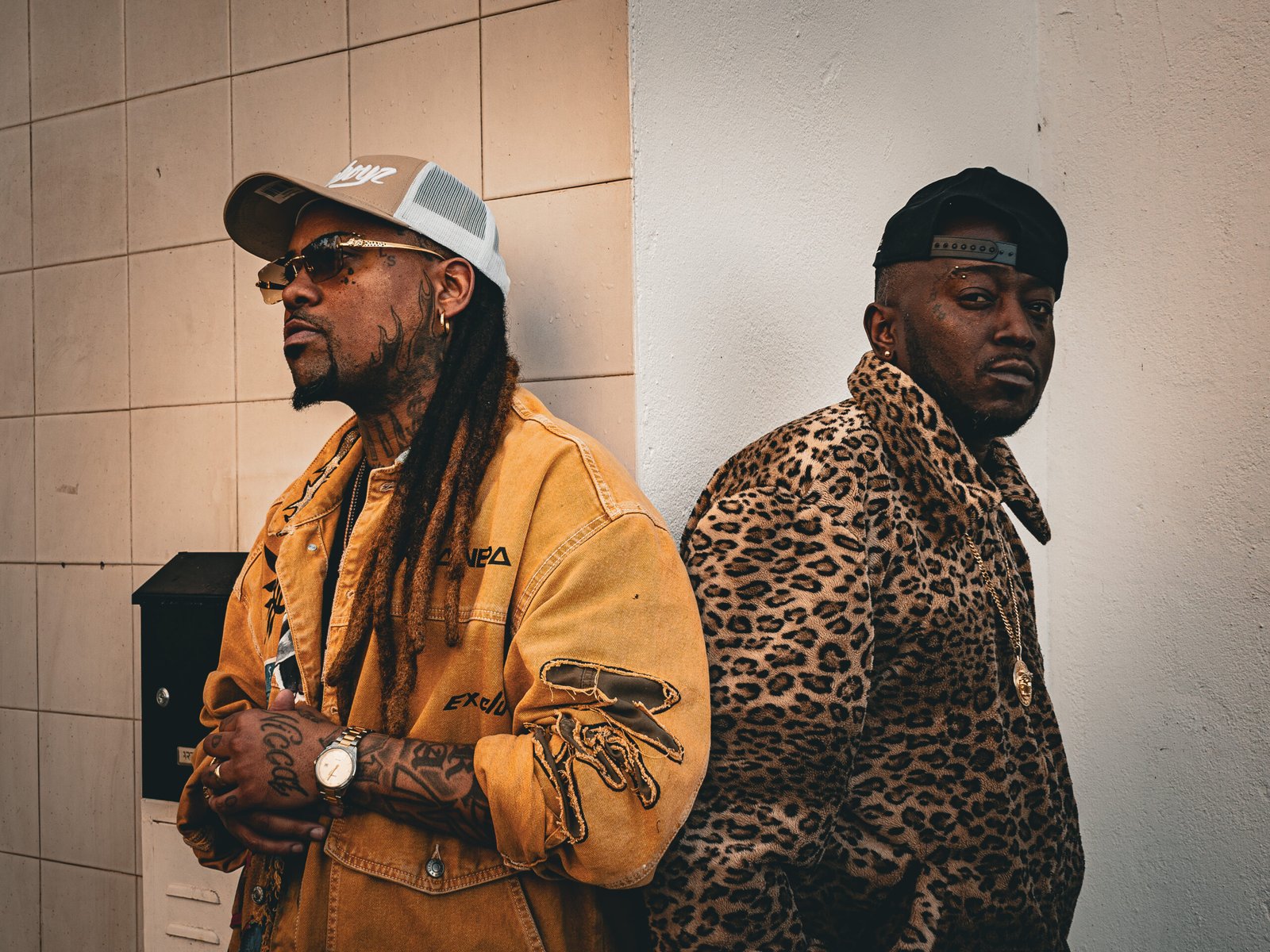
Angolan hip hop does not beg for attention. It builds its presence patiently, bar after bar, decade after decade. And few collectives have shaped that architecture with as much permanence as Força Suprema.
When Força Suprema releases new music, it is never just another drop in the algorithm. It is an event within a lineage. “Fios de Prata,” their latest single featuring Rahiz, arrives not as a nostalgic callback but as a continuation of a long, deliberate evolution. The track forms part of Baseado em + Factos Reais, the 2026 expansion of their 2025 album Baseado em Factos Reais, a project widely regarded within Lusophone circles as one of the strongest hip hop statements of the year.
To understand why “Fios de Prata” matters, you have to understand who Força Suprema is and what they represent.
Founded in the late 1990s, with deep roots in Luanda and later grounded in Portugal’s diaspora communities, Força Suprema emerged in 1998 as an unfiltered voice of resistance. They documented the realities of urban Angola and immigrant life in Lisbon’s periphery with precision and hunger. Their early work did not seek polish. It sought truth.
Projects like FS4Life became formative for Angolan rap. Tracks such as “Snifa Cada Linha”, “Maluku,” and “Deixa o Clima Rolar” were not simply songs. They were declarations. The group elevated lyrical standards in Portuguese-language rap, blending technical sharpness with lived experience. They showed that Angolan hip hop could be both raw and structurally sophisticated.
By the time E a União Fez a Força arrived in 2016, Força Suprema was no longer an underground reference point. They were an institution. The album formalized their dominance, bridging Angola and Portugal with a sound that felt rooted yet expansive. Members like NGA and Don G had already become central figures in Lusophone rap culture, voices that younger artists measured themselves against.
NGA’s solo projects, particularly Filho das Ruas and King, further cemented that status, reinforcing his reputation as one of the most commanding lyricists in Portuguese-language hip hop. But even as individual careers flourished, the collective remained intact. Força Suprema was never about fragmentation. It was about consolidation.
Over nearly three decades, they have accumulated awards, sold-out shows, and a loyal fan base stretching across the Atlantic. Yet their real impact lies deeper. They professionalized Angolan rap. They built infrastructure. They proved longevity was possible. They became a bridge between boom bap foundations and newer sonic textures like trap and drill, embracing evolution without surrendering identity.
That tension between evolution and essence defines “Fios de Prata.”
Produced by Dope Muzik, the track does not chase youthful urgency. It leans into maturity. The title evokes age, experience, and time etched into identity. The narrative explores attraction shaped not by impulse but by lived reality. It centers on the meeting of two adults who recognize a shared depth in one another.
As NGA explains, the concept came from observation. “The song portrays a reality that is very present. We often hear experienced, mature women say they feel attracted to older, more experienced men who, in a way, can protect and guide them. We decided to bring that into the music.”
This is not a simplistic romance. It is a reflection on emotional protection, vulnerability, and the connection between people who have already lived. The encounter unfolds through conversation, subtle recognition, and mutual awareness. The writing avoids caricature. Instead, it humanizes.
Rahiz’s presence adds a melodic counterpoint to the group’s grounded delivery. His contribution feels intimate rather than ornamental. It is rooted in history. “Usually they reach out to me, send the record over, explain the vision behind it, and then I add my part. I bring my own lens to the story. ‘Fios de Prata’ was no different,” he explains.
That creative process is anchored in long familiarity. “We’ve known each other for over 20 years, since we were just kids in the streets of Amadora. Today, we’re much clearer and more aligned about our role in Hip Hop in Portugal and across Portuguese-speaking territories.”
That alignment is audible. There is no tension between styles. The collaboration feels like a continuation rather than an experiment.
What makes this release particularly significant is the emotional register it occupies. Early Força Suprema was confrontational, urgent, and unapologetically aggressive. It needed to be. The late 1990s and early 2000s demanded assertion. Angolan rap was carving space within a broader musical landscape that often marginalized it.
Today, the group writes from experience. There is composure in their delivery. Reflection has replaced raw defiance, but intensity remains intact. That evolution mirrors the maturation of Angolan hip hop itself.
In a continental context often dominated by pop exports, Angola’s rap tradition has remained fiercely lyrical. It thrives on narrative density and competitive bars. Força Suprema stands as one of its most visible pillars. They represent a strain of African hip hop that prioritizes storytelling over spectacle.
“Fios de Prata” fits seamlessly into that arc. It demonstrates that vulnerability can coexist with authority. That desire can be articulated without abandoning dignity. That hip hop, at its best, can grow older without losing edge.
Nearly three decades after their formation, Força Suprema does not operate from nostalgia. They operate from the foundation. They have become what every cultural movement eventually needs: architects who remain active.
Their influence is measurable not only in charts but in standards. Younger Angolan rappers write with sharper discipline because Força Suprema raised the bar. The diaspora scene in Portugal developed competitive muscle because they demanded it. The idea that Lusophone hip hop could sustain itself across decades owes much to their persistence.
“Fios de Prata” is not merely a song about mature love. It is evidence of continuity. It is proof that growth does not weaken legacy. It reinforces it.
Angolan hip hop has always moved deliberately. It has never relied on noise alone. Força Suprema embodies that patience. They have woven nearly thirty years of lived experience into their discography, thread by thread. Silver threads, perhaps.
And as African hip hop continues to assert itself globally, its presence remains steady. Not loud for the sake of volume. Not nostalgic for the sake of memory. Deliberate. Grounded. Enduring.