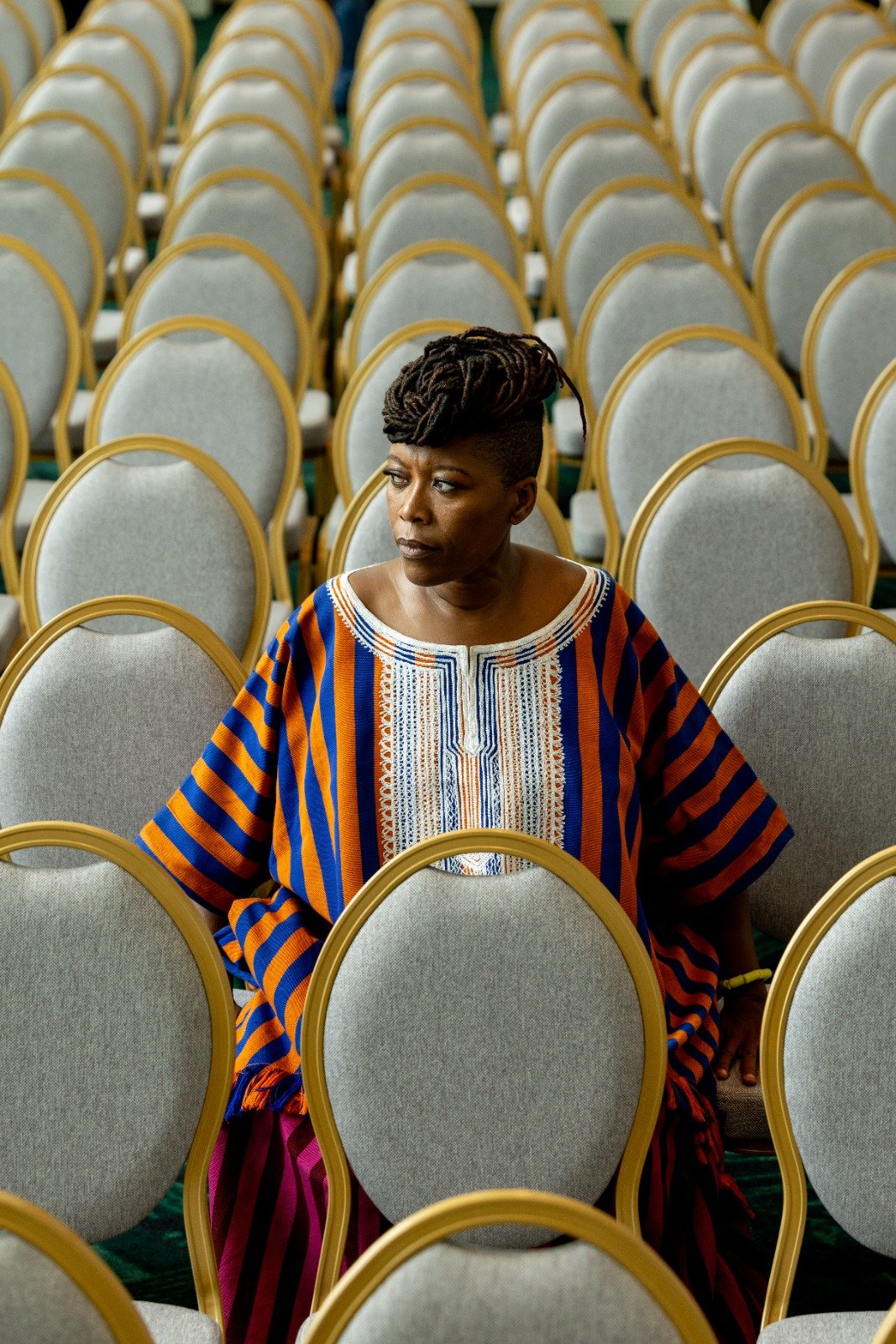
While success is often measured by the heights we reach, legacy is measured by the lives we touch and the people we choose to lift along the way.
Over the years, Georgiana Viou has been steadily building a legacy that reaches far beyond borders. Her impact is felt not only across the African continent, but around the world, where she has left a powerful and undeniable imprint, not only on the culinary landscape, but on society itself. Her journey is proof that excellence becomes even more meaningful when it is used in service of others. Through her voice, her craft and her commitment to creating opportunities for women, Georgiana has transformed personal achievement into collective empowerment, using every door she has opened as an opportunity to hold it open for others.
Her story is no longer simply one of culinary excellence. It is the story of a woman who understood that reaching the top means even more when you use the view, and the platform, to make sure others are seen.
For Georgiana Viou, becoming the first African woman to earn a Michelin star was never meant to be the final destination. It was the beginning of a larger mission, one that extends far beyond the walls of a restaurant and into the vibrant markets of Benin.
Chef, author, speaker, cultural ambassador, visionary; these titles describe Georgiana Viou, but they do not fully define her.
Born in Cotonou, Benin, and internationally celebrated for her remarkable culinary journey, Viou has become one of the most influential voices in African gastronomy. From earning Michelin recognition in France to leading the kitchen at L’Ami inside the Sofitel Cotonou Marina, she has consistently proven that African cuisine belongs among the world’s greatest culinary traditions. Yet, even after reaching one of gastronomy’s highest honors, she chose to look back home, not to celebrate herself, but to celebrate the women who have quietly nourished generations. That vision gave birth to Les Patronnes.
More than a cultural initiative, Les Patronnes is an act of remembrance; it is a declaration that history does not only belong to presidents, artists or entrepreneurs, it also belongs to the women who rise before sunrise, who negotiate every sale with dignity, who know every season by memory, who feed cities, clothe families, preserve traditions and sustain entire local economies without ever asking to be seen.
On our continent, every market has its queens. Women whose names may never appear in textbooks, but whose hands have shaped communities for generations.
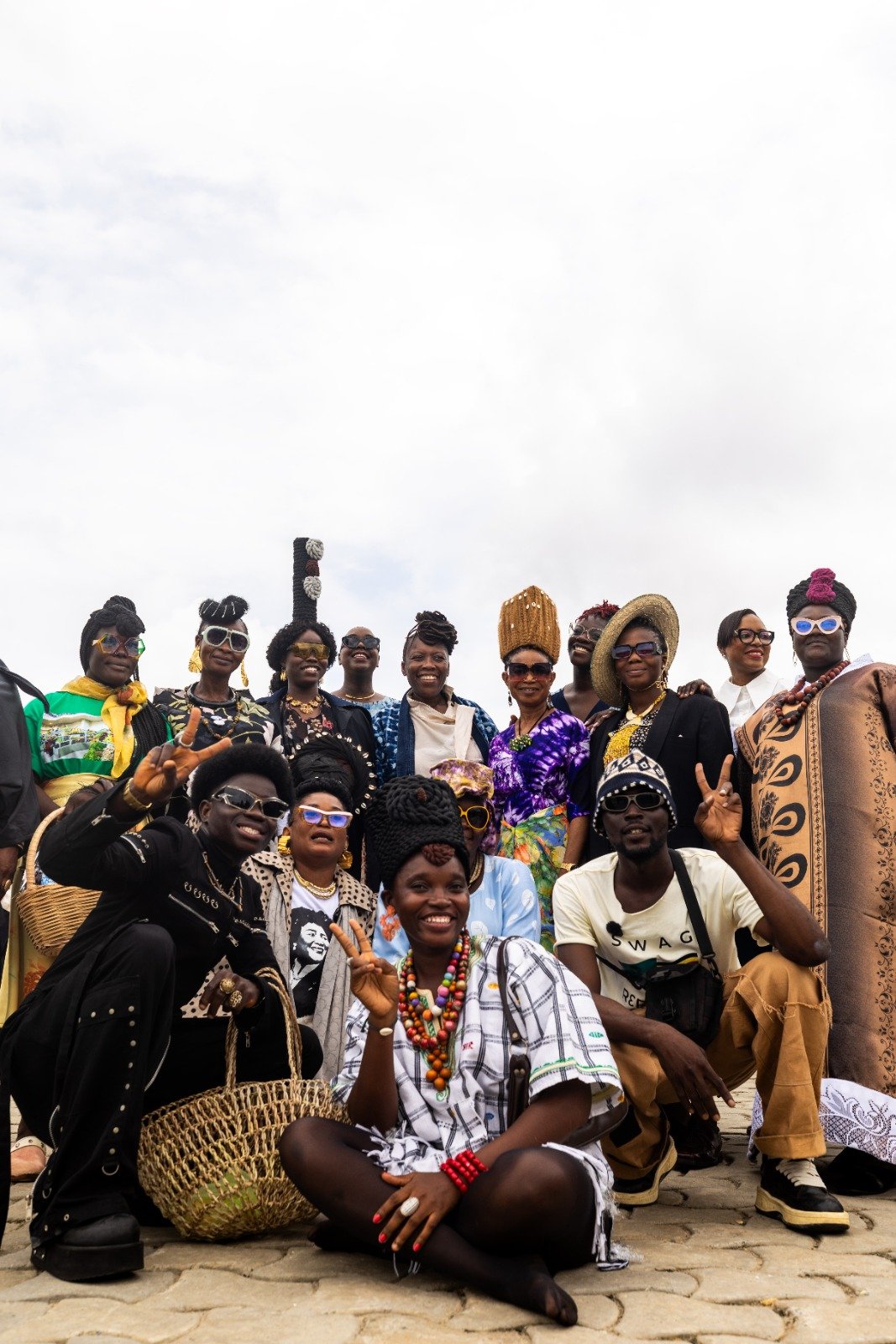
Inspired by the legacy of the legendary Nana Benz and the countless women who continue to carry that entrepreneurial spirit today, Georgiana Viou has transformed photography, gastronomy, fashion and storytelling into powerful tools of recognition. Through Les Patronnes, she reminds us that these women are not simply vendors, they are business leaders, custodians of knowledge, guardians of culture and architects of resilience.
In many ways, Georgiana’s own story mirrors theirs. Like the women she honors, she understands what it means to build something with courage, determination and quiet perseverance. She knows that excellence is rarely inherited, it is earned, often through sacrifice, faith and relentless work.
Her Michelin star may have placed her among the world’s culinary elite, but it never distanced her from the women whose wisdom first taught her that food is more than nourishment; it is memory, it is identity, it’s culture and above all it’s an act of pure love.
Georgiana Viou’s greatest achievement is not becoming the first African woman to receive a Michelin star. It’s using that historic milestone as a platform to ensure that other women whose brilliance has long existed outside the spotlight are finally seen.
True greatness is never measured only by what we accomplish, it is measured by whose stories we choose to tell, whose dignity we restore, and whose voices we elevate.
Through Les Patronnes, Georgiana Viou isn’t simply preserving Benin’s cultural heritage, she is redefining what leadership looks like. She is proving that the most extraordinary recipes are not always written on a plate, indeed, sometimes, they are written in the lives of the women who have quietly fed a nation for generations.
RSA EXCLUSIVE INTERVIEW
For readers around the world discovering your story for the first time, who is Georgiana Viou? Beyond the Michelin star and the accolades, how would you describe the woman behind the chef?
I am a woman who long believed that words would be my life’s work. In the end, they simply became another way of cooking.
I was born in Benin, grew up between different cultures, and have lived in France for more than twenty-five years. I first studied literature and worked in communications. Nothing in my journey suggested I would become a chef. Cooking came later, almost as a quiet revelation. It gave me a language I didn’t yet know how to speak.
People often introduce me as the first African woman to receive a Michelin star. I understand the significance of that distinction, and I am deeply honoured by it. But it does not tell my whole story. Before I am a chef, I am a curious woman. A woman who questions, observes and listens. Someone who is more interested in stories than in recipes, because I believe a dish only truly matters when it tells us something about the people who imagined it, cultivated it, prepared it and passed it on.
My cooking reflects that conviction. It is French in its technique, Beninese in its memory, and deeply personal in its expression. Today, I continue that dialogue as the Culinary Director of L’Ami, the brasserie at Sofitel Cotonou Marina in Benin, while developing new projects across Africa, France and beyond. I am not trying to place two cultures side by side. I simply want to show that they can speak to one another naturally, because that is how I have lived my entire life.
Over the years, I have come to realise that my work extends far beyond the walls of a restaurant. Of course, I love creating emotions around the table. But I also feel a responsibility to preserve gestures, pass on knowledge, and tell the stories of culinary traditions that deserve to be better known. Cooking is one of the last places where history can still be tasted. As long as a recipe continues to be prepared, a memory continues to live.
In many ways, I believe I am doing the very same work I imagined for myself at the age of twenty. I tell stories. The only difference is that today, I write them not only with words, but also with flavours, ingredients, memories and human encounters.
You made history as the first African woman to receive a Michelin star. What did that moment represent for you personally, and what do you believe it represented for African gastronomy on the global stage?
When my name was announced, my very first thought was for my team. A Michelin star is never earned alone. It recognises a collective pursuit of excellence, the countless gestures repeated every single day with the same precision and dedication.
Very quickly, I also realised that this distinction went far beyond my own story. By becoming the first African woman to receive a Michelin star, I found myself, almost despite myself, becoming a symbol. It is not a role one chooses, but it is a responsibility one can choose to embrace.
I understood that this star opened a door—not only for me, but for others. For young African chefs who could now say to themselves, “It is possible.” For ingredients that had long been considered peripheral. For culinary traditions that had every right to take their place within the world’s greatest gastronomic conversations.
But I also believe we must remain cautious. A Michelin star does not validate an entire cuisine, let alone an entire continent. African cuisines never needed external recognition in order to exist. For centuries, they have embodied extraordinary richness, sophistication and intelligence, nourishing generations long before the world began paying attention.
What is changing today is not the value of our cuisines, but the way they are being seen. At last, African gastronomy is beginning to be appreciated not as a curiosity or a passing trend, but as a collection of culinary heritages in their own right—each with its own history, techniques, terroirs, ingredients and unique identities.
If my journey has contributed, even in the smallest way, to accelerating that shift in perspective, then I am profoundly grateful. But my greatest hope is that, in a few years’ time, this question will no longer need to be asked. I hope we will stop speaking about “the first African woman” and simply celebrate great chefs, great women chefs, and great cuisines.
To me, true success will not be that my name remains attached to being the first. It will be that many others soon follow.
Throughout your career, you have consistently elevated the flavours, traditions and ingredients of Benin. Why has it always been so important for you to tell your country’s story through food rather than simply create exceptional cuisine?
I have never felt that I was defending Beninese cuisine. I have simply refused to forget it.
When I cook with an ingredient from Benin, I am not trying to prove that it deserves a place at the table. As far as I am concerned, it has always belonged there. I simply try to approach it with the same respect, curiosity and level of excellence that people instinctively reserve for a great French cheese, an Italian olive oil or a Japanese miso.
For a long time, we accepted the idea that some culinary traditions were universal while others remained local, almost confidential. I have never shared that view. African cuisines are not cuisines in the making. They are ancient, rich and sophisticated traditions, shaped by their own techniques, terroirs, ingredients, codes and histories.
If I tell the story of Benin through my cooking, it is not out of nostalgia, nor is it an attempt to assert an identity. It is because I believe that food is one of the most beautiful ways to transmit a culture. A book may be closed. An exhibition may come to an end. But a dish continues to live for as long as it is cooked, shared and passed on.
I love the idea that a flavour can become a memory. That someone who has never set foot in Benin might, over the course of a meal, experience something of our history, our landscapes, our generosity or our way of welcoming others. Food creates a sense of closeness that very few other forms of expression can achieve.
Ultimately, I am not simply trying to introduce people to new ingredients. I am trying to broaden perspectives. Because behind every ingredient, there is always a face. Behind every recipe, a family. Behind every flavour, a story.
Perhaps that has been my purpose from the very beginning: to ensure that people never taste only what is on the plate, but also the world from which that plate comes.
Les Patronnes is one of the most powerful cultural initiatives to emerge from the culinary world in recent years. What inspired you to create this project, and why was it so important for you to shine a light on the women who bring Benin’s markets to life every single day?
Before it became a project, Les Patronnes was a question.
What happened to the women who once embodied the strength of Benin’s markets?
As a child, I saw these women as giants. They commanded respect through their presence, their authority, their business acumen and their remarkable ability to support entire families. They were far more than market vendors. They were decision-makers, employers, negotiators—women whose economic success gave them genuine influence within society.
My grandmother belonged to that generation of women. Like the Nana Benz, she built her independence through trade. I grew up admiring these women who fed their families, financed their children’s education, built homes and played a vital role in their country’s economic development. They were entrepreneurs long before anyone used that word.
When I returned to Benin years later, I felt that something had changed. The markets were still there, and so were the women. They continued to work with the same determination, feeding cities and sustaining the local economy. Yet somehow, they had become less visible. It was as though, without us even noticing, the women who had long represented a powerful form of female leadership had gradually disappeared from our collective narrative.
Les Patronnes was born from that question.
There is also a more personal reason. Part of my own story was shaped alongside these women. Perhaps that is why I now feel the need to give something back for everything they have passed on to me.
I never wanted to speak for them. I wanted to give them back their voice. To look at them with the respect they deserve. To photograph them with the dignity usually reserved for public figures. To invite them to sit at the same table as artists, journalists, entrepreneurs and chefs because, in my eyes, they have always belonged in that conversation.
This project is not simply about markets. It is about transmission, work, economic independence, craftsmanship and pride. It reminds us that a country’s history is not written only in books or institutions. It is also written every morning behind a stall selling tomatoes, peppers or smoked fish.
If Les Patronnes resonates with so many people, I believe it is because it tells a deeply universal story. In every country, there are extraordinary women whose work quietly holds society together, yet whose names rarely find their place in history.
I simply wanted, for once, to turn the spotlight towards them.
The women featured in Les Patronnes do much more than sell products. They feed families, preserve traditions, sustain local economies and carry generations of knowledge. What do you hope people around the world will understand about these remarkable women after discovering this project?
First of all, I hope people will stop defining them solely by what they sell.
We often speak of a tomato seller, a smoked fish vendor or a chilli merchant. But what I see are women who sometimes run genuine businesses. They manage inventories, negotiate with producers, anticipate seasonal changes, support entire families, employ others and make decisions every single day that keep an entire economy moving.
They also possess an extraordinary knowledge of their products. They know how to recognise a good harvest, anticipate changes in quality, recommend the best way to prepare an ingredient and understand the character of a terroir. Yet this expertise is rarely acknowledged for what it truly is: precious knowledge, built through experience and passed down from one generation to the next.
Long before an ingredient reaches the kitchen of a restaurant, it has often passed through their hands. They are an essential link in our food culture. Without them, countless recipes would disappear, countless skills would fade away and countless flavours would be lost.
But perhaps the most important point lies elsewhere.
I hope we will stop seeing these women as ordinary. They are extraordinary precisely because, with such apparent simplicity, they accomplish things that are essential. They nourish our bodies, of course. But they also nourish memory, the economy, culture and, ultimately, an entire nation.
That is what Les Patronnes seeks to remind us: behind every market are women who, quietly and without seeking recognition, help hold a society together every single day.
They preserve far more than a culinary heritage. They preserve a way of living together.
In many ways, Les Patronnes celebrates dignity, resilience and entrepreneurship. As you spent time listening to these women and documenting their stories, what life lessons did they teach you, and how did the experience transform you personally?
I have always been a little cautious about the word resilience. We often use it to describe people who have never had the luxury of stopping long enough to reflect on their own resilience.
What I encountered in these women was not a heroic determination to overcome adversity. It was simply a way of moving forward. A quiet commitment to doing, every single day, what needed to be done—with remarkable dignity and without ever claiming the status of victim.
They also reminded me of something essential: knowledge does not always come with a diploma.
Their understanding of products, seasons, supply chains, customer behaviour, economic realities and culinary traditions is immense. Yet it is rarely recognised as expertise. Too often, we place greater value on academic knowledge than on the wisdom acquired through experience. I believe that is a mistake.
Being with them also allowed me to rediscover the value of community. From the outside, a market may appear to be a place where everyone works for themselves. In reality, it is sustained every day by solidarity, mutual support and cooperation—qualities that allow an entire community to keep moving forward.
On a personal level, Les Patronnes taught me to look differently. To slow down. To listen more carefully. To accept that some stories are more important than the ones I originally wanted to tell.
Ultimately, I believe this project has made me more humble.
I came with the intention of shining a light on these women. I left realising that they had never stopped shining. It was our gaze that had drifted away from them.
There is often a tendency to celebrate those who stand on the world’s biggest stages while overlooking the people working quietly behind the scenes. Through Les Patronnes, you have chosen to honour everyday women whose impact is immeasurable. Why do you believe storytelling has the power to restore visibility and dignity to those who have too often remained unseen?
I don’t believe stories give people dignity. Their dignity is already there.
What stories can do, however, is transform the way we see. They compel us to notice what we had stopped looking at.
We live in a world where visibility is too often mistaken for importance. Yet some of the people who are most essential to our societies are also the least visible. They are not seeking the spotlight. They are simply committed to doing their work with integrity, consistency and pride.
Telling their stories is not about elevating them. It is about recognising who they already are.
I like to think that every society reveals something about itself through the people it chooses to celebrate. If we only honour those who occupy centre stage, we eventually forget all those without whom that stage could not even exist.
Stories have this extraordinary ability to rebalance our attention. They remind us that heroism is not always spectacular. Sometimes, it lives in a marketplace, behind a stall, in a gesture repeated every day for thirty years, in a woman who rises before dawn to feed her family and, without even knowing it, preserve part of her country’s heritage.
At its heart, every story asks one very simple question:
Who deserves to be seen?
With Les Patronnes, I never wanted to change these women. I simply wanted us to change the way we look at them.
You are a chef, an author, a speaker and now the visionary behind a cultural movement. Looking ahead, what legacy do you hope to build—not only for Benin, but for Africa’s next generation of chefs, entrepreneurs, storytellers and young women who dream of changing the world?
I have never been particularly fond of the word legacy, because it can suggest that the goal is to leave a trace of oneself behind. That is not what drives me.
What I would rather do is help create the conditions for others to write their own stories.
If, in a few years’ time, a young chef, an entrepreneur, an artisan, a farmer, a producer or a storyteller dares to dream bigger because they have come to realise that their own story has value, then I will feel that I have been useful.
I do not believe we are here to be the heroes of our own time. We are, above all, custodians and transmitters. We inherit knowledge, traditions, values and sometimes even trust. Our responsibility is to pass them on, enriched, to those who come after us.
Over the years, I have realised that every one of my projects tells, in essence, the same story: the story of a living heritage. Whether it is a book, a restaurant, a market or an educational programme, my ambition has always been the same—to preserve knowledge, give it a future and inspire others to carry it forward.
That is also why I devote so much energy to projects that extend beyond the kitchen. Teaching, mentoring, documenting, telling stories, connecting people and creating opportunities… to me, they are all part of the same profession.
I deeply believe that passing something on is an act of love. It is a way of saying to someone, “I believe in you enough to entrust you with what was once entrusted to me.”
I also hope, in my own way, to help reshape the narrative of Africa. Too often, the continent is defined by its challenges. I would like it to be recognised just as much for its talent, its craftsmanship, its creativity, its elegance, its intelligence and its remarkable ability to imagine its own future.
If I had to sum up what I hope to leave behind, it would not be a Michelin star, a book or even a project like Les Patronnes.
I would simply hope that more people feel inspired to pass something on themselves. Because perhaps that is the only kind of legacy that continues to grow long after we are gone.
African cuisine is receiving unprecedented international recognition. Where do you see the future of African gastronomy over the next decade, and what still needs to happen for African culinary excellence to receive the global recognition it deserves?
I am, of course, delighted by the growing interest in African cuisines. But I also believe we should be cautious about the effects of trends.
African cuisines did not have to wait for the world to discover them in order to become great. They have always been rich, inventive, sophisticated and deeply rooted in their own territories. What is changing today is not their value—it is the way the world is beginning to look at them.
For me, the next step is not greater visibility. It is full recognition.
That means telling our own stories. Conducting our own research. Documenting our culinary heritage. Educating the next generation. Valuing our producers, artisans, markets, seeds and techniques. Building schools. Writing books. Opening restaurants. Preserving our culinary archives.
A great gastronomic tradition is never built by chefs alone. It rests upon an entire ecosystem.
I dream of an Africa that is no longer seen merely as a source of inspiration for the rest of the world, but as a place where the world comes to learn. Not out of fascination or exoticism, but because our knowledge, our ingredients and our cuisines have naturally earned their place within the great international conversations about gastronomy.
Above all, I hope we will never feel the need to fit African cuisines into categories that are not their own in order for them to be recognised. They do not need comparison to be legitimate.
They simply deserve to be understood for what they are:
living, singular and profoundly universal culinary heritages.
If someone were to visit Benin after reading this interview and discovering Les Patronnes, what would you hope they leave with? What is the one message you want the world to understand about Benin, its people and the extraordinary women who continue to nourish its communities every single day?
First of all, I hope people will come to Benin with curiosity rather than certainty.
Benin is a country that cannot be reduced to what people think they already know about it. It is a land of extraordinary cultural, artistic, spiritual and culinary richness, where every region, every market and every family carries its own unique story.
Of course, I hope visitors will discover our ingredients, our flavours and our recipes. But above all, I hope they will take the time to meet the women and men who bring them to life.