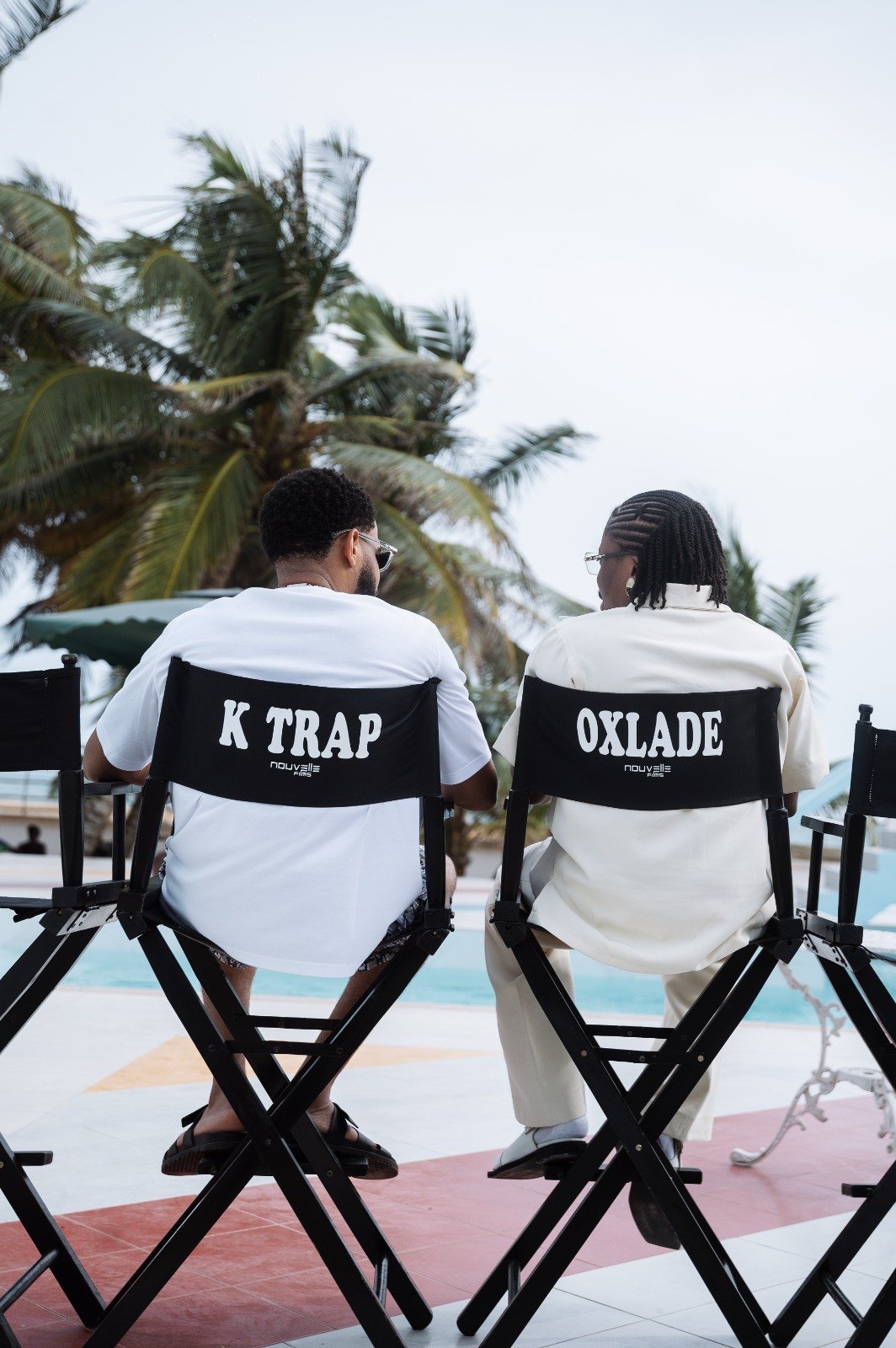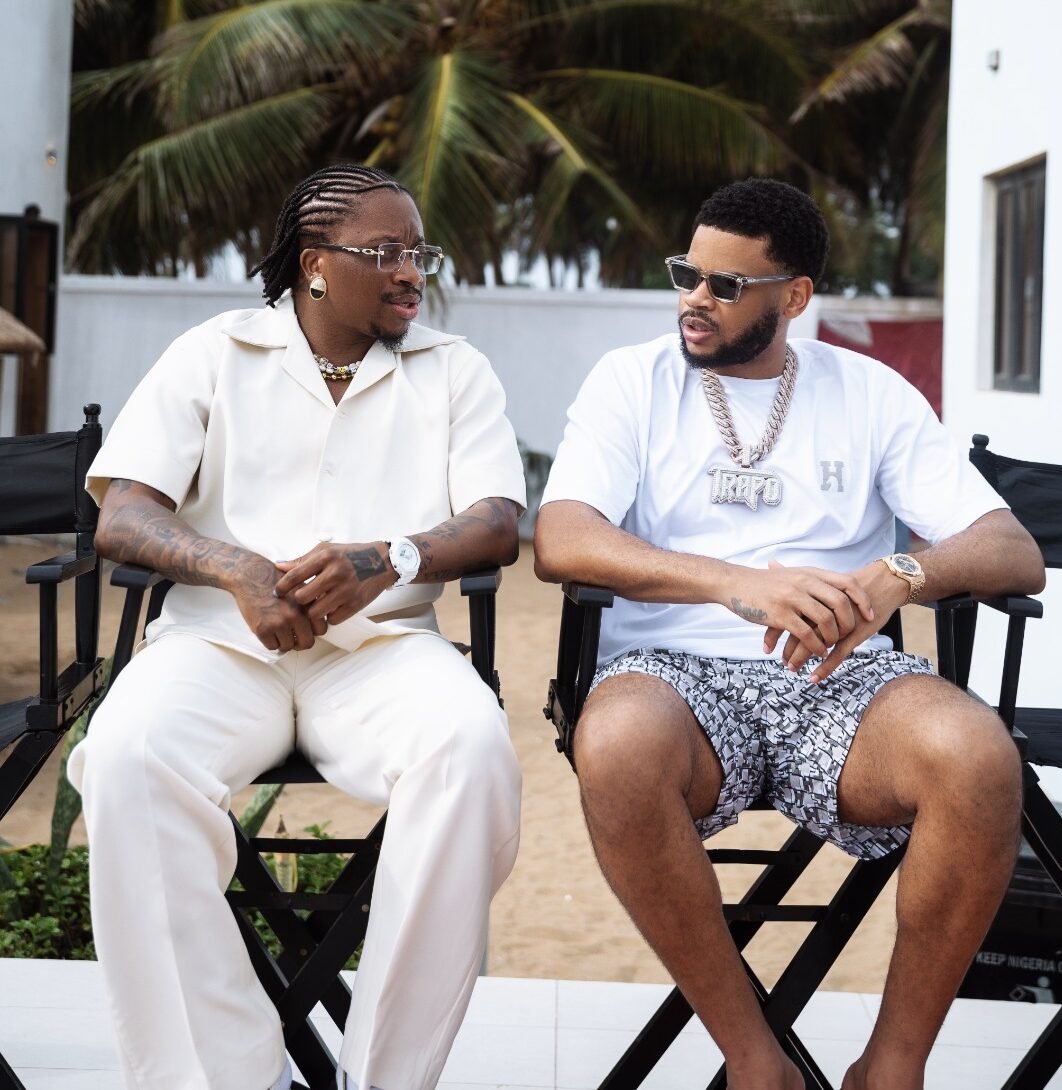
When K-Trap began working on “Pressure,” he already knew whose voice could complete it. The South London rapper had been listening to Oxlade for some time, but reaching out to one of Afrobeats’ most recognisable voices required him to move past an unexpected hesitation.
“Sometimes, coming from the UK, you think you’re smaller than you actually are and people may not know you,” K-Trap tells Rolling Stone Africa. That uncertainty disappeared as soon as Oxlade responded. The Nigerian singer revealed that the admiration was mutual: he had also been following the rapper’s journey and would be “honoured to bless the song.”
For Oxlade, the decision was equally uncomplicated. “I’ve been a fan of K-Trap for the longest, so when the opportunity came up, it was an easy yes,” he says. “I don’t just jump on records for the sake of it. I like to be part of music that genuinely resonates with me. ‘Pressure’ felt like one of those songs.”
Released in August, “Pressure” brings K-Trap’s grounded rap delivery into conversation with Oxlade’s elastic melodies. The collaboration sits in the space between UK rap, Afrobeats and Afroswing, but neither artist treats that fusion as an experiment. Instead, the record feels like the result of two distinct musicians recognising something familiar in each other.
Lagos or Nothing
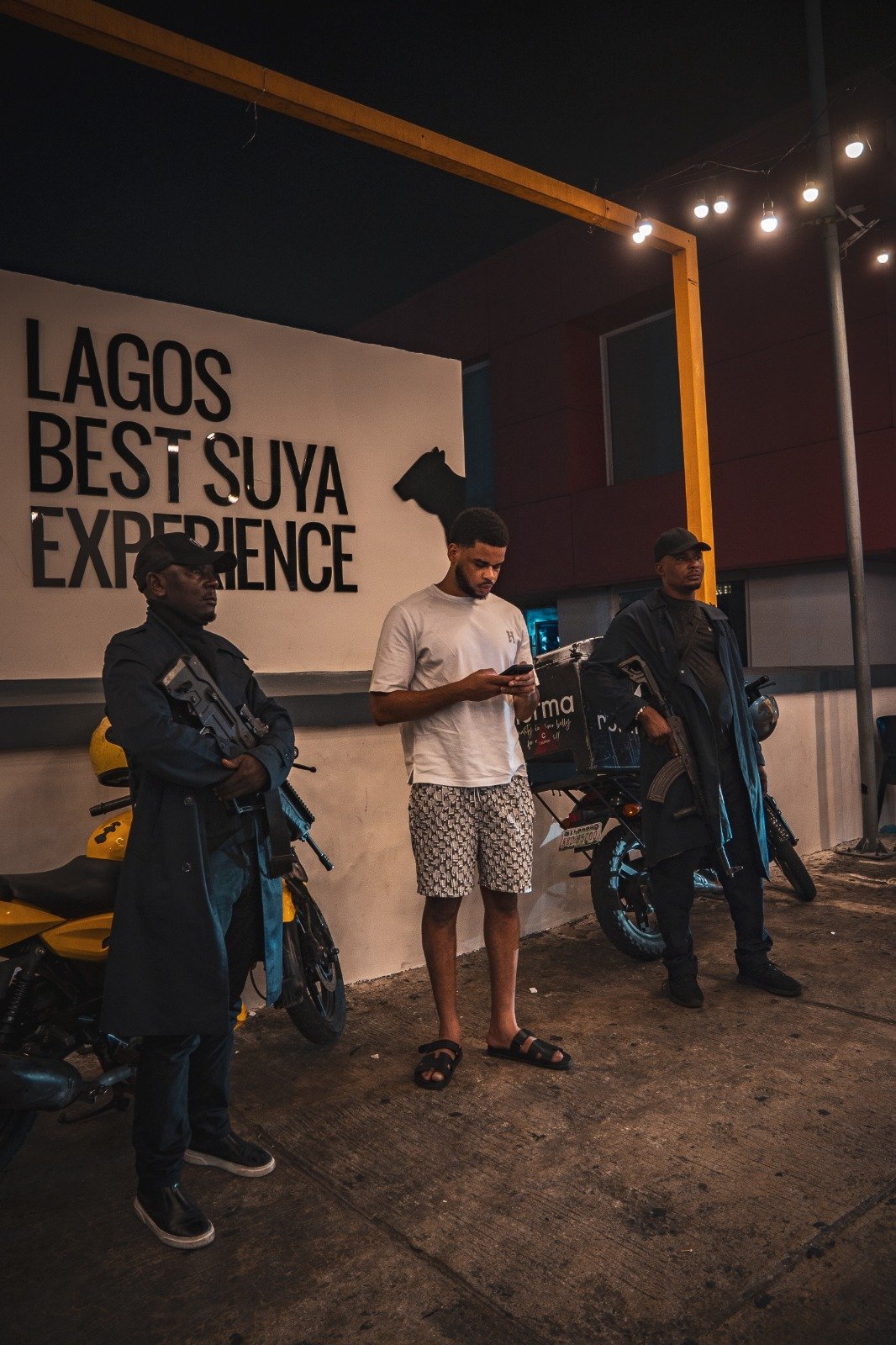
That sense of exchange extends to the music video, filmed in Lagos. For K-Trap, there was never a serious alternative.
“It had to be Lagos or nothing,” he says. “I wanted to experience the culture in real time, and I also wanted to show that in the visuals.”
The decision placed the British rapper inside Oxlade’s environment rather than using the city as a decorative backdrop. “Lagos is home for me, so filming the video there just felt natural,” Oxlade explains. “K-Trap was the one stepping into my world, my zones and experiencing my environment. Lagos has a unique energy that you can’t really recreate anywhere else, and I think that comes across in the visuals.”
For Oxlade, the city became a character in the record’s story. “It wasn’t just about the location,” he adds. “It was about capturing the authenticity of the city and letting that become part of the story behind the record.”
The connection between the pair translated easily from the song to the set. K-Trap says entering each other’s creative space never felt “new or strange,” describing the process as “a normal day in the office.” They exchanged ideas freely, with neither artist having to dilute his own instincts for the collaboration to work.
Oxlade felt the same ease on a personal level. “Beyond the collaboration itself, K-Trap is an amazing person,” he says. “We bonded effortlessly from the moment we linked up, and I think that made the whole experience feel even more genuine. It wasn’t just about two artists making a record; it was about good people coming together to create something special.”
For K-Trap, the song’s potential was evident almost immediately. Oxlade’s attention to detail confirmed that they were building something both could stand behind. “From the jump, I knew it was special,” he says. “From the effort and attention to detail that Ox was showing from the beginning, I knew we would have a finished product that we would both be excited about releasing.”
Beyond the Comfort Zone
“Pressure” arrives at a point when both artists are thinking deliberately about growth. K-Trap may be closely associated with drill, but he rejects the idea that moving into a lighter, more melodic space is a departure from who he is.
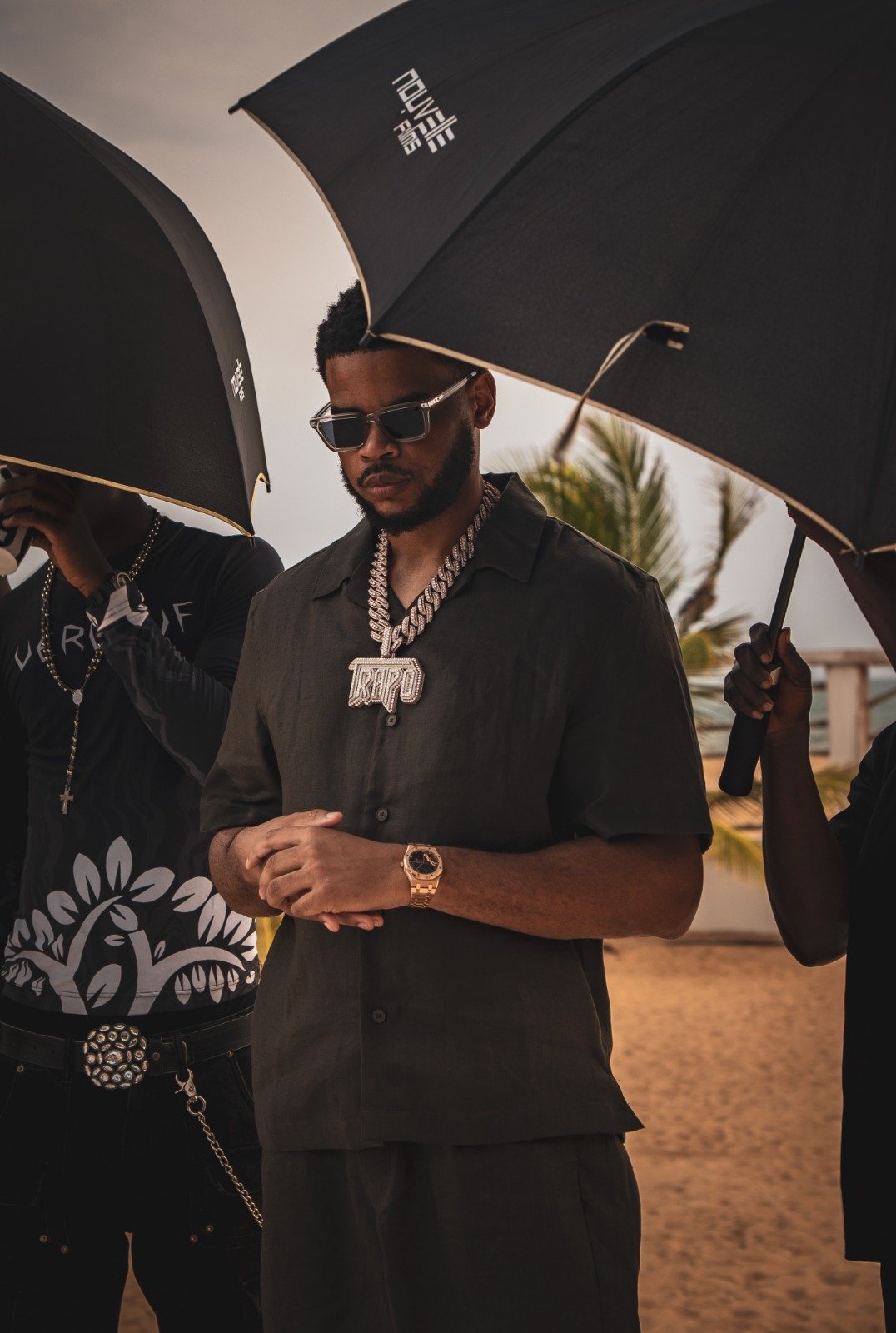
“‘Pressure’ is just a whole vibe,” he says. “It’s two artists having fun and bringing that summer vibe to the people. It’s feel-good music. This is light work for Ox, and regardless of my come-up or what I do best, I’m a musician. I’m an artist, so I never feel a way about coming out of my comfort zone.”
Oxlade views the record through the history and future of Afroswing, the hybrid sound that has long connected African rhythms, UK rap and Caribbean influences. He has explored that relationship through previous collaborations with Krept & Konan and Dave, and believes the form still has room to develop.
“For me, ‘Pressure’ is a futuristic record because it represents where I believe this sound can go,” Oxlade says. “It’s also part of something I’ve been passionate about for a long time, which is bringing Afroswing back into the conversation.”
Rather than treating Afrobeats and UK rap as fixed categories, he sees collaboration as a way for both to evolve without surrendering their identities. “My goal is to keep pushing the Afroswing agenda and play my part in reviving it, using my own sound, my own perspective and everything I’ve learned along the way.”
That confidence in individual identity made the partnership possible. Oxlade says both artists share the same guiding principle: originality is not something to negotiate away in pursuit of a wider audience.
“There’s a reason people connect with us, and it’s because of our uniqueness,” he says. “Nobody can be us, and we don’t try to be anybody else. We both brought our own identity to the record, and that’s what made it special.”
Connecting the Dots
The relationship between African music and the UK is not new. Diaspora communities have carried sounds, language and ideas between both spaces for generations, while collaborations have made those connections increasingly visible in popular music. K-Trap sees “Pressure” as an invitation for more artists to act on that cultural proximity.
“I feel like African culture is already here in the UK and always has been,” he says. “But I feel like K-Trap making that move is going to encourage loads more people like myself to show that different side to them and embrace it more.”
His hope is direct: “I hope this collaboration motivates everyone, especially artists, to make that move, cross over, collaborate and connect the dots.”
Oxlade describes the record as proof that music can travel without erasing difference. “Music has no boundaries,” he says. “‘Pressure’ is more than just a song. It’s a statement about what can happen when artists from different worlds come together with mutual respect and a shared vision.”
He is equally emphatic about the sound at the collaboration’s centre. “Afroswing isn’t dead—not at all,” he says. “I think this record proves there’s still so much life in that sound. We’re going to keep making more cross-country collaborations like this because that’s how we continue to grow the culture.”
Beyond chart reach or audience expansion, Oxlade hopes listeners respond first to the music itself. “Music is beautiful, man. It’s a universal language, regardless of any language barrier that comes with it,” he says. “At the end of the day, just enjoy good music and don’t let good music die.”
The Hunger to Keep Growing
Both artists describe ambition as inseparable from authenticity. K-Trap acknowledges the importance of his beginnings, but refuses to let them define the limits of his future.
“Who doesn’t want to level up?” he asks. “Of course, we are who we are, and we appreciate and can never forget where it started. But where we want to go is just as important. I just carry on reaching for the stars and keeping that authenticity about me.”
Oxlade frames artistic evolution as a constant balancing act. “Change is constant, growth is constant,” he says. “You have to keep changing without losing your authenticity. Finding the perfect balance comes from always trying to be consistent and improving yourself without losing yourself.”
For the singer, the drive is also rooted in memory. The distance he has travelled only sharpens his desire to keep moving. “The hunger never dies,” he says. “Where I come from is a constant reminder of why I have to keep pushing. The hustle I came from is the reason I never want to go back to the streets. That experience shaped me, and it keeps me focused every single day.”
K-Trap’s formula is simpler but no less demanding: “I just continue to be grateful and stay ambitious. There’s always more to do.”
Asked to describe each other in three words, their answers reveal how closely their impressions align. K-Trap calls Oxlade “authentic, cultured, proud.” Oxlade describes K-Trap as “real, authentic and very relatable,” adding that the rapper’s mentality felt so familiar that he told him he could be Nigerian.
That sense of kinship may be the real centre of “Pressure.” The record crosses borders, but its chemistry comes from what the artists already share: pride in where they come from, trust in their individual voices and the ambition to move beyond the lanes assigned to them.
For the remainder of 2026, K-Trap promises “more music and live performances.” Oxlade is preparing to release his forthcoming album, Ox N B, followed by a tour. In his words, what comes next is “nonstop madness.”