
Kenyan rapper Lil Maina is looking to the past to create something new. With Genge and Kapuka having played a defining role in Kenya’s pop culture in the early 2000s, the genres carried an energy and attitude that still resonates with Kenyans who grew up with them. In “Tetemesha” and “Vimajor”, Lil Maina revisits those sounds from his own perspective, bringing the nostalgia of that era into the present.
“I’m trying to bring that nostalgia back, but through who I am as an artist today,” he tells Rolling Stone Africa. “For the new generation, some of these sounds and influences will feel completely new, but for the older generation, I want the music to take them back to a certain time and feeling.”
The singles which were released on August 21 offer a preview of Lil Maina’s forthcoming album, STUNNA MAN. The Kenyan artist wants the project to occupy a space where an older listener can hear echoes of their youth while a younger listener encounters those sounds without the baggage of nostalgia. “Vimajor” connects Lil Maina to his roots, while “Tetemesha” challenges him to push beyond them.

Lil Maina grew up surrounded by this music, which he is now revisiting. The sounds of artists such as Jua Cali, Mejja, Kleptomaniax, Ulopa, P-Unit, Jaguar, DNA and Gidi Gidi Maji Maji were part of the soundtrack of his childhood. Those records weren’t just songs to him; they represented a moment when Kenyan urban music had its own language, attitude and cultural confidence. The rapper is attempting to recover this feeling with STUNNA MAN and not just recreating Genge and Kapuka.
“I’m not trying to copy what they did. I’m more interested in recreating the feeling that music gave me growing up and translating it into 2026 through my own sound,” he said. “Vimajor” features his uncle, Wilson Kanyi, one of the earliest people to influence his love for music. The two lived together at his grandparents’ home, where Lil Maina, the youngest in the house, came to see his uncle as something close to an older brother.
Kanyi was also pursuing music himself, exposing Lil Maina to the reality of making music long before he became an artist himself. Watching his uncle chase music helped plant the idea that music could be more than something to listen to. “Someone who influenced my love for music when I was young is now on a record with me all these years later. That makes the song personal in a way another collaboration probably couldn’t have been,” Lil Maina said.
The title “Vimajor”, meaning “in a major way”, fits the moment. It is a declaration of arrival that acknowledges the people and sounds that helped make that arrival possible. The record connects family history with Kenyan music history, turning lineage into part of the song’s meaning. While “Vimajor” is about connection, “Tetemesha” is about disruption. Meaning “to shake things up”, the track was recorded after Lil Maina returned from the United States and entered the studio with producer So Fresh.
The session was initially connected to a Red Bull freestyle, but the music quickly took on a life of its own. Listening to 50 Cent in the studio helped establish the record’s attitude, while a memory of K-Rupt and E-Sir’s “Bamba” provided the lyrical spark. “I’m not going into the studio trying to recreate ‘Bamba’ or make a 50 Cent record. Those musical memories are already part of me, so I take the feeling or attitude they gave me and allow it to come out naturally through Lil Maina,” he clarified.
This shows how much Lil Maina has changed since “Kishash” introduced him to a wider audience. His 2023 debut album, Maisha Ya Stunna, established him as more than an internet personality crossing into music, pairing his knack for catchy records with collaborations that included Buruklyn Boyz, Trio Mio, Scar Mkadinali and Njeri. The album was also an early demonstration that he was interested in exploring different sides of himself. “I’m still identifying my sound and figuring out exactly what I want, and I’m okay with that,” he mentioned.
That freedom has already opened doors. He began singing more, leading to “Desire” on his SUMBUA album and revealing a side of his artistry that might not have been obvious from the records that first made his name. He has also become more comfortable with vulnerability.
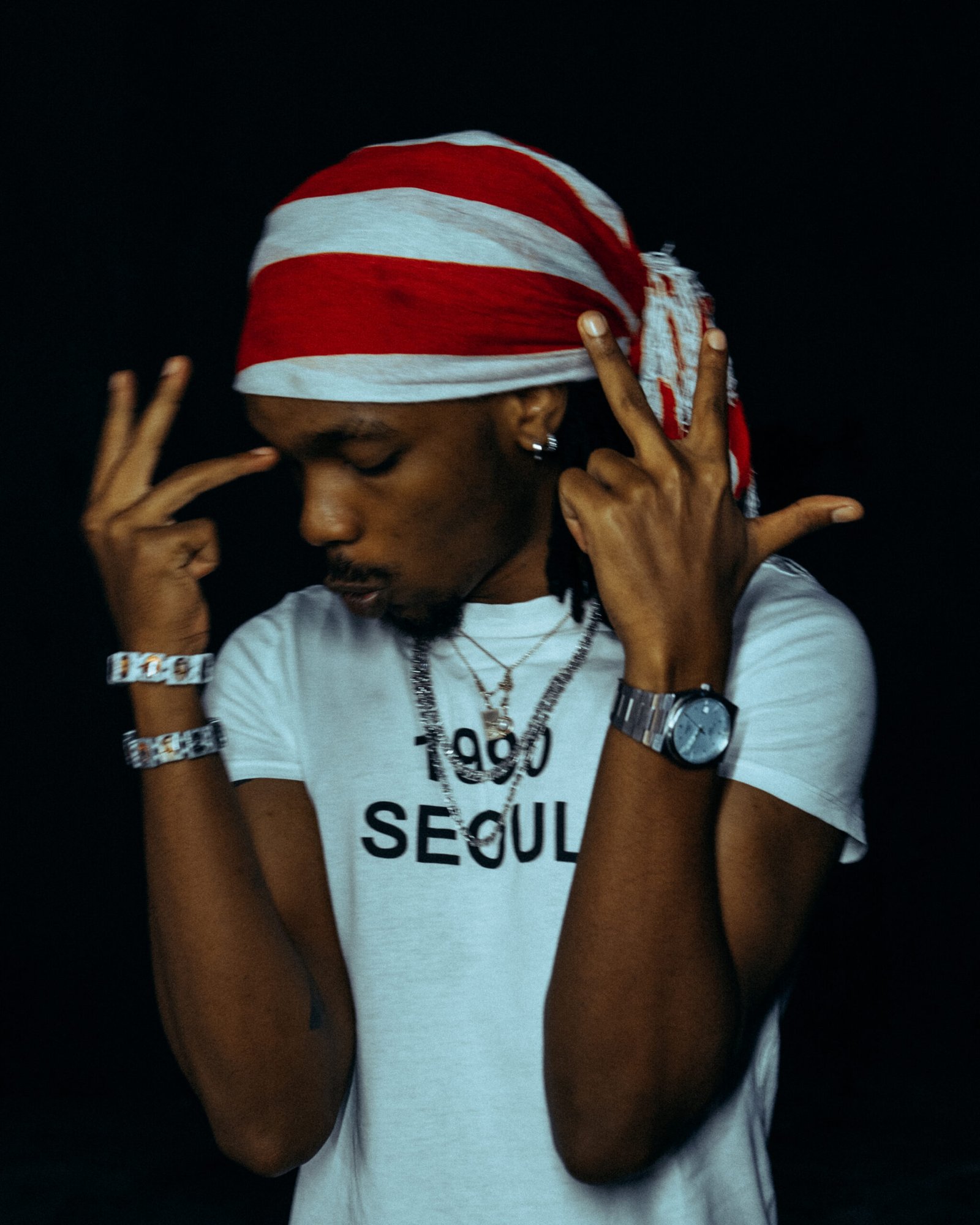
He said, “If I feel like singing, I’ll sing. If I feel like expressing something personal, I want to be able to do that too. I don’t want to box myself in because of what people already know Lil Maina for.” That refusal to be boxed in is what makes STUNNA MAN more interesting than a straightforward throwback project. The album draws from Kenya’s musical past, but Lil Maina is using the history to give himself permission to experiment rather than restrict himself to a particular sound, and at the heart of that experiment is Sheng.
For Lil Maina, protecting Kenyan musical identity begins with protecting the language that has long given Kenyan urban music its personality. He sees Sheng as something living and constantly evolving, shaped differently by every generation but always carrying something distinctly Kenyan. He also questions why Kenyan listeners embrace music from elsewhere with enthusiasm while sometimes treating their own cultural expressions as something that needs to be softened or translated for international consumption.
“We have to believe that our own language, our own stories and our own sound are worthy of that same pride,” he said and added, “I want someone outside Kenya to hear Sheng on a record and not need us to change it for them. They can fall in love with it the same way we’ve fallen in love with music from other cultures.”
For anyone discovering Lil Maina from outside Kenya, he wants to communicate the country’s energy to them through his music. “Kenya loves to party. I love to party. We’re a party culture,” he revealed. The rapper also wants to reach a point where he can give himself completely to music, without needing to divide his attention between the craft and everything else required to sustain it.
He refuses to treat STUNNA MAN as a make-or-break moment. “If it succeeds the way I dream it will, amazing,” he said. “If it doesn’t, I’ll create something new and try again.” That attitude is the most fitting definition of the “stunna” mentality he has been building since his debut. With “Vimajor” and “Tetemesha”, Lil Maina is not just revisiting the Kenyan music that raised him; he is turning it into a fresh sound that he can call his own.
OUR INTERVIEW WITH LIL MAINA

What do “Vimajor” and “Tetemesha” reveal about where Lil Maina is creatively right now, and what can listeners expect from STUNNA MAN?
I made “Vimajor” at the beginning of the year, and “Tetemesha” came later, right after I landed back from the States. With both records, I wanted to pay homage to the early 2000s and recreate that feeling Kenyan music had during that era.
With STUNNA MAN, I’m trying to bring that nostalgia back, but through who I am as an artist today. For the new generation, some of these sounds and influences will feel completely new, but for the older generation, I want the music to take them back to a certain time and feeling.
That balance is a big part of the project for me — new to one generation, nostalgic to another.
You’re drawing heavily from the Genge and Kapuka era that shaped Kenyan urban music in the early 2000s. Which artists, songs, or moments from that era had the biggest influence on you growing up, and how did you approach bringing that sound into 2026 without simply recreating the past?
I grew up surrounded by that music. It was everywhere — on the radio, on TV and through my older family members, especially my uncle, who would play a lot of it.
I grew up listening to Jua Cali, Mejja, Kleptomaniax, Ulopa, P-Unit, Jaguar, DNA, Gidi Gidi Maji Maji and so many others. Songs like Jua Cali’s “Miaka,” “Bongo La Biashara” and Kleptomaniax’s “Swing” are part of my childhood.
With STUNNA MAN, I’m not trying to copy what they did. I’m more interested in recreating the feeling that music gave me growing up and translating it into 2026 through my own sound.
That’s why the project can exist between two generations. Some people who grew up during that era can hear it and immediately feel that nostalgia, while somebody younger can experience those influences as something new.
“Vimajor” features your uncle, Wilson Kanyi, making it a personal collaboration. What did having a family member and someone connected to an older generation of Kenyan music bring to the song that another collaborator might not have been able to?
My uncle was actually one of my earliest influences when it came to music. Growing up, I lived with him at my grandparents’ home. I was the last born in the house, so he became almost like an older brother to me.
He was a recording artist at the time, and I remember watching him pursue music. He even curtain-raised for T.O.K. back in the day. A lot of my love for music came from simply being around him.
So having him on “Vimajor” felt full-circle for me. It wasn’t really about getting a feature for the sake of a feature; it was family coming together and doing something cool creatively.
Someone who influenced my love for music when I was young is now on a record with me all these years later. That makes the song personal in a way another collaboration probably couldn’t have been.
You’ve mentioned K-Rupt and E-Sir’s “Bamba” and 50 Cent as influences behind “Tetemesha.” How do you balance those personal musical memories with your desire to create something that feels distinctly Lil Maina rather than nostalgic?
When I was making “Tetemesha” with So Fresh, he asked me how I normally start a song — whether I start with the hook or the verse.
Immediately, I thought about K-Rupt’s line on “Bamba” with E-Sir, where he talks about starting by dropping the verse. That became the spark, and from there I just flowed with it.
The 50 Cent influence came from “U Not Like Me.” I’ve always loved the attitude on that record — the way it sounds confident without trying too hard. That’s really the mood of “Tetemesha.” The song has an attitude.
I think that’s how I balance my influences. I’m not going into the studio trying to recreate “Bamba” or make a 50 Cent record. Those musical memories are already part of me, so I take the feeling or attitude they gave me and allow it to come out naturally through Lil Maina.
Since your breakout with “Kishash” and your debut album Maisha Ya Stunna, your career has evolved considerably. What do you think has changed most about Lil Maina and how does that evolution show up on STUNNA MAN?
Since “Kishash” and Maisha Ya Stunna, a lot has happened. I’ve met new people along the way, learned a lot and really gotten into the music business, but through all of that I made the decision to keep focusing on my craft.
I’m still here, still creating, and those records are still banging to this day.
I think one of the biggest changes is that I’ve allowed myself to keep discovering who I am musically. I’m still identifying my sound and figuring out exactly what I want, and I’m okay with that.
I started singing more, for example, and that led to a record like “Desire” on my SUMBUA album, which showed me another side of myself as an artist.
I also want to become more vulnerable with my music. If I feel like singing, I’ll sing. If I feel like expressing something personal, I want to be able to do that too. I don’t want to box myself in because of what people already know Lil Maina for.
I’m still evolving, and I believe with time everything will align itself. STUNNA MAN is another part of that journey.
There’s an interesting tension in this project between preserving Kenyan musical heritage and shaking things up. What parts of Kenyan music culture do you feel are important to protect, and what conventions are you most interested in challenging or reinventing?
The biggest thing I never want us to lose is our culture — and for me, Sheng is a huge part of that.
Sometimes I feel like we’re so focused on borrowing from cultures outside Kenya that we forget how powerful our own culture is. I look at how Kenyans can sing along to Nigerian music word for word, even in languages that aren’t ours, and I think: why can’t we have that same love and belief in Kenyan music?
That doesn’t mean we shouldn’t appreciate music from everywhere else. We should. But we also have to believe that our own language, our own stories and our own sound are worthy of that same pride.
Sheng has always evolved with every generation, from back then until now, and I want to be part of keeping that alive. I want someone outside Kenya to hear Sheng on a record and not need us to change it for them. They can fall in love with it the same way we’ve fallen in love with music from other cultures.
That’s something I want to keep fighting for with my music — our culture, and Sheng specifically.
As Kenyan music continues to reach bigger international audiences, what do you want someone outside Kenya to understand about Nairobi and Kenyan culture when they hear STUNNA MAN? And what would success for this new era look like for you beyond streams and charts?
First, I want them to feel a vibe. When you hear a record like “Vimajor,” I want you to be able to jam to it even before you understand every word I’m saying.
Kenya loves to party. I love to party. We’re a party culture. There’s an energy here that I want people outside the country to experience through my music. I want someone in another part of the world to hear STUNNA MAN and feel a piece of Nairobi and Kenya through that energy.
Beyond streams and charts, success for me would mean getting to a point where I can focus on music and music alone. I want to give everything to the craft and see how far I can take it.
But at the same time, I don’t look at STUNNA MAN as my only shot. If it succeeds the way I dream it will, amazing. If it doesn’t, I’ll create something new and try again.
I don’t think I’ll ever run out of options or ideas. As long as I’m here, I’m going to keep creating.