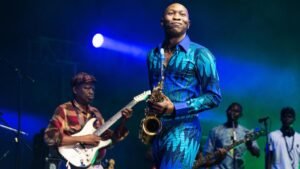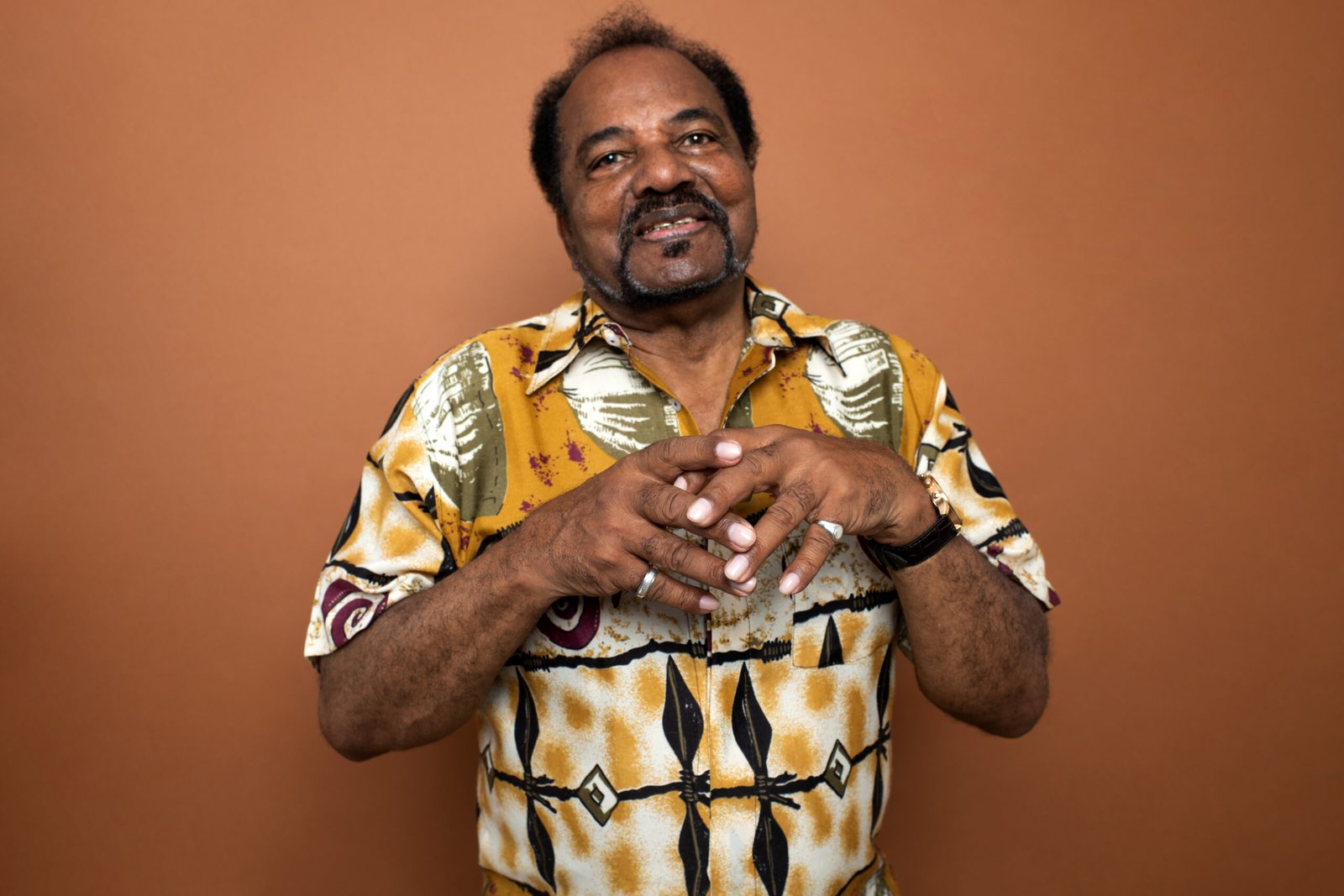
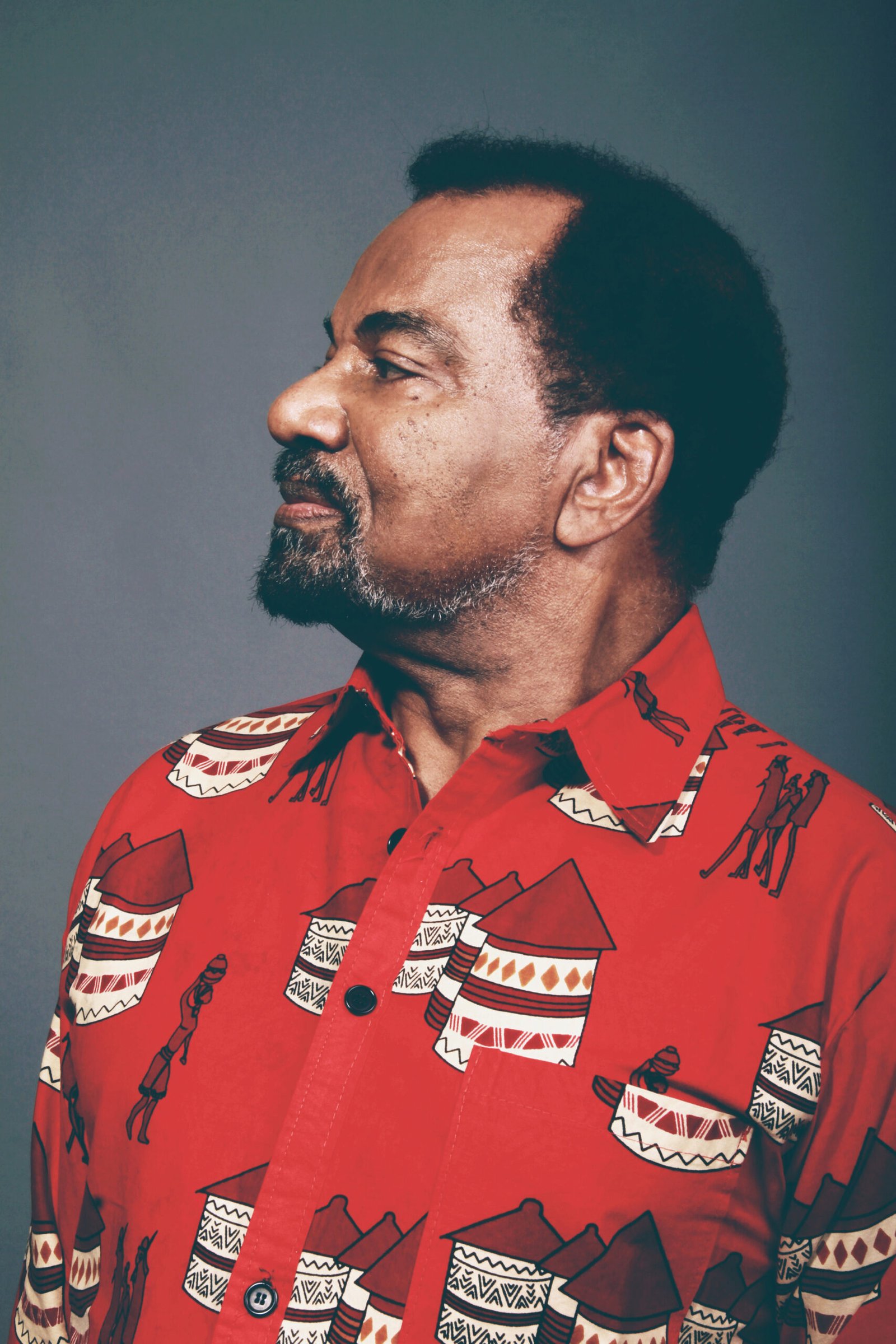
Bonga does not explain himself. He never has. Born José Adelino Barceló de Carvalho in 1943 on the outskirts of Luanda, he took a name the streets gave him and built a world around it: a world of semba rhythms and Angolan kimbundu poetry, of exile and return, of a country he has never stopped singing toward, even when that country made it dangerous to do so. He is 82 years old and still on stages across the world, still drawing crowds who arrive already knowing every word, and crowds who are hearing him for the very first time. Right now, increasingly, it is the latter.
Something is happening around Bonga that defies easy categorisation. It is not a comeback because he never went away. It is not a rediscovery, because those who always knew never forgot. It is something closer to a collision between a man who has spent decades moving toward the world and a generation that has only recently started moving toward him. Young Brazilians, young Angolans, young listeners from the diaspora scattered across Europe and the Americas are arriving at his music the way you arrive at something that was waiting for you.
He is aware of this. And characteristically, he does not make too much of it.
“I am more listened to outside, which is incredible. That has to do with foreign entrepreneurs who always took care of Bonga, travelling to every country, spreading the music, receiving awards that give Angola a certain stimulus, a certain prestige. Which is quite good.”
— Bonga
The pragmatism in that statement is not modesty. It is the hard-won perspective of someone who watched his own country fracture and still managed to keep the music circulating through the cracks. Semba, the Angolan genre Bonga helped shape and preserve, pre-dates and in many ways gave birth to Brazilian samba. That genealogy alone should have ensured a permanent, structural connection between the two traditions. Instead, the connection survived through individual carriers, stubborn musicians, and audiences willing to follow the sound wherever it led. Bonga has been one of the most important of those carriers.
Bonga – Mona Ki Ngi Xica
It is inside that context that the Coala Festival makes its argument. Born in Brazil over a decade ago as a platform for Portuguese-language music, Coala has grown into something more deliberate: a festival built explicitly around the idea that Angola, Brazil, and the wider lusophone African world share not just a language but a living musical conversation that has been allowed to happen too rarely, in too few places, with too little structural support. This May marks its third edition in Cascais, and the lineup reads less like a booking sheet than a thesis statement. Caetano Veloso, one of the great architects of Brazilian popular music. João Gomes and Lulu Santos, representing the generations that followed. Slow J from the Portuguese-speaking Atlantic. And Bonga, from Angola, carrying everything that came before them all.
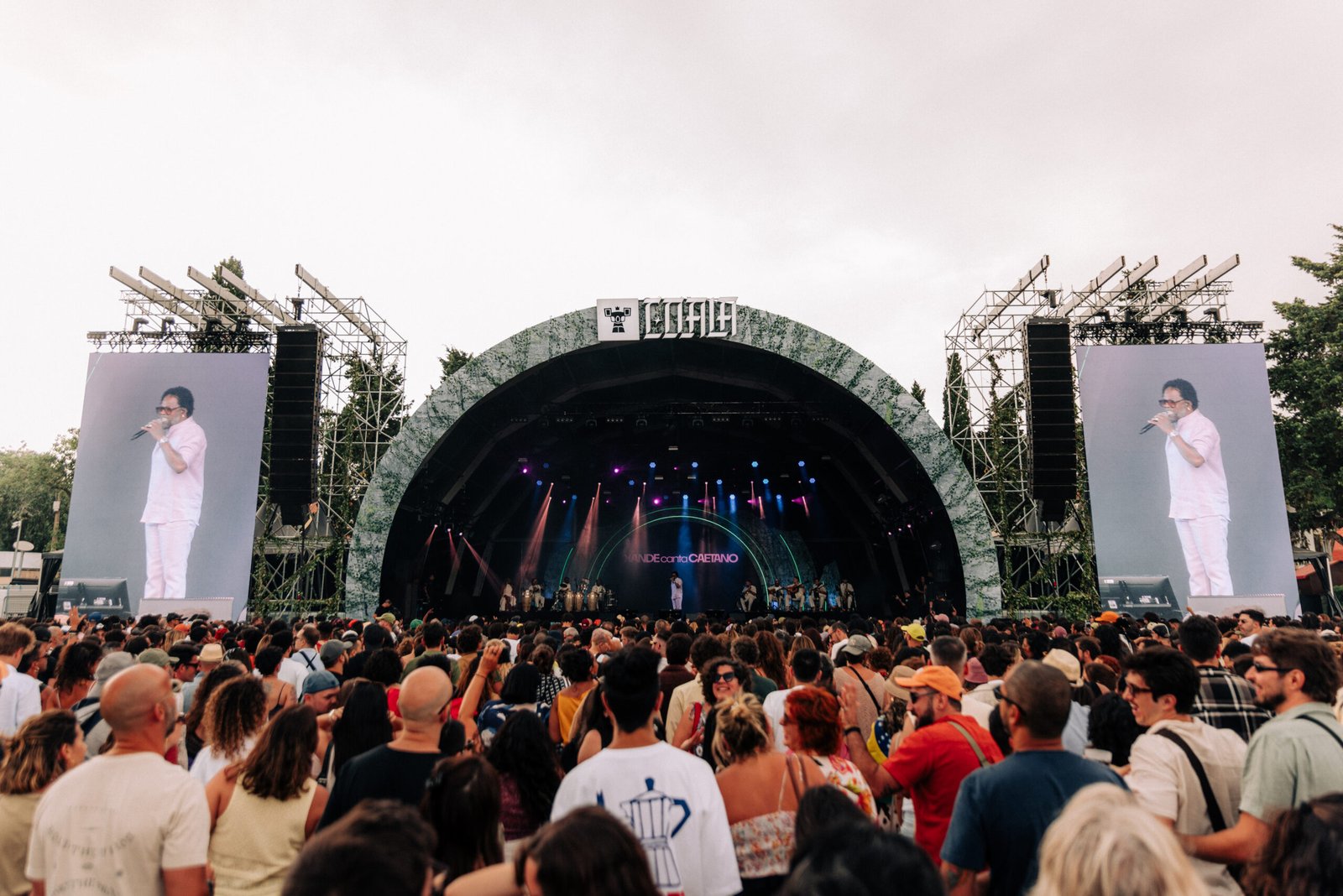
What makes the festival’s curatorial logic interesting is that it does not flatten these artists into a single brand. The differences between semba and Brazilian funk, between Bonga’s acoustic storytelling and the trap-inflected sounds of younger Angolan artists, are real and meaningful. Coala does not ask those differences to disappear. It asks them to share a stage. The bet is that proximity does what argument cannot: that when these musics are placed next to each other, something becomes audible that was always true but hard to hear from a distance.
Bonga, when asked whether gatherings like this build real bridges across geographies and generations, is unambiguous.
“My participation comes in that spirit: to bring together something very important, in an important organisation, one that will gather all these people, all these musicalities, all the rhythms from various places. It is giving a tremendous push, and that is very, very good. It is positive.”
— Bonga
He is not, however, uncritical of where the new generation has gone. Warm about the talent, unsparing about the disconnection.
“It would be good if we were found together in time, in steps, in homes, in courtyards, in what has already been practised before. The youth, who should care more about the ancestors’ music and the foundations of our musicality, are doing very little of that…the connection to the motherland, to the ancestors, to the things that dignify and identify us — that is what is missing.”
— Bonga
It is worth sitting with that phrase: the things that dignify and identify us. For Bonga, music has never been separable from those things. His songs are not about Angola in the way a postcard is about a place. They carry Angola the way a person carries their own history: the joy and the grief inseparable, the celebration and the critique arriving in the same breath. He has described himself as the artist who speaks of hardship, but also the artist who speaks of what was good and continues to be good. That refusal to resolve the tension is what gives the music its force. It is also, quietly, what gives this moment its stakes.
The new generation that is finding Bonga now is finding all of that at once. They are arriving at an artist who was already complete before they were born, and discovering that the completeness is not a closed door but an open one. His music does not require initiation. It requires presence. And part of what Coala Festival is testing, in its third edition, is whether a stage can function as that kind of open door at scale. Whether the shared rhythmic vocabulary of the lusophone world, rarely allowed to speak all at once, sounds like what everyone already suspected it did.
Bonga’s answer to the political dimension of all this is, by now, his most consistent observation. He has watched the lusophone world fail to build the kind of infrastructure that would make its cultural connections structural rather than accidental. He has watched music do what institutions could not.
“I wish that, from a political and social point of view, it were as important as the music. It is music that has been the catalyst, that unites us, that brings us together, and gives us tremendous joy. That is the good side.”
— Bonga
That is the good side. He says it without irony and without sentimentality. It is simply what he has observed over eight decades of living in the world: that when the other things fail, the music keeps moving. It carried the people who made it and the people who needed it across whatever distances were supposed to separate them. It is still doing so.
Ask Bonga what the crowd can expect when he takes the stage, and he gives the only honest answer: it depends on the crowd. The show has always been a two-way thing. He brings Angola and everything that means, every weight and every joy, and the audience brings whatever they have come with, and something happens in the space between them that neither could have made alone.
“The sound passes, the rhythm passes, people dance. We contribute to joy. And that is exactly what is going to happen.”
For a generation that is only now learning his name, that will be enough to start. For those who have been with him for years, it will be one more night of something that has never stopped being necessary. Bonga has never needed a moment. He has always been in the moment, waiting for the world to catch up.