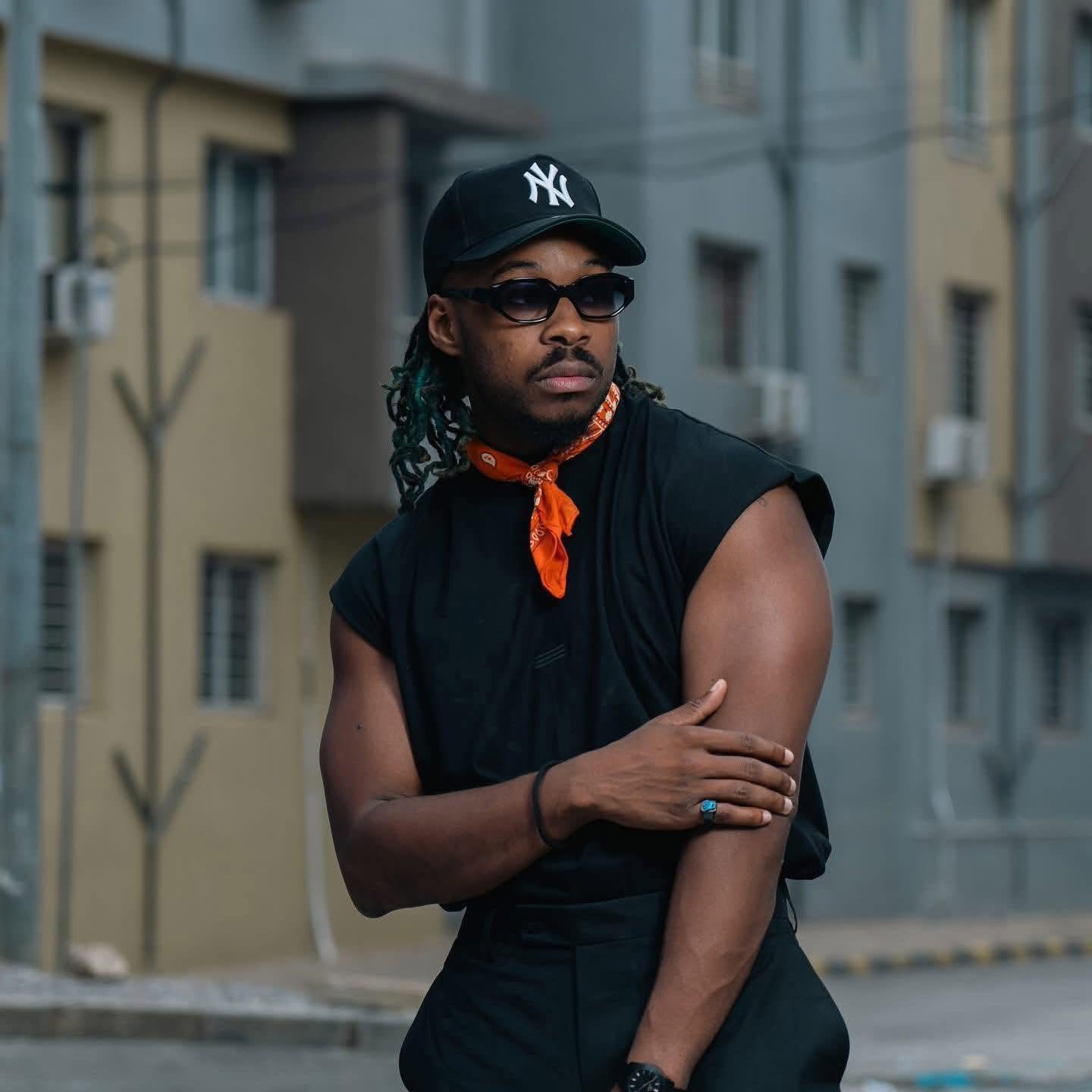
An Ivorian artist with a distinctly creative spirit, Miedjia is building a musical universe where rap, R&B, electronic influences and popular sounds intersect. Also a sound engineer, he approaches music through instinct and emotion. During a recent visit to Accra, Ghana, he spoke to Rolling Stone Africa about his identity, his influences, his 31-day creative challenge and his ambition to reach one million monthly listeners on Spotify before the end of the year.
What does the name Miedjia mean, and where does it come from?
Miedjia is my real first name. On my official documents, it is spelled differently because many African names lost their original spelling through colonisation. For my artist name, I decided to reclaim its authentic spelling. In my language, Miedjia means “Mr. Lion.” It is also the name of the man who raised my father.
I later added Fuego mainly to make it easier for people to find me online, because many people were not familiar with the name Miedjia. It also reflects my personality because I have a fiery temperament. Fire does not necessarily mean destruction, it can serve many purposes as long as it is controlled.
I chose the Spanish word “fuego” because I thought it sounded better than “feu” or “fire.” The people who follow me and connect with my universe, I call them the “Fuegoat.”
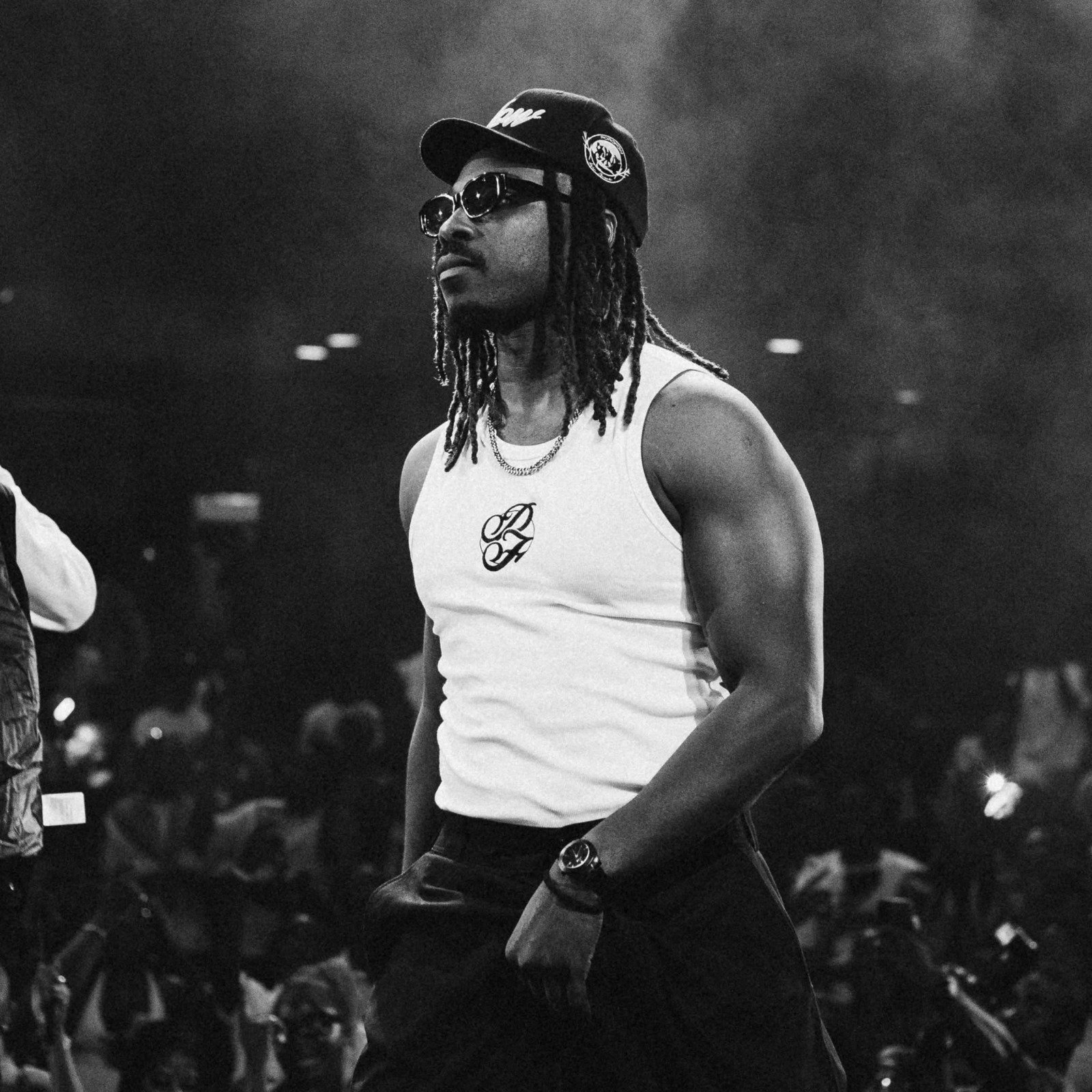
For people discovering you today, how would you introduce yourself beyond the artist whose music they hear on streaming platforms?
I would say that I am an instinctive artist. I try to make music that touches people rather than music that is necessarily designed to be mainstream. Instead of following trends, I prefer creating what speaks to me and what could also resonate with other people.
Your journey has taken you between Côte d’Ivoire and France. What do these different environments represent in your artistic identity?
I grew up in Côte d’Ivoire before moving to France. When I started making music, I was mainly influenced by French rappers. There is definitely a multicultural side to me, I can move easily between France and Côte d’Ivoire, and you can hear that in my music as well as in the way I speak.
Returning to Côte d’Ivoire also gave me the opportunity to rediscover the country and observe what had changed and evolved. At the same time, I kept a very strong Ivorian foundation, especially through the music my parents listened to, such as Daouda le Sentimental and other major figures of Ivorian popular music.
All of these experiences have naturally influenced the way I create.
Your sound blends rap, R&B and more electronic or popular influences. Is your decision not to limit yourself to one specific genre intentional?
Not really. A few years ago, I was much more scattered because I did not yet know exactly which direction I wanted to take. Today, my universe is more defined and more focused.
I am not trying to say that I am different from everyone else. I am simply someone who deeply loves music and enjoys doing what I do.
At the beginning of the year, you challenged yourself to create for 31 days. What exactly did the challenge involve, and what did you learn from it?
I did not release one song every day. Instead, every day I posted a video showing myself creating a song. Some of those tracks were later officially released.
The experience reinforced the way I already approach music. I create through instinct and feeling, and that really became visible during those 31 days. Without that spontaneity, it would be difficult to produce so much in such a short period of time.
The most productive artists are often the ones who are able to immediately turn an emotion or a situation into music.
The final day of the challenge featured Gabonese artist L’Oiseau Rare. How did that collaboration come about?
I really like Gabonese music. A Gabonese friend introduced me to different aspects of it and put me onto several sounds from the country, even though I still do not know the names of all the artists.
I met L’Oiseau Rare through Shado Chris. I am also a sound engineer, and L’Oiseau Rare needed to record something in the studio with Didi B. That day, Shado Chris was not available, so they came to my place instead.
The connection happened very naturally.
Behind the concepts people see on social media, there is a less visible reality involving work, fatigue and organisation. What part of your daily life does the public see the least?
I would say the organisational side.
The question people ask me most often is, “How do you manage to do all of this in 24 hours?” My answer is that 24 hours is a lot of time. We all have the same number of hours, but we do not use them in the same way.
Some people manage to accomplish extraordinary things within that same amount of time. That means it is possible with discipline and good organisation.
I’d rather be inspired by the exceptions than by what’s considered normal.
At the same time, I do not show much of that organisational process because if I also had to create content explaining how I organise myself, I am not sure I would still have enough time to actually do everything.
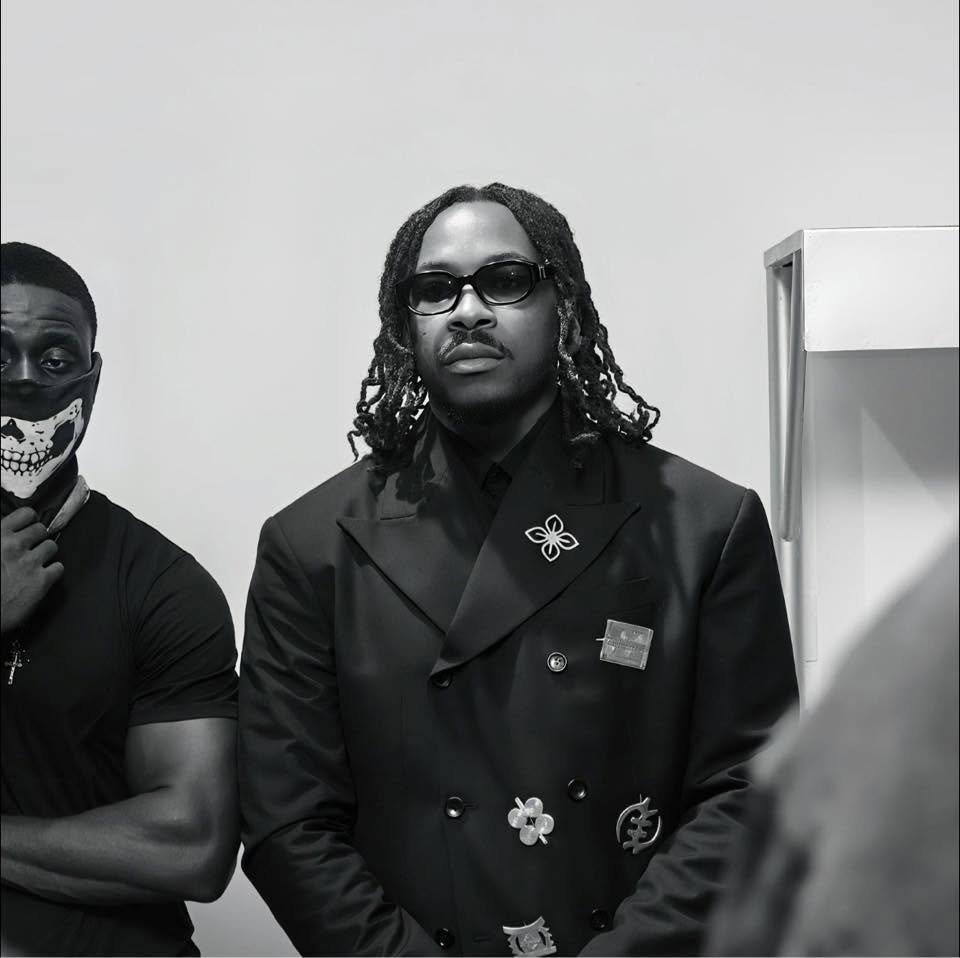
You now have the goal of reaching one million monthly listeners on Spotify. How do you plan to take on this new challenge?
The concept is very simple. When I started this challenge, I was at around 120,000 monthly listeners before dropping back to approximately 117,000. But that makes the goal even more exciting.
I like projects that are a little crazy and ambitious. I want to see how far my mind can go in finding the resources and strategies that will allow me to reach one million monthly listeners before the end of the year.
There are less than six months left, but some artists have already managed to reach that number in two weeks. So why couldn’t we do it in five months?
We are doing this interview in Accra, where you are currently visiting. Could you see yourself returning to Ghana to work and collaborate with local artists?
I came to Accra as a tourist, so I cannot leave saying that I truly know the city or its cultural scene.
Next time, I would like to come back for work, meet artists and explore different creative fields, regardless of genre.
I am already fortunate enough to know you, but I would need to immerse myself much more deeply in the local creative community. On my next trip, I would like to discover Ghanaian culture from the inside, directly through the people who are actively shaping it.
Through this conversation, Miedjia reveals himself as an ambitious artist, but above all, a methodical one. Behind the spontaneity he embraces lies genuine discipline, something essential to transforming ideas into tangible projects.
Between Côte d’Ivoire, France and new possibilities in Ghana, he is now pursuing a clearly defined goal, to continue expanding his music without sacrificing the instinct that has shaped his creative identity.