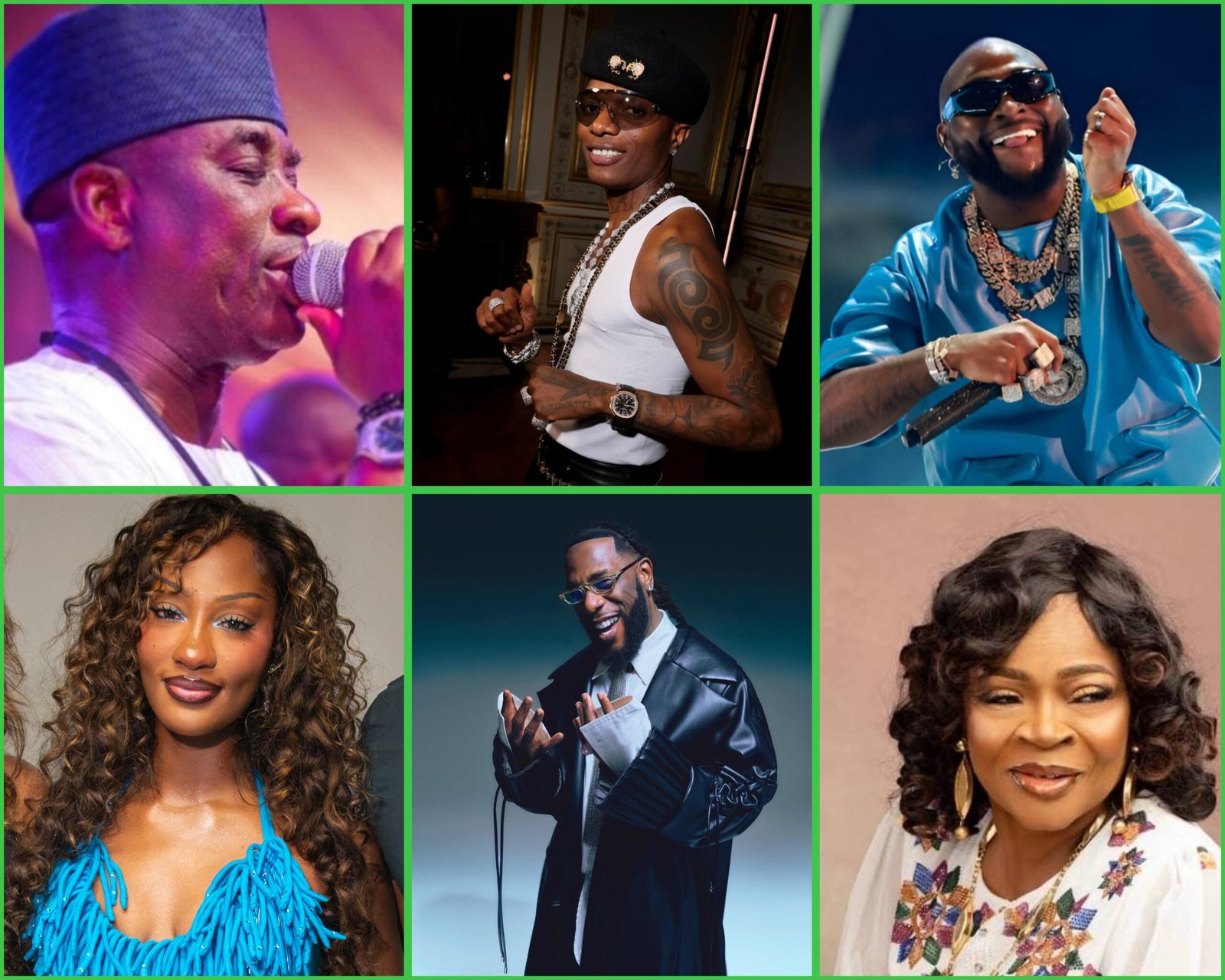
It’s Nigeria’s Independence Day! On October 1, 1960, Nigeria gained independence from the British colonial rule. It’s 66 years already, and Nigeria isn’t where it used to be. Nigerian artists have made an impact globally, putting the country on the global music map. To celebrate Nigeria’s Independence Day, we are taking a moment to appreciate these artists.
Not only the artists that are making waves currently, but also the pioneers. From Juju, Highlife, and Fuji legends to Afrobeats stars, we are celebrating the artists who have made Nigerian music travel far beyond its shores. These artists have introduced Nigerian music to international audiences, filled international arenas, topped global charts, and collaborated with some of the biggest names in the world and, given millions of people a reason to connect with Nigeria.
To celebrate Nigeria at 66, here are 66 artists whose music, creativity, influence, and achievements have helped put Nigeria on the global music map.
1. Fela Anikulapo Kuti
The late Fela Anikulapo Kuti deserves to be celebrated. He pioneered Afrobeats and made global impact during his lifetime. On January 31, 2026, he became the first African artist to receive a posthumous Grammy Lifetime Achievement Award.
2. King Sunny Ade
King Sunny Ade introduced Nigerian music to audiences far beyond Africa. The juju legend is known for his guitar talent and energetic performances.
3. Ebenezer Obey
Known as the “Chief Commander,” Ebenezer Obey is also one of the defining voices of Nigerian juju. His music combined Yoruba traditions with messages about life, morality, relationships, and society.
4. Onyeka Onwenu
Late Onyeka Onwenu was more than a singer. Her music made her one of Nigeria’s most respected cultural figures, while her international career helped introduce a different side of Nigerian music to the world.
5. Victor Uwaifo
The late legendary multi-instrumentalist and artist gave Nigeria one of its most recognizable international hits with “Joromi.” His creativity helped establish Nigerian highlife as a sound capable of travelling beyond the country.
6. Osita Osadebe
Late Osita Osadebe was one of the great ambassadors of Igbo music. His songs helped keep southeastern Nigeria’s rich music traditions alive for generations.
7. Sir Victor Olaiya
Known as the “Evil Genius of Highlife,” the late Victor Olaiya was one of the most influential pioneers of Highlife. His music helped shape the sound of early post-independence Nigeria.
8. I.K. Dairo
A pioneer of modern Nigerian juju, I.K. Dairo brought the genre to wider audiences and became one of the earliest Nigerian musicians to achieve international recognition.
9. Sikiru Ayinde Barrister
Late Alhaji Sikiru Ayinde Barrister created and pioneered Fuji music. He transformed Islamic music into a genre that became a major part of Nigerian pop culture.
10. King Wasiu Ayinde, Marshal
KWAM 1 took Fuji music to new audiences while modernizing its presentation. His longevity and influence have made him one of the biggest figures in Nigerian Fuji.
11. Saheed Osupa
The Fuji musician also deserves a spot on this list with how he makes Fuji a song that makes people think deeply about the meaning of the lyrics.
12. Wasiu Alabi Pasuma
He is another Fuji legend whose songs leave you moving on the dance floor. We also celebrate his career and sound.
13. Yinka Ayefele
Yinka Ayefele is known for pioneering the Gospel Tungba music style. He is a legend who deserves to be celebrated.
14. Salawa Abeni
Salawa Abeni, also known as the “Queen of Waka Music,” modernized waka music and broke gender barriers in the Nigerian music industry.
15. Lagbaja
From the early days when he gave us “Kokon Below” to later when he released “Skentele Skontolo,” we can still feel his impact in the Nigerian music industry.
16. 2Baba
From Plantashun Boiz to his remarkable solo career, 2Baba helped define modern Nigerian pop music. “African Queen” became a landmark song that introduced Nigerian pop to a wider international audience.
17. D’banj
With his energetic performances and global ambition, D’banj was one of the faces of Nigeria’s early 2000s pop explosion.
18. Don Jazzy
Although primarily known as a producer and executive, Don Jazzy’s contribution to Nigerian music is enormous. Through Mo Hits and later Mavin Records, he helped develop and nurture some of the country’s biggest stars.
19. P-Square
Although Peter and Paul Okoye of P-Square have separated to become solo artists. The music duo took Nigerian pop to stages around Africa and beyond. They were one of Africa’s most successful musical duos.
20. Wande Coal
With his exceptional vocals, Wande Coal is one of the defining voices of Nigeria’s transition into the modern Afrobeats era.
21. 9ice
9ice brought Yoruba language and culture into contemporary Nigerian pop in a way that resonated with audiences at home and abroad. “Gongo Aso” remains one of the defining songs of its era.
22. Banky W
Banky W helped build the infrastructure around Nigeria’s emerging pop industry while establishing himself as a successful recording artist. His EME label also played a role in the early careers of several major Nigerian artists.
23. Omawumi
With her powerful voice and commanding stage presence, Omawumi became one of the most recognizable female voices of her generation and an important part of Nigeria’s modern music story.
24. Asa
Asa’s soulful fusion of folk, pop, and jazz found listeners far beyond Nigeria. Her music and international tours established her as one of the best female singers Nigeria produced.
25. Tiwa Savage
Tiwa Savage has been instrumental in expanding the visibility of Nigerian female artists. From her early international experience to her solo career, she has consistently moved between Nigerian and global music spaces.
26. Yemi Alade
Yemi Alade is one of Nigeria’s and Africa’s most recognizable pop stars. Her song, “Johnny,” became a continental and international hit, while her multilingual music broadened her audience even further.
27. Flavour
Flavour’s fusion of highlife, Igbo cultural influences, and contemporary African pop helped introduce southeastern Nigerian sounds to a worldwide audience.
28. Timaya
Timaya helped popularize a distinct blend of dancehall, reggae, and Nigerian pop. His consistency and influence have made him an important figure in the evolution of contemporary Nigerian music.
29. Olamide
Olamide has played a major role in bringing indigenous-language music into the center of Nigeria’s contemporary pop culture. Through his music and YBNL, he has also helped nurture a new generation of Nigerian talent.
30. Phyno
Phyno demonstrated that an artist could build a massive mainstream career while predominantly recording in Igbo. His music has helped showcase southeastern Nigerian culture to audiences around the world.
31. Mr. Eazi
Mr. Eazi helped popularize a laid-back sound that travelled across Africa and into international music markets. His Banku Music movement reflected the fluid relationship between Nigerian and Ghanaian music.
32. Tekno
Tekno is one of the artists that helped shape the sound of contemporary Afrobeats. His work behind the scenes and as a performer has influenced the direction of Nigerian pop.
33. Adekunle Gold
Adekunle Gold has continually reinvented himself, moving from a traditional Nigerian pop sound into a broader Afropop and alternative space while maintaining a strong connection to Nigerian culture.
34. Simi
Simi’s melodious voice and songs have earned her a dedicated audience in Nigeria and beyond. Her music has helped strengthen the presence of female singer-songwriters in contemporary Nigerian pop.
35. Teni
Teni brought a bold personality and powerful vocals to Nigerian pop. Her music has helped broaden the range of personalities represented in contemporary Afrobeats.
36. Niniola
Niniola has carved out a unique space by blending Afrobeats with house and electronic influences. Her music has also attracted attention from international producers and audiences.
37. Brymo
Brymo is known as a pioneering Nigerian alternative artist. He is also famous for his philosophical lyrics and unique blend of African folk, soul, rock, and traditional Yoruba music.
38. Falz
Falz brought humor, social commentary, and Nigerian street language into his music. His ability to combine entertainment with observations about Nigerian society has made him one of Nigeria’s distinctive contemporary artists.
39. Show Dem Camp
The hip-hop duo of Ghost and Tec has helped establish an alternative, lyric-driven lane within Nigerian music. Their work has also connected Nigerian hip-hop with a wider global audience.
40. Duncan Mighty
Duncan Mighty brought Port Harcourt and Niger Delta influences into mainstream Nigerian music. His sound helped expand the cultural geography represented in Nigerian pop.
41. Seyi Shay
Seyi Shay has contributed to Nigerian pop through her music, songwriting, and collaborations. She wrote and produced music for global projects, including the soundtrack for Konami’s video game Crime Life: Gang Wars.
42. M.I. Abaga
M.I. Abaga has been one of the defining figures in Nigerian hip-hop. His lyricism, albums, and work with Chocolate City helped strengthen the foundations of Nigeria’s rap scene.
43. Ice Prince
Ice Prince became one of Nigeria’s most recognizable rappers with songs such as “Oleku.” His music helped demonstrate the commercial and international potential of Nigerian hip-hop.
44. Vector
Vector has remained one of the respected voices in Nigerian rap, known for his lyricism and contribution to Nigeria’s hip-hop culture.
45. Ladipoe
Ladipoe represents a new generation of Nigerian rappers blending hip-hop with Afropop. His music has helped demonstrate how Nigerian rap can continue evolving alongside Afrobeats.
46. Omah Lay
Omah Lay’s alternative take on Afrobeats has connected with listeners across continents. His music reflects the diverse directions Nigerian pop can take.
47. Fireboy DML
Fireboy DML has helped push Nigerian Afropop towards a more melodic and emotionally driven direction. His international collaborations have further expanded his reach.
48. Victony
Victony represents the resilience and creativity of Nigeria’s new generation. His distinctive sound and international collaborations have helped introduce his music to listeners far outside Nigeria.
49. Mayorkun
From “Eleko” to his later work, Mayorkun has established himself as one of the important voices of his generation.
50. Patoranking
Patoranking has helped place Nigerian dancehall and reggae-influenced music on international stages. His music draws from both Nigerian and Caribbean influences.
51. Iyanya
Iyanya’s “Kukere” was one of the biggest Nigerian pop records of its era. The song’s international popularity showed how Nigerian dance and local cultural influences could become global entertainment.
52. Odumodublvck
Odumodublvck has helped push Nigerian rap into international conversations. He is the first Nigerian rapper with an entry on the Global Spotify Chart.
53. CKay
CKay is known globally for his massive international hit single “Love Nwantiti” and pioneering the “Emo-Afrobeats” music style. “Love Nwantiti” was the first Nigerian solo song to exceed one billion streams on Spotify.
54. Shallipopi
Shallipopi’s street-pop sound and energetic personality have quickly made him one of the notable names in Nigeria’s new wave. His music reflects the constantly changing language and rhythm of Nigerian youth culture.
55. Young Jonn
From his influential work as a producer to his emergence as a recording artist, Young Jonn has played two important roles in Nigeria’s evolving pop story.
56. BNXN
BNXN blends Afrobeats with R&B, dancehall, and other global influences. His collaborations have helped position him within the international Afrobeats movement.
57. Johnny Drille
Johnny Drille has carved out a distinctive space with his folk-inspired sound and heartfelt songs. His music represents the softer, singer-songwriter side of Nigeria’s global music story.
58. Seyi Vibez
Seyi Vibez is known for his unique street-pop and Afro-fusion style that blends indigenous Yoruba lyrics, Islamic vocals, and traditional Fuji and Apala elements.
59. Kizz Daniel
Kizz Daniel has consistently delivered melodic Afropop songs that connect with audiences across Africa and beyond. His music has contributed to Afropop’s growing international footprint.
60. Ayra Starr
Ayra Starr has quickly become one of the leading voices of her generation. Her music blends Afrobeats, R&B, and pop while her international audience continues to grow.
61. Rema
Rema represents a new generation of Nigerian artists who grew up in a world where Afrobeats was already global. “Calm Down” became a major international success and further expanded the reach of Nigerian pop.
62. Asake
Asake brought Fuji, Yoruba street-pop, and Afrobeats together in a way that resonated with audiences far beyond Nigeria. His rapid rise has made him one of the defining artists of the current Afrobeats era.
63. Tems
Tems is one of Nigeria’s most internationally recognized contemporary voices. Her collaborations and solo work have taken her sound to some of the biggest audiences in the world.
64. Davido
Davido is one of the major faces of the new generation of African pop. From “Dami Duro” and “Fall” to his international collaborations, he has helped make Nigerian music a visible part of global pop.
65. Wizkid
Wizkid’s evolution from a young Lagos star to an international superstar reflects the growth of Nigerian music itself. His collaborations with global artists and his ability to move comfortably between Afrobeats and international pop have helped expand Afrobeats’ reach.
66. Burna Boy
Burna Boy took Nigerian music to some of the world’s biggest stages. His Grammy win and international tours are a major chapter in the global recognition of Nigerian music. His World Cup song with Shakira, “Dai Dai,” is the first music video released in 2026 to surpass one billion views on YouTube.
As Nigeria marks 66 years of independence, we celebrate the 66 artists above for their impact on the music industry. They are the artists who have helped the world hear us.
Happy Independence Day Nigeria.