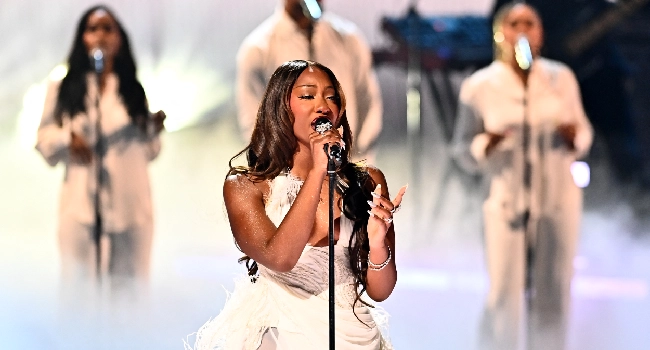
There was a time African artists arrived at the BET Awards as exciting newcomers invited to showcase a rapidly growing sound that many in the West still considered niche. Their victories, while celebrated, often came with caveats. They were “international” stars, acknowledged from a distance and separated from the night’s biggest conversations.
The 2026 BET Awards told a different story. From Nigerian superstar Tems taking the stage during the ceremony held on June 28, 2026, at the Peacock Theatre in Los Angeles, California, USA, to the presence of African artists among the nominees in the main global categories, this year’s show is a confirmation that Africa is no longer knocking on the door of global music; it is already inside the room.

This year, African artists weren’t included simply because they represented a growing market. Their nominations reflected careers that now exist comfortably within the global mainstream.
Tems entered the awards with three nominations, which are the Best Female R&B/Pop Artist, BET Her for “First”, and Viewer’s Choice Award for “Raindance” with Dave, while Nigerian heavyweights Wizkid, Burna Boy, and Asake also secured recognition across major categories.
Wizkid and Asake were nominated together in the Best Group category for their collaborative project REAL, Vol. 1. Burna Boy, on the other hand, was nominated for Best Collaboration for his feature on American rapper Gunna’s hit single “WGFT”.

South Africa’s Tyla also earned two nominations. She was nominated for Video of the Year and the Viewer’s Choice Award for “Chanel”.
These nominations matter because these artists are no longer succeeding solely through African audiences; they are charting globally, selling out arenas across continents, collaborating with some of the world’s biggest stars, and influencing the direction of contemporary pop, R&B and hip-hop.
The BET Awards have not always had an easy relationship with African music. When the ceremony introduced the Best International Act: Africa category in 2011, it marked an important step towards recognising talent from the continent. But it also attracted criticism. A lot of Africans questioned why the award category was presented backstage, away from the main televised broadcast.
In 2018 BET started awarding the Best International Act on the main live stage. In 2026 it completely eliminated the standalone international/African category and nominated African artists directly alongside American and British stars in general categories.
Now African artists are not defined by a single regional category. Instead, they compete across genre-specific and general award fields, collaborate with American and European stars as equals, and appear as performers whose presence feels entirely natural within the broader celebration of Black music.
At the 2026 BET Awards, Tems’ presence as both a nominee and performer reflected an artist whose place within global music is no longer questioned. It is assumed. Her rise has been remarkable because she has resisted becoming a simplified version of herself for international audiences. Her songwriting remains unmistakably Nigerian.
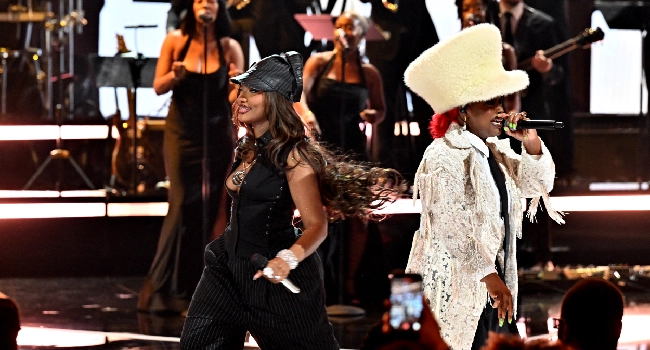
What we have learnt from this year’s award is that African music has moved beyond seeking validation. But this does not mean that African artists now enjoy equal opportunities across every corner of the global music business.
There are still disparities in touring infrastructure and executive representation.
English-language African artists often receive greater visibility than musicians creating in French and Portuguese.
Many talented artists from East, Central and North Africa remain significantly underrepresented in global conversations. The next stage of African music’s evolution will require expanding the spotlight beyond a handful of superstar names, as real progress will be to recognise the continent’s extraordinary diversity, not just celebrate its biggest exports.
The most memorable moments of the 2026 BET Awards celebrated Black excellence across generations, from Teyana Taylor’s emotional recognition as Icon of the Year to Lauryn Hill receiving the inaugural Living Legend Icon Award. It was a ceremony rooted in legacy while looking towards the future.
Africa belonged naturally within that story, not because the continent needed permission to be there, but because the global sound of Black music has changed, and Africa helped change it.
The question after this year’s BET Awards is no longer whether African artists deserve seats at the industry’s biggest tables; they already belong there.