African music has rarely commanded this much global attention. From Lagos and Accra to Johannesburg, Nairobi, Abidjan and Dar es Salaam, artists from the continent are reaching audiences that would have been considerably harder to access a decade ago. African sounds are travelling, collaborations are becoming increasingly borderless, and global conversations around the continent’s creative economy have changed considerably.
But visibility and infrastructure are not the same thing.
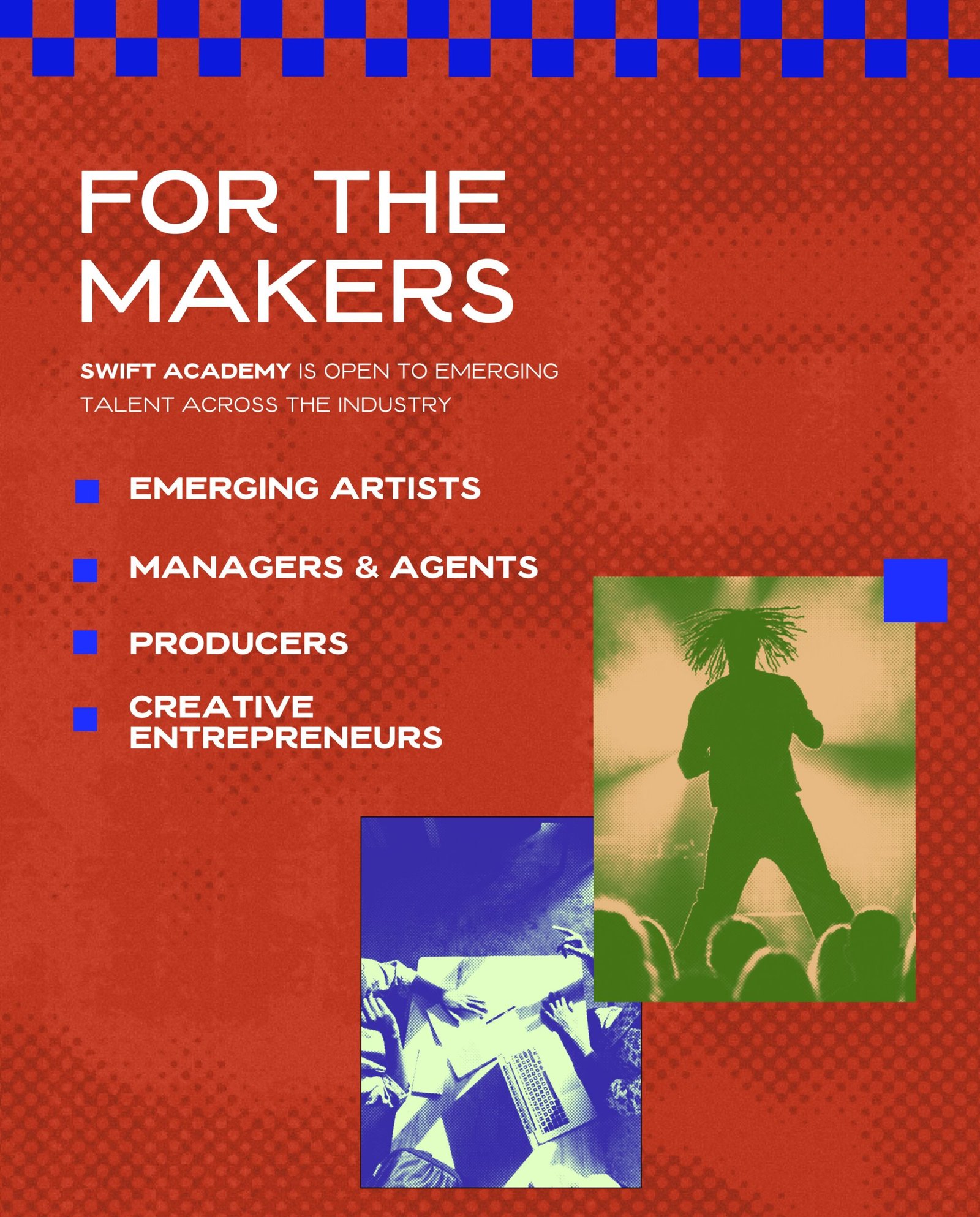
Behind the success stories that dominate streaming charts, festival stages and social media feeds is a much larger community of emerging artists, producers, songwriters, managers, creative directors and other music professionals attempting to build sustainable careers in an industry that is still developing many of the structures required to support them.
It is within this context that Martell is launching Swift Academy, a new pan-African talent development platform designed to identify, develop and connect emerging African music creatives and professionals with mentorship, industry expertise, networks and opportunities.
Curated by Africa House, Swift Academy will launch its first edition in Kenya, with applications opening on August 17, 2026, before the initiative expands across Africa over the following 12 months. The programme aims to support 100 emerging creatives during its first year.
The ambition is significant because the conversation around African music is increasingly moving beyond discovery.
The question is no longer simply whether African talent can reach international audiences. We have enough evidence to know that it can. A more important question now is whether the industry surrounding that talent can develop quickly enough to transform moments of visibility into sustainable careers and businesses.
Beyond the Breakthrough
For years, conversations around the rise of African music internationally have naturally focused on artists. They are the most visible representation of an ecosystem whose influence has expanded dramatically.
But an industry cannot be built by artists alone.
Behind every sustainable music career is an increasingly complex network of people: producers, engineers, songwriters, managers, lawyers, publicists, photographers, videographers, stylists, booking agents, tour managers, A&Rs, marketers, designers and executives.
For emerging professionals, access to that network can be as important as talent itself.
This is particularly relevant across African markets where creative ability is abundant but access to mentorship, professional networks and structured career-development opportunities remains uneven.
According to figures shared as part of the Swift Academy launch, Sub-Saharan Africa’s recorded music market reached $120 million in 2025, following more than 15 percent year-on-year growth for two consecutive years.
Those numbers point towards an industry moving in the right direction. But rapid commercial growth also raises another question: who is being equipped to participate in that growth?
Swift Academy is positioning itself within that gap.
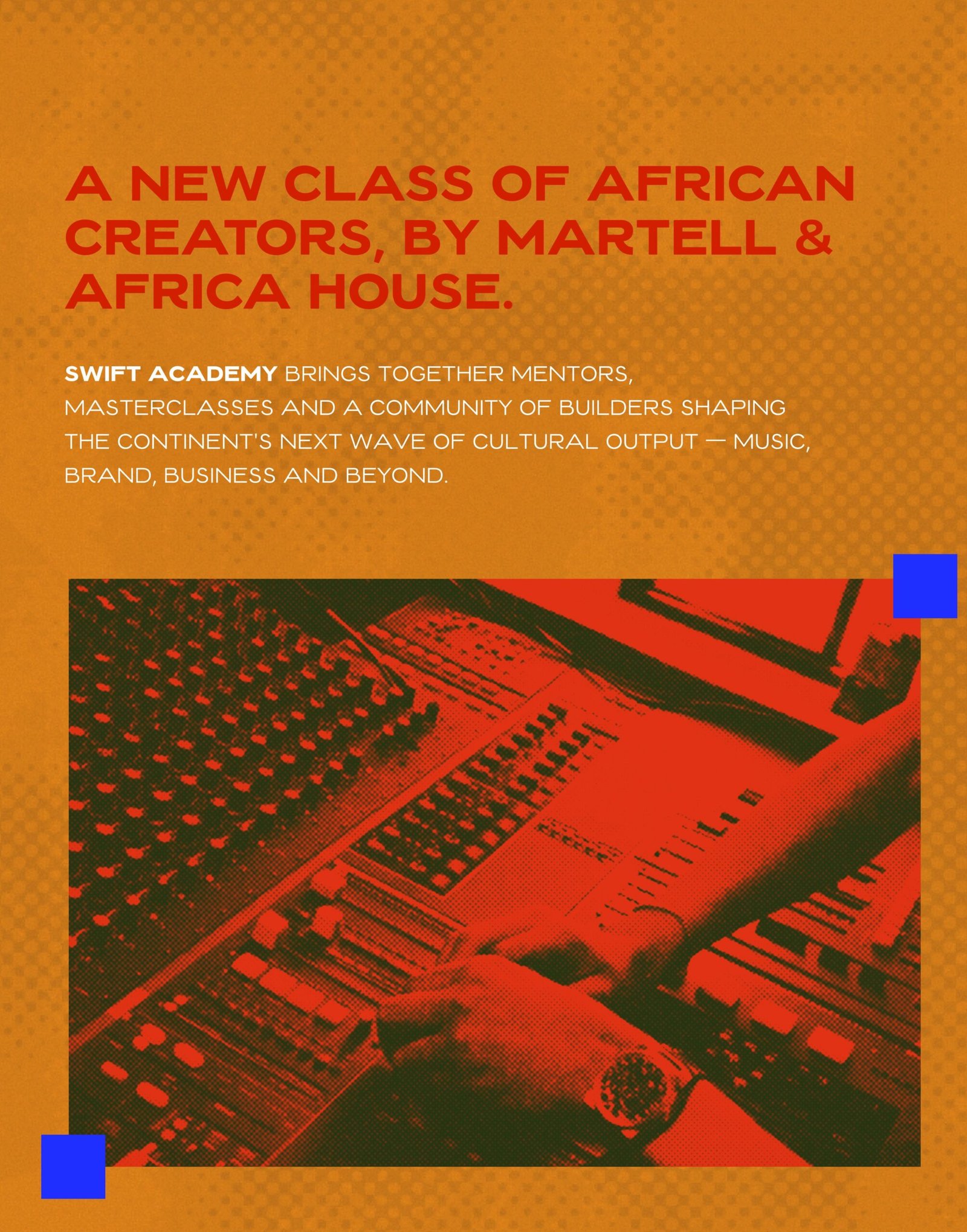
Rather than approaching talent development solely from the perspective of performance or artistic discovery, the platform is intended for both music creatives and professionals, connecting participants with experienced mentors, practical knowledge and relationships within the wider industry.
“At Martell, we believe in celebrating progress, championing collective success and supporting creators as they pursue excellence on their own terms,” says Lanre Odutola, Head of Culture & Partnerships at Martell.
“Our journey within African music has allowed us to build meaningful relationships across the ecosystem and understand where sustained support can create greater opportunity.”
For Odutola, the academy represents an extension of those relationships rather than a standalone intervention.
“Swift Academy brings that commitment to life by helping emerging creatives and professionals strengthen their skills, access experienced mentors and build connections that can support their growth,” he adds. “Through the platform, we want to contribute to the continued progress of African music alongside the people shaping its future.
Why Kenya Matters
Choosing Kenya for the first edition is notable.
Nairobi has long occupied an interesting position within East Africa’s creative landscape. The city has produced artists, producers, DJs and independent creative communities across hip-hop, gengetone, alternative music, electronic sounds and contemporary African pop,
while also functioning as an important regional centre for media, technology, advertising and culture.
Like many African markets, however, the challenge has not necessarily been the absence of talent.
The more persistent question is how talent moves from potential to profession, and how creatives gain access to the knowledge and relationships that allow them to navigate an industry extending far beyond their home market.
That distinction matters at a moment when African music itself is becoming increasingly interconnected.
A record can be created in Nairobi, gain traction on social media in Johannesburg, find an audience in Lagos and eventually travel into Europe or North America. The geography of music discovery has changed dramatically.
Professional networks need to evolve with it.
Swift Academy’s pan-African structure could therefore prove particularly relevant if it succeeds in creating relationships that continue beyond individual workshops or events.
Building Networks, Not Just Moments
Africa House will serve as the curatorial partner for the programme.
Operating across Africa and its global diaspora, the platform works at the intersection of culture, talent and business, bringing together creatives, entrepreneurs and cultural leaders through events, partnerships and community-led initiatives.
That existing network forms an important part of Swift Academy’s proposition.
“Swift Academy reflects what Africa House was created to do: connect the talent that already exists across the continent with the ecosystems and opportunities that allow it to grow,” says Jade Kelly Wilson, co-founder of Africa House.
For Wilson, access is central to the programme’s purpose.
“Africa House is known for creating curated, exclusive spaces that bring people together and we’ve always felt it was important to also create pathways for emerging talent to access those spaces through mentorship, knowledge-sharing and meaningful connections with established creative leaders.”
That idea — creating access rather than simply creating exposure, may ultimately be one of the more important elements of initiatives such as Swift Academy.
African music does not suffer from a shortage of talent competitions, showcases or viral discoveries. What remains less consistently available is the infrastructure that comes after discovery: understanding contracts, building teams, managing intellectual property,
developing professional relationships, entering new markets and creating careers capable of surviving beyond a breakout song or moment.
“Swift Academy is a natural extension of that work,” Wilson continues. “We’re excited to create a platform where emerging creatives can learn, collaborate and build relationships that extend beyond their immediate market.”
The Next Phase of Africa’s Music Economy
The timing of the programme also reflects a broader shift in the African music business.
For much of the last decade, international attention has understandably centred on the global rise of African artists and sounds. Afrobeats became an international commercial force, amapiano travelled far beyond South Africa, Francophone African artists strengthened their position across Europe and the continent, while scenes in East Africa continued developing their own audiences and identities.
Yet the next stage of growth will require more than exporting successful artists. It requires stronger local and regional ecosystems.
That means developing the people who understand the business behind the music as seriously as the people making the music itself.
It also means creating more opportunities for African professionals to build relationships with one another.
Historically, an emerging creative in Nairobi might have looked first towards London, Paris or New York for access to an international network. Today, some of the most valuable relationships may equally exist in Lagos, Johannesburg, Accra, Abidjan, Kigali or another African creative capital.
A truly pan-African platform has the potential to shorten those distances.
That possibility becomes particularly interesting when considering the number of young Africans already entering the creative economy through unconventional routes. Some begin as content creators. Others start as photographers, DJs, producers or independent managers before developing into multidisciplinary creative professionals.
Their careers do not always follow traditional industry pathways because, in many cases, those pathways are still being built.
Programmes like Swift Academy therefore arrive at an important moment: African creativity is becoming increasingly valuable internationally, while the continent is simultaneously determining what kind of industry it wants to build around that value.
From Cultural Presence to Long-Term Investment
For Martell, Swift Academy also represents the continuation of a relationship with African music and culture that has developed through various cultural platforms and experiences over the past four years.
The move from supporting cultural moments to investing in talent development is worth paying attention to.
Brand involvement in African music is not new. As the continent’s cultural influence has grown, so has the presence of international brands around concerts, festivals, artist partnerships and entertainment campaigns.
The more consequential question, however, is what remains after the campaign ends.
Long-term cultural investment requires more than association with successful artists. It requires engagement with the ecosystem producing the next generation of them, and with the professionals who will manage, market, record, photograph, book, style and develop their careers.
Swift Academy will ultimately have to be measured by what its participants are able to build from the access it provides. Mentorship programmes are most valuable when relationships continue after the formal programme ends, and professional networks matter when they translate into real collaboration, knowledge and opportunity.
That will be the test as the academy expands beyond Kenya.
But its underlying premise addresses one of the most important conversations happening within African music today.
Africa has demonstrated its ability to produce culture capable of travelling around the world.
The next challenge is ensuring that the infrastructure, expertise, businesses and professional networks surrounding that culture grow with the same ambition.
Swift Academy’s first cohort in Kenya will offer an early indication of how Martell and Africa House intend to contribute to that next chapter.
Applications for the Kenya edition of Swift Academy will open on August 17, 2026. Emerging creatives and music professionals interested in taking part can pre-register here.