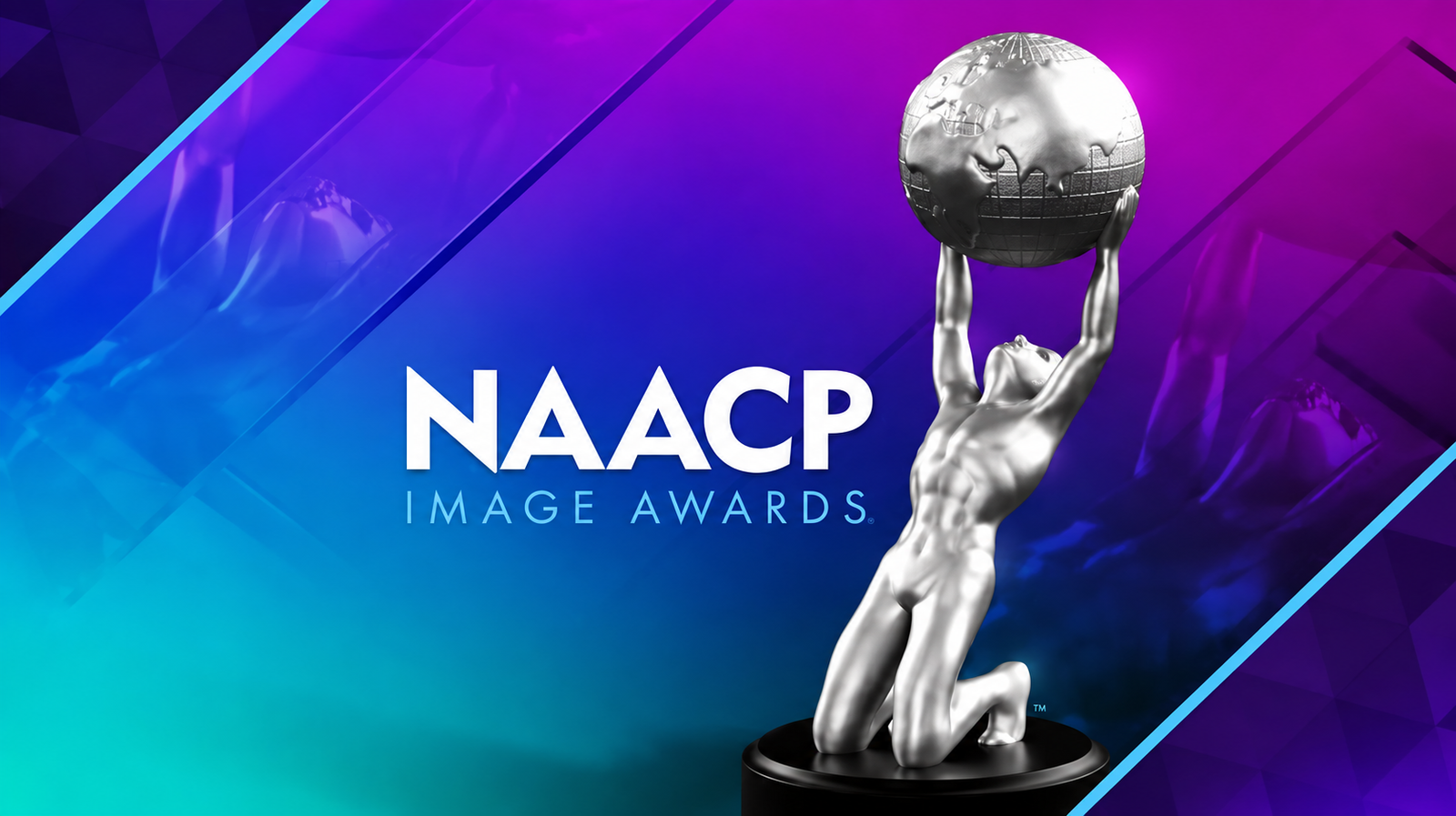
For more than a century, the NAACP has stood at the center of the fight for the recognition, dignity and advancement of Black people in America. For decades, the NAACP Image Awards have celebrated the artists, storytellers and cultural architects whose work has shaped not only Black culture, but global culture. Now, that definition of Black excellence is expanding.
For its 58th edition, the NAACP Image Awards has introduced 10 new categories dedicated specifically to African excellence across music, film and television, outstanding African Album, Outstanding African New Artist, Outstanding African Song, Outstanding African Motion Picture, Outstanding Actor in an African Motion Picture, Outstanding Actress in an African Motion Picture, Outstanding Directing in an African Motion Picture, Outstanding African Television Series, Outstanding Actor in an African Television Series and Outstanding Actress in an African Television Series.
These categories are much more than ten trophies. They represent ten new doors through which an emerging filmmaker in Lagos, an actress in Accra, a television creator in Johannesburg, a singer in Abidjan or a director in Nairobi may suddenly find their work entering conversations thousands of kilometers away. They are doors connecting industries that have spent generations influencing one another without always having the infrastructure to recognize, reward and economically empower that relationship. Most importantly, they are doors bringing Black America and Africa closer together at a moment when building bridges across the global Black world has never mattered more.
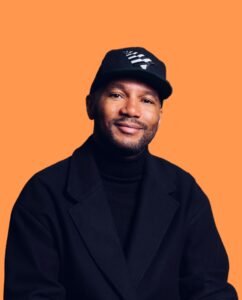
Behind institutional change are often individuals who refuse to stop asking a question. For actor, producer and humanitarian Jimmy Jean-Louis, that question was simple: How can an institution dedicated to celebrating Black excellence fully do so without Africa? Jean-Louis says he had been raising the idea with NAACP President and CEO Derrick Johnson for years. His conviction was equally straightforward: if we are going to celebrate Black excellence, Africa cannot remain peripheral to that celebration. Africa provides roots, historically, culturally and creatively, to a global Black story much larger than any single country. Jean-Louis had already been thinking about these connections through his own work, including a film project with the legendary Angélique Kidjo and previous efforts to create stronger pathways between Hollywood and Nollywood. Those efforts did not always develop as envisioned, but the idea never disappeared. Then the global explosion of African music changed the cultural landscape. Afrobeats became unavoidable. African artists began filling arenas around the world. Amapiano travelled from South African townships to dance floors thousands of miles away. African films and television productions reached international audiences through streaming platforms. African fashion, language, dance and aesthetics increasingly became part of global popular culture.
For Jean-Louis, the NAACP possessed something particularly important: history, credibility, infrastructure and a reputation built over generations. It was simply a question of finding the right people to turn an idea into something tangible. Then came an encounter that helped accelerate everything. Jean-Louis met entertainment executives Belma Michael Johnson and Dana Sims while having a drink. The subject of Africa and the NAACP Image Awards came up. Jean-Louis encouraged them to pursue the idea, and instead of allowing the conversation to remain a conversation, they went to work. With the involvement and support of key people within and around the NAACP, including British Robinson, an extraordinary committee began taking shape, bringing together people whose careers span entertainment, music, finance, film, media and African creative industries. The committee includes Steven Adams of Alta Global Media; Erica Grayson of LVRN; Opeyemi Iredumare, consultant; Belma Michael Johnson of Black Factual Entertainment; Jimmy Jean-Louis, actor, producer and humanitarian; British Robinson, Africa Chair at the Milken Institute; Julian Schuster, consultant; and Dana Sims of Industry Entertainment. What emerged was not simply a committee advocating for African categories, but a group attempting to build infrastructure between two enormous cultural ecosystems.
One of the most important implications of the NAACP’s decision is its potential to expand how African creativity itself is understood internationally. For much of the Western mainstream, contemporary African music has increasingly become synonymous with one word: Afrobeats. Its extraordinary global rise deserves celebration, but Africa is not a genre. It is 54 countries, thousands of languages and an almost immeasurable number of musical, artistic and storytelling traditions. From highlife, juju and fuji to amapiano, mbalax, soukous, coupé-décalé, makossa, Afro-house and countless traditional and contemporary forms, African music cannot be contained within a single category. The same applies to cinema. Nollywood may be one of the continent’s most internationally recognizable film industries, but extraordinary filmmaking exists from Senegal to South Africa, Kenya to Côte d’Ivoire, Morocco to Ghana and far beyond.
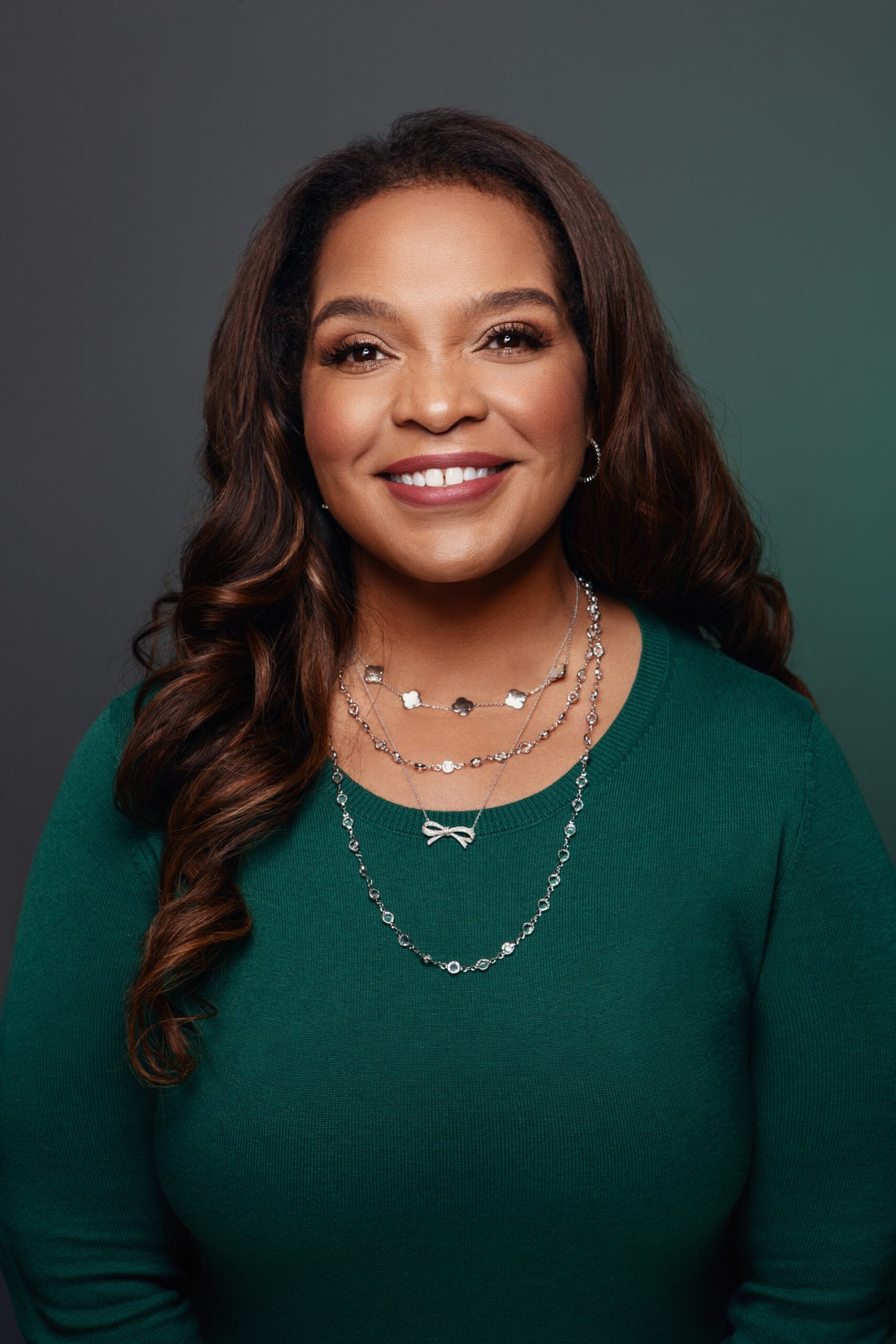
Erica Grayson of LVRN sees the expansion as an opportunity for education as much as celebration. For Grayson, the continent sits at the foundation of music and storytelling. The West has begun reconnecting with Africa more visibly, but there remains significant work to do in understanding the depth of African history and its influence on music around the world. From Fela Kuti to Black Coffee and generations before and between them, the story is infinitely bigger than a single global trend. Africa is everywhere. These categories create an opportunity to begin showing audiences just how much. This initiative therefore matters not simply because African artists will receive awards, but because recognition can become education. It can encourage audiences to look beyond what is currently trending and discover the extraordinary diversity of a continent whose creative traditions have influenced global culture for generations.
Awards matter because visibility matters, but visibility is not merely symbolic. It has economic consequences. Committee member Opeyemi Iredumare understands that personally. Years ago, during a visit to Memphis, Iredumare entered a music studio and museum and encountered parts of Black American musical history he had never known. He walked out crying. He learned more about gospel, the evolution of Black American music and the extraordinary role Black communities played in creating genres that would ultimately shape global popular culture. The experience left him with a question: How could Black communities separated by geography know so little about one another’s histories? Fifteen years ago, he says, an initiative like the one now being undertaken by the NAACP felt almost unimaginable. Today, he describes it as a dream come true and a full-circle moment. But his argument goes beyond culture. “The economics don’t make sense when we separate.” That may be one of the most important observations surrounding this entire initiative, because recognition creates discovery. Discovery creates audiences. Audiences create market access. Market access creates investment, distribution, touring opportunities, licensing, partnerships and careers. An African filmmaker recognized by an American institution can suddenly enter conversations with studios, producers, agents and distributors who may never previously have encountered their work. An African actor can become visible to casting directors beyond their domestic industry. A television series can travel. An artist can reach a new audience. A story can cross an ocean. What begins as an award category can become an economic corridor.
There is another conversation that this expansion forces the global entertainment industry to confront: how value is assigned to African success. As Juju McLean observed during our conversation, an African artist can accumulate millions of streams on the continent and still find that those numbers are not always perceived internationally with the same weight as equivalent success in Western markets. But a million listeners are a million listeners. African audiences cannot continue to be treated merely as emerging consumers while African creators are valued differently because their success originated in Lagos, Accra, Johannesburg, Nairobi or Abidjan rather than Los Angeles, London or New York. The global creative economy cannot enthusiastically consume African culture while undervaluing the markets and creators producing it. Recognition from an institution with the history and cultural authority of the NAACP can contribute to changing that equation.
For Steven Adams, who has spent approximately 15 years working to strengthen connections with the African continent, seeing an institution as significant as the NAACP participate in this work represents an extraordinary moment. “For the last 15 years, I have been working on connecting the continent,” he reflected. “To see something as powerful as the NAACP working on this is powerful. I can only imagine what will come out of this.” And the possibilities extend far beyond entertainment. British Robinson’s presence on the committee is particularly significant because she brings a perspective connected to global finance, investment and Africa through her work with the Milken Institute, where she serves as Africa Chair. For years, conversations around Africa have too often been framed around aid, instability or what the continent supposedly lacks. A different conversation is emerging: What happens when Africa is understood through investment? Through intellectual property? Through creative industries? Through market opportunity? Through ownership? Africa’s creative economy may prove to be one of the most important arenas through which perceptions of the continent are transformed. Music, film and television do something economic reports alone cannot: they allow people to encounter one another. Before someone visits a country, they may hear its music. Before they understand its politics, they may watch its films. Before they invest in its economy, they may fall in love with its culture. Culture can become the first bridge. Commerce can follow.
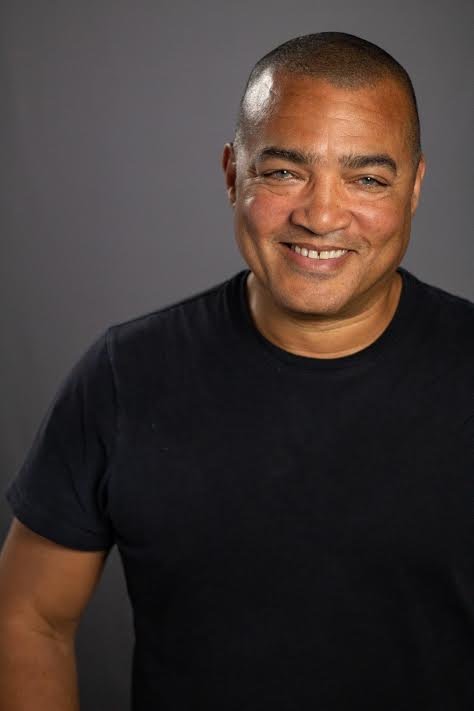
For Belma Michael Johnson, there is another reason to believe this initiative can endure: the people behind it. Everyone involved in the committee, he explained, arrived at this work with an independent commitment to the vision long before becoming part of the collective. He recalls encountering Steven Adams’ work and seeing something extraordinary in the communities being assembled. He remembers listening to Erica Grayson speak on a panel and being struck by the depth and thoughtfulness of her understanding of music, describing her as one of the smartest and most thoughtful people he had encountered in the industry over nearly two decades. These were not people selected simply to occupy seats around a table. They had already been building bridges in their respective industries. Now they were building one together. “This committee, this group is the reason why it will succeed,” Johnson said. That distinction matters. Institutions can announce categories. People build movements.
There is something deeper at stake here. For generations, conversations between Africa and its diaspora have often begun with separation: African. African American. Caribbean. Afro-Latino. Black British. Francophone. Anglophone. Lusophone. Different histories, different languages and different experiences. Those distinctions are real and deserve to be understood, but they do not have to become walls. Across the Atlantic, Black communities have continuously influenced one another, sometimes without even realizing it. The musical conversation alone stretches across centuries. African rhythms survived displacement and transformed throughout the Americas. Black communities created gospel, blues, jazz, soul, funk, reggae, hip-hop and countless other forms. Those sounds travelled back across the Atlantic and influenced generations of African artists. African sounds then travelled outward again, evolving into new movements that today influence artists everywhere. It has never been a one-way exchange. It is a circle. And now institutions have an opportunity to build structures worthy of that history.
The NAACP’s decision deserves celebration, but its greatest significance will not be measured by the announcement itself. It will be measured by what happens next. Who gets discovered? Who receives investment? Which films find distribution? Which actors cross markets? Which collaborations are born? Which young African creator sees someone from their country recognized on an international stage and suddenly understands that their own dream is possible? And perhaps most importantly: what other institutions follow? Because representation cannot stop at invitations to the room. Eventually, the architecture of the room itself must change. Africa should not be treated as an occasional international addition to Black culture. It is foundational to the global Black story. And the diaspora should not be understood as disconnected branches with little relationship to the continent. It represents centuries of African-descended people creating extraordinary cultures, institutions and movements across the world.
It is up to us to keep building bridges to bring these different worlds closer together, rather than allowing what separates us to push us further apart. That responsibility extends beyond the NAACP. It belongs to artists, executives, journalists, investors, institutions, governments and audiences on both sides of the Atlantic. We need more co-productions between Hollywood and African film industries, more investment flowing in both directions, more African executives in global rooms, more diaspora creators working on the continent, more African stories distributed internationally without first having to be translated through a Western gaze, more knowledge of one another, more ownership, more exchange and more bridges. Because at a time when the world seems increasingly determined to tell us what separates us, perhaps one of the most powerful things Black people across the world can do is remember what connects us. The NAACP has built an important new bridge. Now millions of us have the opportunity to cross it, and then build another.