There is a particular cruelty in being celebrated by a nation that refuses to see you as its equal. To be applauded for your extraordinary abilities, to carry your country’s flag onto the world stage, to bring home its greatest sporting honors, and yet return to a society where the color of your skin determines whether you are worthy of being served in a restaurant, welcomed into certain spaces, or afforded the most basic human dignity. This was the America in which Muhammad Ali became a champion.
In many ways, it is an America whose contradictions remain painfully familiar today. Long before the world would know him as Muhammad Ali, before his name became synonymous with greatness, courage and resistance, he was Cassius Marcellus Clay Jr., a young Black man growing up in a country that had already decided what he could and could not become. But Ali would spend his life challenging those limitations.
He understood something that being extraordinary at what you do should never be the price of being treated as an equal human being.
His greatness was not simply that he could defeat the most formidable opponents in the world; it was that he refused to surrender his identity, his convictions or his humanity to a society that expected his gratitude for opportunities while denying him fundamental human rights.
That is why; decades after his most celebrated victories, Muhammad Ali remains one of the most important figures in the history of sport, activism and the global struggle for Black dignity.
Muhammad Ali did not simply fight to become the greatest; he fought for the right to define what greatness meant to him and millions of his people in America and across the world.
A GOLD MEDAL COULD NOT BUY HIM EQUALITY
In 1960, an 18-year-old Cassius Clay travelled to Rome to represent the United States at the Olympic Games. He returned home with a gold medal.
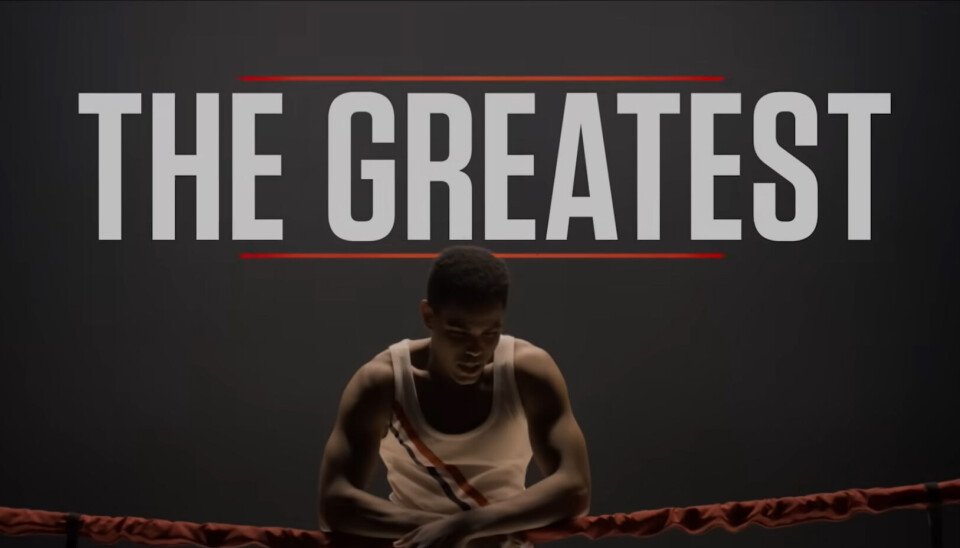
For a young man from Louisville, Kentucky, it was a great achievement. He had conquered the international stage, demonstrated exceptional talent and brought honor to the very country whose racial divisions had shaped his childhood. But the America to which he returned was not prepared to extend the same recognition to his humanity that it had extended to his athletic abilities. This contradiction forms one of the most powerful foundations of The Greatest, the new Prime Video series executive produced by Michael B. Jordan and Lonnie Ali, Muhammad Ali’s wife.
The series revisits the early life of the man who would become a global icon, exploring the experiences, relationships and racial realities that shaped his understanding of himself and the world around him. In one particularly poignant sequence, the young Olympic champion enters a restaurant wearing the medal he has just won for his country and yet, he is refused service because he is Black. The same young man who was considered worthy of representing America before the world was not considered worthy of sitting down and being served in his own country.
His gold medal could open doors to international recognition, but it could not dismantle the racial barriers he, and millions of Black people were facing at home.
The series depicts Clay responding to this humiliation by throwing his Olympic medal into a river, a dramatic representation of the conflict between national pride and personal dignity. The historical circumstances surrounding the loss of Ali’s original medal remain disputed, but the symbolism of the scene speaks to a much larger truth.
It forces us to ask: What does it mean to win gold for a country that continues to treat your humanity as negotiable? This question reaches far beyond Muhammad Ali. It is a question that has followed generations of Black athletes, artists, intellectuals and leaders who have been celebrated for their contributions while simultaneously confronting discrimination in the societies that benefit from their excellence. It reminded us of the many times some of the greatest Black Athletes in America have been asked to “shut up and dribble” while being applauded.
The applause has often been loudest when Black achievement serves national pride. The demand for silence has often been strongest when those same individuals challenge national injustice.
THE GREATEST FIGHT WAS NEVER INSIDE THE RING
Muhammad Ali understood the power of his platform; and beyond that, the responsibility that came with it. Indeed, he recognized that fame, wealth and international admiration could not erase the realities faced by millions of Black Americans who did not have the privilege of his visibility.
He could have chosen a different path and enjoyed his success; embraced his celebrity and avoided the uncomfortable questions surrounding race, inequality and injustice. He could have become the champion America wanted him to be: one who punches and kept his mouth shut. But instead, he became something far more consequential: a man who was willing to confront the very structures that sought to celebrate his talent while limiting his freedom.
His journey toward activism was inseparable from his journey toward self-discovery. The racism he experienced was not simply a series of personal humiliations. It was part of a larger system that shaped where Black people could live, work, study, travel and exercises their basic human rights.
For Ali, recognizing this reality meant looking beyond the individual prejudices he encountered and examining the deeper contradictions of American society. How could a nation proclaim freedom while denying it to so many of its own citizens? How could it celebrate a Black champion on the international stage while expecting Black communities at home to accept segregation and discrimination? How could a country demand his loyalty without offering him the same dignity and protection it promised others?
These questions were rooted in his lived experience. They would then become central to the man he was determined to be. Ali understood that the struggle for equality was not taking place somewhere distant from American life. The injustice he was confronting existed in the streets, institutions and communities of his own country. His willingness to acknowledge that reality would eventually make him one of the most controversial public figures of his generation. But it would also make him one of the most influential of his generation.
Muhammad Ali refused to become a symbol of American greatness at the expense of remaining silent about American injustice. He did not simply “count the days”; he made every day count, building a legacy of courage, resistance and unwavering commitment to justice that continues to live through generations of people.
THE BURDEN OF BEING BLACK AND EXCEPTIONAL
More than six decades after Ali’s Olympic triumph, the contradictions that shaped his life have not disappeared. Today, across the United States and around the world, Black excellence continues to command admiration in sports, entertainment, fashion, music, business and culture. Black athletes fill stadiums; Black musicians not only contribute, but also help shape the global soundscape; Black designers influence international fashion; Black artists redefine culture; and Black innovators contribute to industries that generate extraordinary wealth.
The admiration for Black achievement has not always translated into equal treatment for Black people. Indeed, racial profiling, discrimination in employment and housing, unequal access to opportunity, and disparities in the criminal justice system continue to shape the lives of Black communities. In different parts of the world, people of African descent still confront assumptions about their intelligence, their capabilities, their belonging and their worth. They are sometimes expected to demonstrate exceptional achievement simply to receive the recognition and respect that others are granted without question; and even then, success does not guarantee protection from prejudice. A Black person can be internationally celebrated and still encounter racism in the most ordinary moments of daily life. A Black athlete at the highest level can represent a nation with distinction and still be told, directly or indirectly, that they do not fully belong. A Black professional can reach the highest levels of achievement and still find their competence questioned in ways their peers rarely experience.
This is the exact contradiction Muhammad Ali confronted; it is also the contradiction that makes his story so powerfully relevant.
The truth is that the world has become comfortable consuming Black excellence while being far less consistent in defending the concept of equality. That is not to suggest that society has made no progress since the era of segregation. Important legal, political and social victories have transformed opportunities for millions of people, but progress should never be confused with completion. The existence of celebrated Black individuals does not, by itself, prove or equal the disappearance of systemic inequality.
Although representation, achievements and visibility matters, none of these can ever substitute for justice. Muhammad Ali understood this distinction long before it became a familiar part of contemporary conversations about race and representation. He knew that his personal success could not be separated from the broader conditions affecting his people, and he refused to allow his achievements to become an excuse for ignoring their struggles.
THE FAMILY BEFORE THE ICON
While The Greatest examines the making of a champion, some of its most revealing moments unfold inside the Clay family home, where ambition, love, disappointment, sacrifice and complicated relationships shaped the young man who would eventually captivate the world.
Jaalen Best takes on the responsibility of portraying Cassius Clay, capturing the early years of a figure whose confidence would become one of his most recognizable characteristics; but behind that confidence stood a family navigating its own struggles.
Omari Hardwick portrays Cassius Clay Sr., a father whose personal frustrations and unfulfilled ambitions complicate his relationship with his increasingly successful son. As the young Cassius begins attracting attention, opportunity and financial interest, the family’s existing tensions become more pronounced. The series explores a father struggling with his own limitations while watching his son move toward possibilities that had remained beyond his reach. It is a difficult portrait of family dynamics, shaped by personal choices, economic pressures and the broader realities of racial inequality.
One of the most compelling figures in this story is Odessa Clay, Muhammad Ali’s mother, portrayed by Dana Gourrier. Her story offers another perspective on the cost of Black achievement; even as her son rises to international prominence, Odessa continues working as a domestic servant in a white household.The contrast is striking: her son is celebrated around the world, yet her own circumstances remain shaped by the racial and economic limitations of the society around her. Through Odessa, the series reminds us that the success of one family member does not automatically free an entire family from the structures of inequality.
Odessa’s importance extend beyond the sacrifices she makes. She emerges as a woman whose love is accompanied by discernment, strength and a determination to protect her son.
As the professional boxing world begins recognizing Cassius’s commercial potential, she understands that his talent could make him vulnerable to individuals whose interests may not align with his own. In one significant scene, she arrives with legal representation to help safeguard his future. It is a reminder that behind many of history’s most celebrated men stand women whose contributions are too often overlooked. These women, still today, protects these men before the world knows their names; they believe in their possibilities before success made those possibilities visible.
Women whose courage was exercised private moments when the future of their families was at stake, far before the public celebrations, recognitions and applauses.
Odessa Clay’s presence adds an essential dimension to Muhammad Ali’s story because before he became a man who refused to let the world define him, he was a son shaped by the strength, sacrifices and convictions of those closest to him.
THE COURAGE TO BECOME MUHAMMAD ALI
“He who is not courageous enough to take risks, will accomplish nothing in life”. Muhammad Ali.
Cassius Clay’s transformation into Muhammad Ali was much more than a change of name. It was something deeply significant. It was about a man choosing who he wished to be regardless of the limitations that society tried to impose upon him.
It represented an assertion of identity, faith, autonomy and self-determination at a time when Black Americans were still fighting to secure basic civil rights. Ali was publicly declaring that his identity belonged to him. He would not allow the expectations of others to determine his beliefs and he refused to allow fame to silence his conscience.
He rose above the fear of losing public approval to prevent him from challenging injustice.
His relationship with Malcolm X, portrayed in the series by Michael Ealy, forms part of the larger intellectual and spiritual environment that influenced his developing worldview. Ali’s political and religious convictions would evolve over the course of his life. They would sometimes provoke fierce disagreement, even among those who admired his athletic achievements.
Regardless of the critics, he was willing to accept the consequences of his convictions. That became especially evident in 1967, when he refused induction into the United States military during the Vietnam War. This decision came at an enormous personal cost. He was stripped of his heavyweight title and prevented from boxing during some of the most important years of his athletic career. For many athletes, the possibility of losing everything they had worked to achieve would have been enough to compel silence but not for Ali. He understood that principles mean little if they exist only when they are convenient. The world could not take away his right to determine what he stood for; and that is courage.
WHY THE GREATEST MATTERS TODAY
The arrival of The Greatest comes at a time when questions surrounding race, identity, belonging and equality continue to shape public discourse across the United States and beyond. It also arrives in an era when athletes and entertainers are increasingly expected to navigate the complicated relationship between their public platforms and their personal convictions. While some are celebrated for speaking out, others face intense criticism, commercial pressure or demands to remain silent.
The Greatest and Muhammad Ali’s life offers an important perspective on these debates. The series reminds us that activism is not a departure from greatness; it is in many cases its fullest expression.
For younger generations who may know Ali primarily through archival footage, legendary fights or his unmistakable confidence, The Greatest offers an opportunity to encounter the human experiences behind the icon. It shows the young man who experienced humiliation, the son who witnessed his family’s struggle; the athlete who recognized that high level talent did not exempt him from racism. It gives us a deep look at the individual who began questioning the society around him and, in doing so, discovered the power of his own voice.
The series also brings together an ensemble cast that includes Amin Joseph as Sonny Liston, Kai Parham as Rudy Clay, later known as Rahaman Ali, Giovanni Ribisi as legendary trainer Angelo Dundee, Erica Tazel as Geraldine Liston and Reno Wilson as Drew Bundini Brown. Together, these characters help illuminate the people, rivalries, relationships and circumstances that surrounded Ali’s emergence.
Beyond the performances and historical recreation lies a much larger question: What does Muhammad Ali’s story demand of us today? Maybe it demands that we reconsider how we define progress and that we look beyond the visibility of successful Black individuals while examining the realities of the communities from which they emerge. That we recognize the difference between celebrating Black culture and respecting Black humanity, for true progress begins when we value not only what Black people contribute to the world, but also their dignity, humanity and fundamental right to equality.
Society cannot claim to have overcome racial inequality simply because it has learned to applaud those who rose above it; and most importantly, that we stop asking Black people to prove their greatness before recognizing their dignity.
A LEGACY THAT BELONGS TO THE WORLD
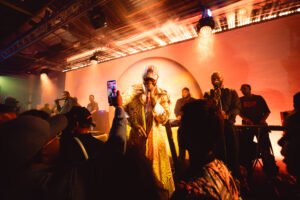
At the New York premiere of The Greatest, Rolling Stone Africa had the opportunity to speak with Lonnie Ali, Muhammad Ali’s wife and one of the executive producers behind the series. Her involvement in bringing this story to the screen carries particular significance.
Muhammad Ali’s legacy belongs not only to boxing history, but also to the history of civil rights, cultural identity, religious freedom and the ongoing struggle for human dignity. Preserving that legacy means ensuring that future generations understand the complexity of the man behind the legend. The victories, certainly; the charisma and extraordinary athleticism, but also the convictions, the sacrifices, the controversies and the personal cost of refusing to compromise.
For Africa and its global diaspora, Ali’s story holds an especially profound meaning. He represented something larger than the boundaries of the United States. He became a symbol of Black pride and self-determination at a time when people of African descent across the world were challenging colonialism, segregation and systems of racial oppression. His unapologetic belief in himself became an act of defiance. His refusal to accept the limits imposed upon him resonated far beyond American borders. Africans remember Ali’s historical fight in the Democratic Republic of Congo where “Ali Bomaye” till this day is resonating in the minds of millions of Congolese and Africans people across the continent.
He showed generations of young Black people across the globe that they did not need permission to believe in their own greatness.
His legacy also carries a responsibility to remember that the struggle for equality cannot depend exclusively on the emergence of extraordinary individuals. Indeed, not every child will become Muhammad Ali; not every young person will win an Olympic medal, become a world champion or command the attention of millions; and they should not have to, for the right to dignity, opportunity and respect must belong just as fully to the child whose name the world will never know as it did to the man the world called The Greatest.
HE DID NOT JUST COUNT THE DAYS. HE MADE THE DAYS COUNT.
Muhammad Ali understood that greatness was not simply measured by the number of victories accumulated over a lifetime, it was measured by the meaning attached to those victories; by his impact beyond the ring; by the principles he was willing to defend; the injustice he refused to accept, and the courage to stand alone despite the consequences.
Ali was a fighter in every sense of the word, long before he stepped into the ring and long after his final professional fight. His greatest opponent was never Joe Frazier, George Foreman or any other boxing legend. It was a society that sought to strip him and his people of their most fundamental human rights simply because of the color of their skin. He confronted that injustice with the same unstoppable courage, conviction and determination that made him The Greatest inside the ring. He challenged it through his words, his choices, his sacrifices and his refusal to surrender his convictions. In doing so, he transformed the meaning of what it meant to be a champion.
Today, as societies continue to confront the persistence of racial prejudice and inequality, his legacy remains both an inspiration and a challenge. An inspiration to those who refuse to accept the limitations imposed upon them, and a challenge to a world that continues, too often, to celebrate Black achievement without extending the same commitment to equality.
Muhammad Ali did not simply want to be remembered as a man who could defeat anyone standing across from him, he wanted to live as a man who knew exactly who he was, regardless of what the world thought he was entitled to become.
He did not count the days. He made the days count.
The greatest tribute we can pay to Muhammad Ali is to continue confronting the injustices he refused to ignore. The fight for human dignity did not end with him. Until equality is more than a promise, until Black humanity is respected as readily as Black excellence is celebrated, the fight he helped carry forward remains unfinished.
Muhammad Ali was The Greatest not simply because of the battles he won inside the ring, but because he never abandoned his people in their collective struggle for freedom, justice and equality. He understood that true greatness was not measured by personal triumph alone, but by the courage to stand for something greater than oneself. He truly walked the walk.
As he once reflected on how he wished to be remembered:
“I’ll tell you how I’d like to be remembered: As a Black man who won the heavyweight title, who was humorous and who never looked down on those who looked up to him. A man who stood for freedom, justice and equality. And I wouldn’t even mind if folks forgot how pretty I was.” – Muhammad Ali
To The Greatest, we say this: Your legacy is not forgotten, your courage still speaks and your fight for justice continues to inspire generations.
And through this exceptional series, Lonnie Ali, Michael B. Jordan and an extraordinary cast have ensured that the world remembers not only the champion who conquered the ring, but the man who stood unwaveringly for the dignity of his people.
We invite you all to watch The Greatest, not simply to revisit the life of a legend, but to understand why his story, his convictions and his fight for humanity remain as relevant today as they were more than half a century ago.