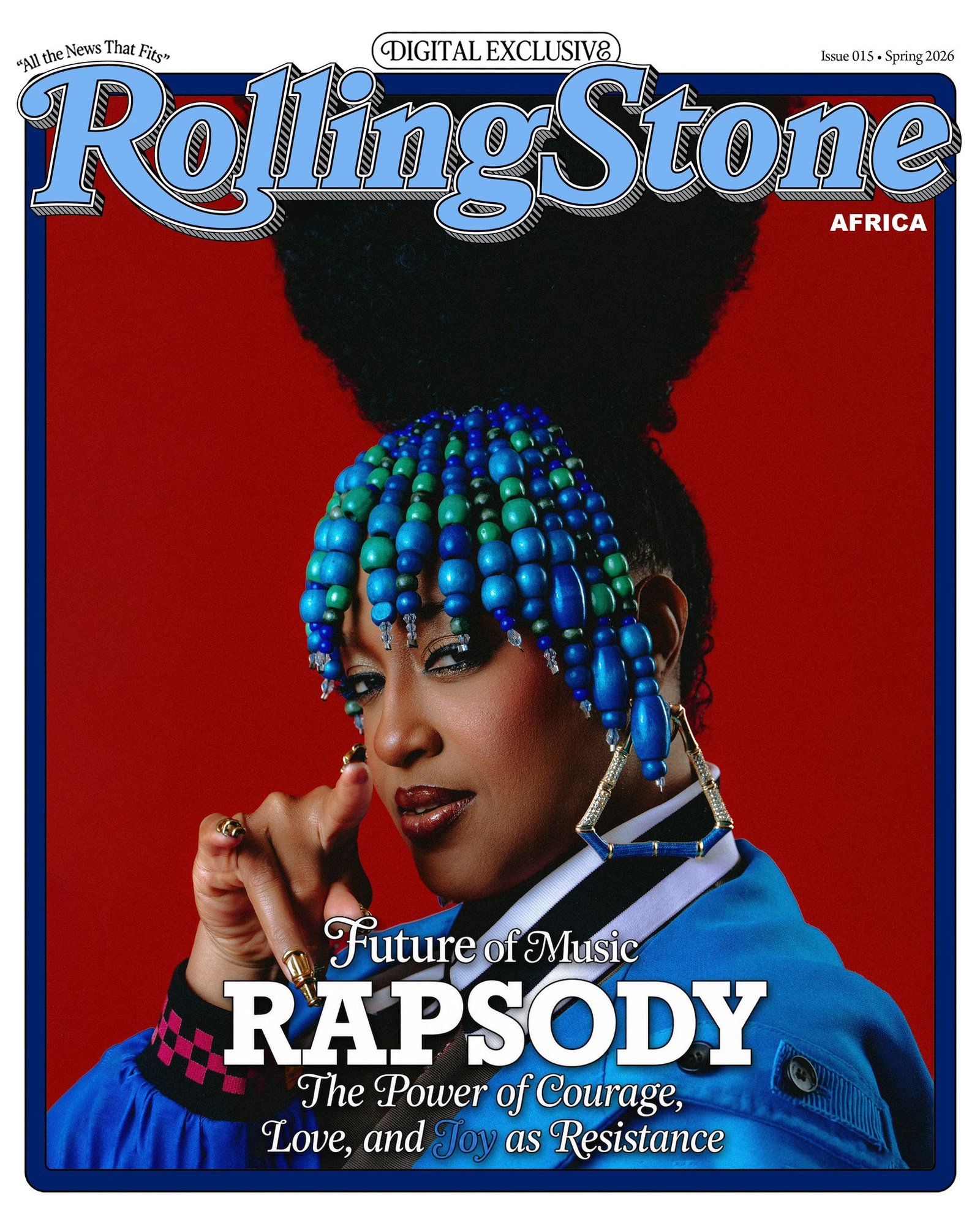
For more than a decade, Rapsody has established herself as one of hip-hop’s most respected voices.
While the music industry often celebrates commercial success above all else, Rapsody has built her legacy through substance and an unwavering commitment to telling stories that matter. Her music challenges listeners to think deeply, reflect honestly and reconnect with themselves, their communities and their history.
Speaking with Rolling Stone Africa ahead of the release of her new single on June 12 and her forthcoming album God Gotta Afro and Gold Hoops, Rapsody offered a thoughtful reflection on the experiences, values and beliefs that continue to shape both her art and her life.
Despite her accolades, she remains remarkably grounded.
“I want to feel like I’m the everyday girl that people can connect with,” she says. “I’m an auntie, I’m an artist, I’m a poet. I’m a lover of Black people and Black culture.”
That perspective continues to serve as the foundation for everything she creates.
The Gift of Language
Rapsody’s relationship with words is one that deserves careful study. Speaking with her feels less like conducting an interview and more like witnessing a masterclass in intentional storytelling. Every answer is thoughtful, layered, and delivered with the same precision that has made her one of hip-hop’s most respected lyricists. For Rapsody, language is far more than a means of communication; it is a vessel for preserving history, expressing identity, and deepening understanding. She speaks passionately about the power of poetry and hip-hop’s unique ability to communicate multiple meanings at once through metaphor, wordplay, and storytelling.
Her appreciation for language and culture was nurtured early on. Growing up, she developed a profound connection to Black history through her family, particularly her father, whom she describes as a passionate lover of Black people and Black culture. Annual family viewings of Roots became more than a tradition; they helped shape her understanding of history, identity, and the importance of knowing where one comes from.That foundation eventually led her to see hip-hop as part of a much older lineage.
Long before rap music existed, African societies relied on oral traditions to preserve knowledge, pass down wisdom, and safeguard culture across generations. During slavery, songs and spirituals carried coded messages, hope, resistance, and survival. In many ways, Rapsody views hip-hop as a continuation of that tradition; a modern vehicle for storytelling, truth-telling, and cultural preservation.
“It gave me a voice for myself, for my family, for my community,” she says. “That’s where I found purpose.”
For Rapsody, music became more than a creative outlet; it, indeed became a responsibility; a way to contribute to culture, honour those who came before her, and ensure that the stories, experiences, and truths of her people continue to be heard for generations to come.
Healing Through Vulnerability
Her previous album, Please Don’t Cry, marked a turning point in her career. It was the first time she felt she had fully removed the protective barriers between herself and her audience.
“The most challenging part was figuring out how much of myself I was ready to share,” she explains.
That vulnerability emerged from a deeply personal healing journey that began around 2019 and intensified during the COVID-19 pandemic. Like many people, Rapsody suddenly found herself stripped of distractions.There were no tours, no events; no opportunities to stay busy enough to avoid difficult emotions. She found herself sitting alone with heartbreak, disappointment and unresolved pain.
“When the world shuts down and you can’t go outside and be busy enough to ignore it, you have to sit in the fire,” she says.
What followed was a three-to-four-year process of healing. She turned to meditation, prayer, exercise, reading and self-reflection. She spent long periods in silence learning how to listen to herself. One of the most transformative moments came during a guided meditation exercise that encouraged participants to revisit childhood experiences.The exercise helped her identify emotional patterns she had carried throughout her life, including the tendency to prioritize others above herself in order to receive love and validation.
“It helped me understand the root of so many things,” she says.
The experience became a turning point in which rather than running from discomfort, she learned to face it and rather than suppressing pain, she learned to understand it. Through that process, she discovered something that now informs much of her work: healing requires courage.
Success Beyond Awards and Numbers
For Rapsody, success should not solely be measured through streams, chart positions and social media engagement. While she appreciates recognition and understands the value of awards, she believes true success is measured through impact. For her, the greatest rewards come from hearing how a song helped someone heal, grow or better understand themselves.
She recalls meeting listeners who shared stories about how her music had transformed their perspectives or strengthened important relationships. One fan even explained how her album Eve helped him better understand his Black girlfriend. Those moments remain more meaningful than any trophy.
“They’re the things that keep me full,” she says.
Her philosophy is simple: purpose over popularity; impact over attention and authenticity over performance.
“You have to be courageous enough to be the difference.”
Representation and the Full Spectrum of Black Womanhood
Throughout her career, Rapsody has consistently advocated for broader representation of women within hip-hop. She believes progress has been made, but she also believes there is still work to do. Specifically, she wants to see greater recognition of the many ways Black women exist and express themselves.
Looking back to artists such as Lauryn Hill, Queen Latifah, MC Lyte, Missy Elliott, Lil’ Kim and Foxy Brown, she points to an era where multiple forms of Black womanhood could coexist in mainstream music.
“There is a place for all of it,” she says.
“The sexy. The intellectual. The spiritual. The revolutionary. The vulnerable. The playful. The ambitious. The nurturing.”
For Rapsody, representation is not about replacing one narrative with another but moreso about creating space for all narratives.
She also advocates for greater representation behind the scenes, including more Black women producers, songwriters and executives helping shape the future of the industry.
God Gotta Afro and Gold Hoops
If Please Don’t Cry represented an inward journey, God Gotta Afro and Gold Hoops feels like both a homecoming and an expansion. The album emerged from a period during which Rapsody found herself increasingly drawn toward Africa. After visiting an Afrofuturist exhibit at the Smithsonian National Museum of African American History and Culture, she became fascinated by questions surrounding identity, ancestry and the future of Black people. At the same time, she found herself revisiting artists such as Sun Ra, Grace Jones and Fela Kuti.
Everything seemed to be pointing her toward the continent and eventually, she followed that instinct.
She travelled to Ghana before continuing to Johannesburg, South Africa, where much of the album was recorded. The experience left a profound impression on her. Visits to historical sites connected to the Ashanti Kingdom, the Door of Return and former slave castles forced her to confront questions surrounding memory, displacement and belonging.
One particular moment stood out; while travelling through Ghana, she noticed that much of the gospel music playing on local radio stations reflected Western influences rather than local cultural traditions. The observation sparked deeper questions about cultural preservation and the lingering effects of colonialism. It became one of many experiences that would eventually shape the album.
Reclaiming Identity, Reclaiming Self
The title track, “God Gotta Afro,” became one of the project’s foundational ideas. For Rapsody, the song is about reclaiming identity in a world where Black history, spirituality and contributions have often been erased or rewritten. She describes the album as a message to future generations; as a reminder of who Black people are, where they come from; of their beauty, brilliance and resilience.
The project explores themes of Black love, spirituality, joy, resistance and cultural pride. It asks listeners to reconnect with themselves while imagining a future rooted in self-knowledge and collective empowerment. That God gotta Afro too!
If history is constantly being rewritten, Rapsody wants this album to stand as a record of truth.
Joy Is Resistance
“Joy is resistance.” she shares.
For Rapsody, joy is not the absence of struggle, it is simply the decision to choose hope despite struggle, the decision to celebrate despite adversity. It’s the refusal to allow oppression, disappointment or injustice to define the entirety of one’s existence.
That philosophy runs throughout the new album. While God Gotta Afro and Gold Hoops addresses serious themes, it is ultimately a joyful project as it celebrates Black love, imagination, creativity, excellence, possibilities and community.
“Still remaining joyful in these times is powerful,” she says.
The Power of the Village
The theme of community was at the heart of the conversation. When discussing mentorship, leadership and future generations, Rapsody repeatedly returned to the importance of the village.
She spoke about the need to reconnect younger generations with elders and create stronger pathways for knowledge sharing. Too often, she argues, society celebrates youth while overlooking the wisdom of those who came before. Hip-hop, in particular, has developed a tendency to treat artists as if they should eventually age out of relevance and Rapsody rejects that idea entirely. She believes elders still have lessons to teach, just as younger generations have new perspectives to offer.
“The village matters,” she says.
The wisdom of elders, the energy of youth, the exchange between generations; all of it matters.
Make the Door Wider
“It’s my purpose to make the door wider so more people can come through.” She states.
It is a principle that reflects her approach to artistry, leadership and community. She understands that countless people helped create opportunities for her. Indeed there were mentors, family members, artists, executives, friends and more.
Now she views it as her responsibility to create opportunities for others.
“Each one teach one,” she says.
This phrase captured the spirit of everything she discussed during the interview. Whether speaking about healing, Black identity, Pan-Africanism, women in hip-hop or community, Rapsody consistently returns to the same idea that progress is collective, success is shared and that culture survives when people ffinvest in one another.
As she prepares to release her new single today, on June 12 and move closer to the arrival of God Gotta Afro and Gold Hoops, Rapsody is contributing another chapter to a much larger conversation about courage, love, identity, joy and what it means to leave the door open for those who follow.